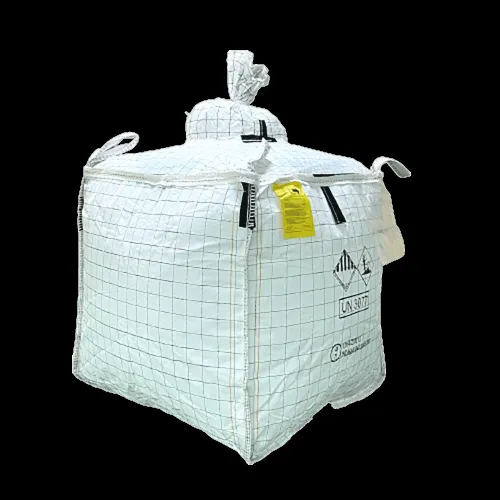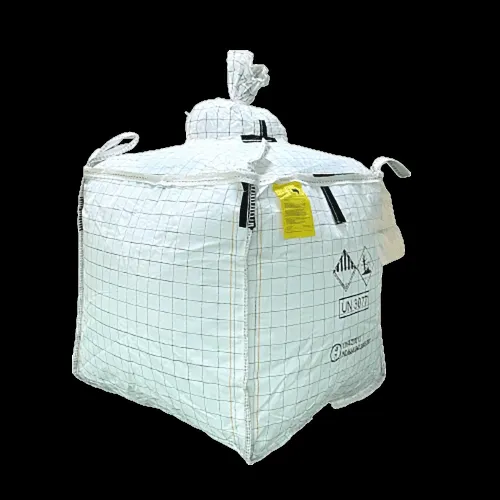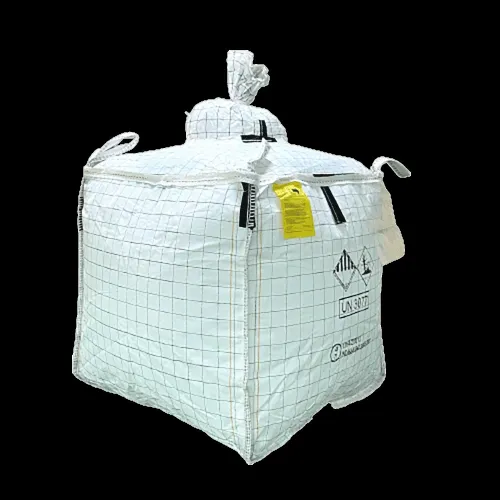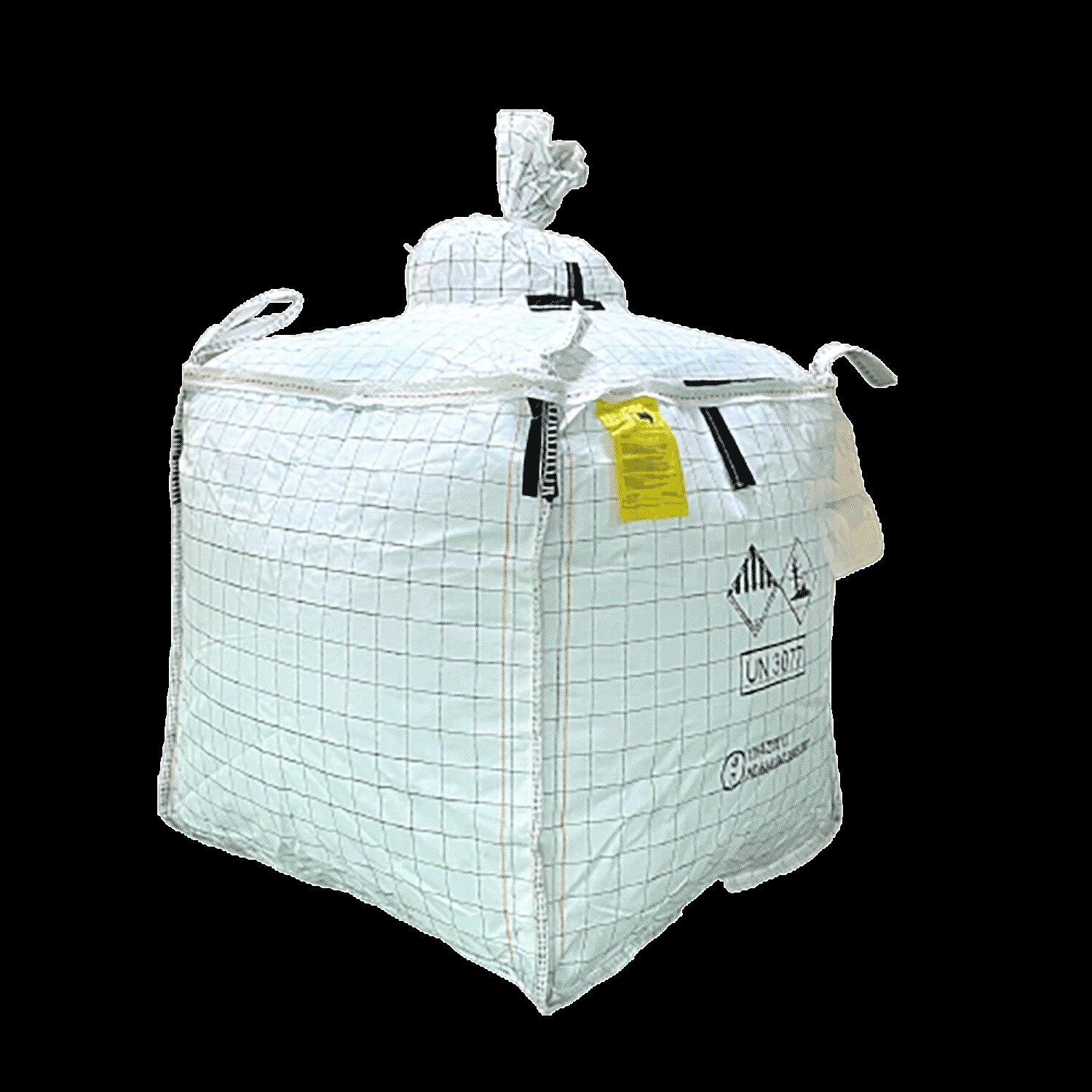
Choosing a bulk bag for fertilizer starts with the product, not a nominal “1-ton” capacity. By the end, you will be able to define the required FIBC specification, compare construction and lifting options, check the safe working load, and set storage and transport controls for Vadodara’s climate.
Key takeaways
- Calculate filled mass from bulk density before selecting FIBC volume.
- Specify fabric, liner and seams for moisture, dust and product flow.
- Set SWL above the actual filled mass and match the lifting design.
- Include discharge, storage, testing and documentation requirements in the purchase order.
Start with the Fertilizer, Not the Bag Volume
A 1,000 kg FIBC is not automatically suitable for 1,000 kg of fertilizer. Select the bag from the product’s bulk density, particle size, moisture sensitivity, flow behaviour and discharge method, then confirm the safe working load (SWL) with the actual filled mass. High-density grades can exceed the SWL even when the stated volume appears adequate.
Your FIBC selection guide should record:
- Product name and grade, bulk density, particle-size range, moisture content, dust level and caking tendency.
- Target fill weight, SWL, safety factor, stacking height and planned storage duration.
- Filling method, including pneumatic-air rate, venting, filtration and permitted internal pressure.
- Top construction, discharge outlet size and closure, plus loop configuration for forklift or lifting equipment.
- Transport route and exposure to Vadodara’s heat, humidity and monsoon rain.
For urea FIBC requirements, prioritise moisture control and reliable discharge because absorbed water promotes caking. DAP and MAP packaging bags need the same product-specific review, while NPK, potash and micronutrients can demand different outlet sizes because particle size and flow vary. Seeds and soil amendments may need gentler handling or a different fill-and-discharge arrangement.
Do not assume ordinary polypropylene suits every product: verify chemical compatibility and electrostatic control where the finished formulation requires it. A pneumatic filling system also needs a pressure and venting specification; without one, the bag can overinflate and release dust.
Match the Fabric, Liner and Seams to Product Behaviour
Coated versus uncoated woven polypropylene is a moisture-and-dust decision: choose coated fabric when fine fertilizer particles or surface moisture could pass through the weave; choose uncoated fabric for dry, free-flowing granules where ventilation and lower cost matter. Coating does not make seams or spouts sift-proof.
For hygroscopic fertilizer packaging, specify a polyethylene liner when the product absorbs humid air, cakes during storage, or needs protection from contamination. Put material, thickness, fit, seal method, antistatic treatment, and removable status in the FIBC liner specification.
A loose or poorly sealed liner traps condensation and can turn a dry product into a hard mass.
Use taped or specially closed seams for fine powders and high-value agrochemicals. Match the closable filling spout and controlled discharge closure to the receiving hopper: a full-bottom outlet empties quickly, while an iris or smaller spout improves metering but leaves more residue.
Use this checklist for static and containment control:
- Select sift-proof seams, a closable filling spout, and a controlled discharge spout when dust loss or product value makes leakage unacceptable.
- Specify a Type C FIBC when the operation provides a verified earth connection and requires conductive paths through the bag.
- Specify a Type D FIBC when charge dissipation without a designated earth connection is required; use only the specified fabric system and operating environment.
- Do not substitute an ordinary polypropylene bag for Type C or Type D where an electrostatic ignition assessment requires controlled FIBC performance.
- Check liner antistatic treatment separately: a polyethylene liner can increase electrostatic risk even when the outer fabric is suitable.
Set the Safe Working Load and Choose the Lifting Design
Specify capacity by target filled mass and safe working load, not by a “1-ton” label. Calculate the highest mass from the product’s bulk-density range; dense DAP, MAP or potash can exceed the expected load at the same volume.
Specify a 5:1 safety factor for single-trip handling, or a 6:1 FIBC when repeated handling or harsher transport demands extra margin. Neither ratio authorises reuse without inspection and recertification.
| Design | Handling choice | Best fit |
|---|---|---|
| 1-loop and 2-loop FIBC comparison | One or two lifting loops, matched to approved hooks or forklift attachments | Fast handling where the site already has compatible equipment |
| Four-loop FIBC | Each loop engages a forklift hook, spreader or crane attachment | Balanced lifting and wider equipment compatibility |
| Four-loop with corner loops | Forklift or spreader lifts all loops together | Frequent pallet-free movement and controlled stability |
| Loop placement | Confirm loop length, spacing and lifting angle | Prevents side loading, tearing and unstable loads |
State the filling and discharge equipment in the purchase specification. Use a top filling spout for enclosed filling lines, an open top for rapid manual or conveyor loading, and a dust-controlled closure for fine fertilizer.
Match the bottom outlet to the receiving hopper: a full-bottom discharge empties quickly, while an iris or smaller spout gives better metering but can retain more product.
- Provide target fill weight, density range, stacking height and forklift method.
- Name the hopper inlet, outlet diameter, clearance and required discharge rate.
- Specify loop design, fill head, discharge closure and whether the bag is single-trip or reusable.
Control Storage, Weather Exposure and Regulatory Risk
Store fertilizer FIBCs under a roof, on pallets or a raised dry floor, with a waterproof cover that leaves ventilation space. Vadodara’s heat, humidity and monsoon rain accelerate fabric ageing and moisture pickup; standing water can wick through the base and cause caking.
UV-resistant FIBC storage slows sunlight damage, but UV-stabilized polypropylene is not suitable for indefinite uncovered storage.
Use this handling checklist:
- Inspect each bag for torn fabric, damaged loops, open seams or a wet base before filling and dispatch.
- Keep filled bags away from walls, drains and direct sunlight; stack only to the height validated for that bag and product.
- Use monsoon protection for bulk bags: a clean, covered vehicle and a waterproof outer sheet that does not trap condensation.
- Do not drag FIBCs or lift them with damaged loops. Secure loads against shifting during road transport.
ISO 21898 sets construction and performance requirements for FIBCs carrying non-dangerous goods, but it does not replace your product specification. For fertilizer dangerous-goods packaging, confirm the finished product’s transport classification and any required UN packaging approval. Ammonium nitrate formulations need this check before procurement.
Where dust handling creates an ignition risk, specify the electrostatic class. Type C requires grounding during filling and discharge, with resistance to ground verified against the 1.0 × 10^8 ohm limit in IEC 61340-4-4. Type D relies on its designed dissipative fabric system; neither type is interchangeable with an ordinary polypropylene bag.
Turn the Specification into a Supplier-Ready Purchase Order
A quotation request that says “one-ton bag” leaves the critical decisions unresolved. Prepare an FIBC purchase specification that lets a fertilizer packaging supplier Vadodara price the construction, testing and handling requirements without guessing.
1. Name the product and grade, then provide bulk density, target fill weight, particle size, moisture content, flow behaviour, dust level, hygroscopicity and caking tendency.
2. State the bag’s rated safe working load, required safety factor, dimensions, top construction, discharge outlet, loop arrangement and forklift method. Include whether operators will use a filling frame, pallet or lifting frame.
3. Describe the filling and emptying equipment. Give the target filling rate, pneumatic-air use, venting and filter arrangement, and permissible internal pressure. Do not assume a standard FIBC is suitable for air-assisted filling.
4. Specify liner material, fit, sealing method and compatibility with the filling and discharge outlets. State storage duration, stacking height, transport route, monsoon exposure and whether UV-stabilized fabric is needed.
5. Ask for a sample drawing, construction details, production sample and FIBC test certificate covering SWL, safety factor, fabric and seam performance. Specify any Type C or Type D electrostatic requirement; ordinary polypropylene is not an equivalent.
Deccan Cans & Printers Pvt. Ltd. can evaluate a quotation more accurately when these details accompany the enquiry. Record the decision between tin containers versus FIBCs: tins suit rigid, hermetic small packs, while FIBCs suit bulk handling.
Related products
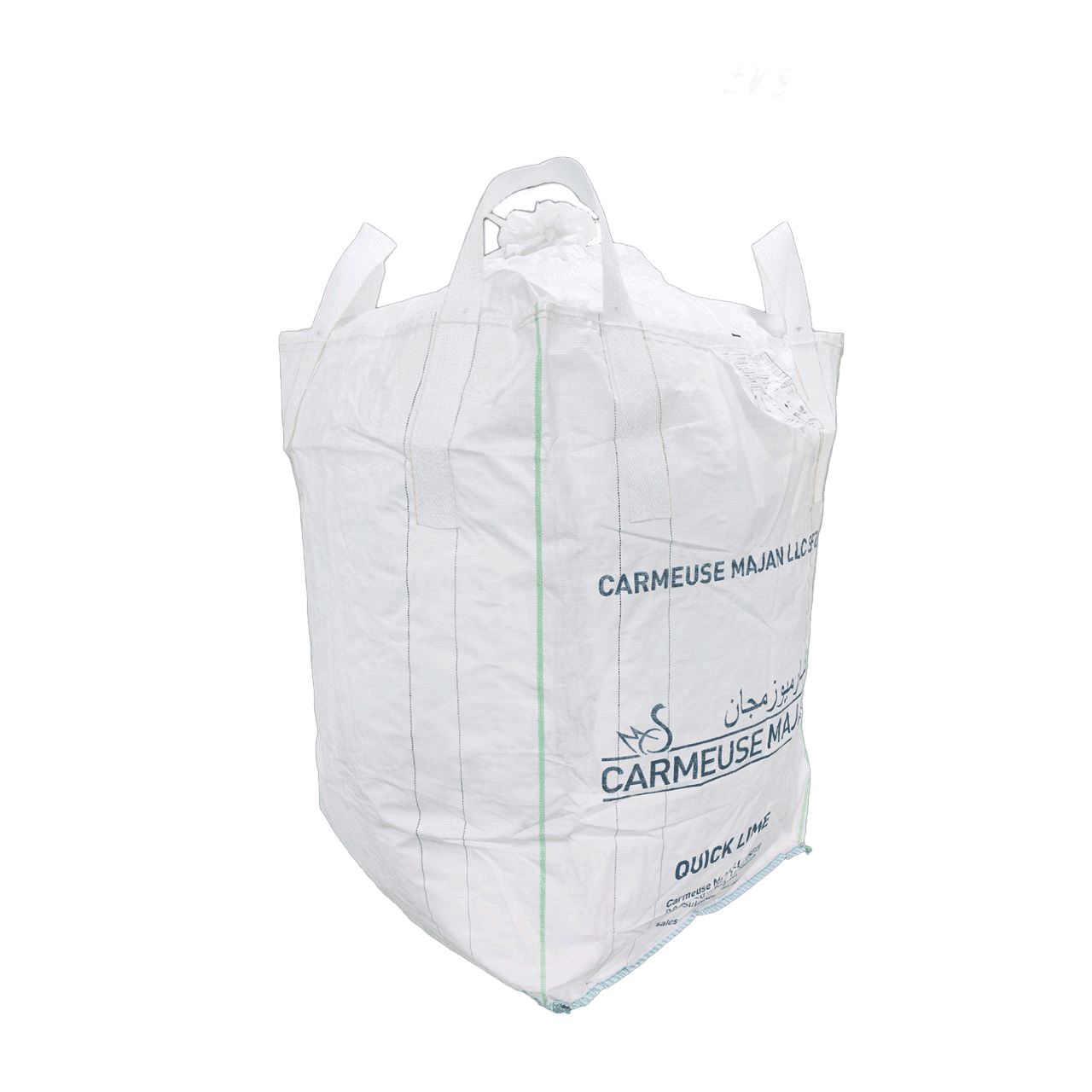 | FIBC Section Bags With Liners FIBC Liners – Bulk Bag Liners Deccan Cans & Printers Pvt. Ltd. |
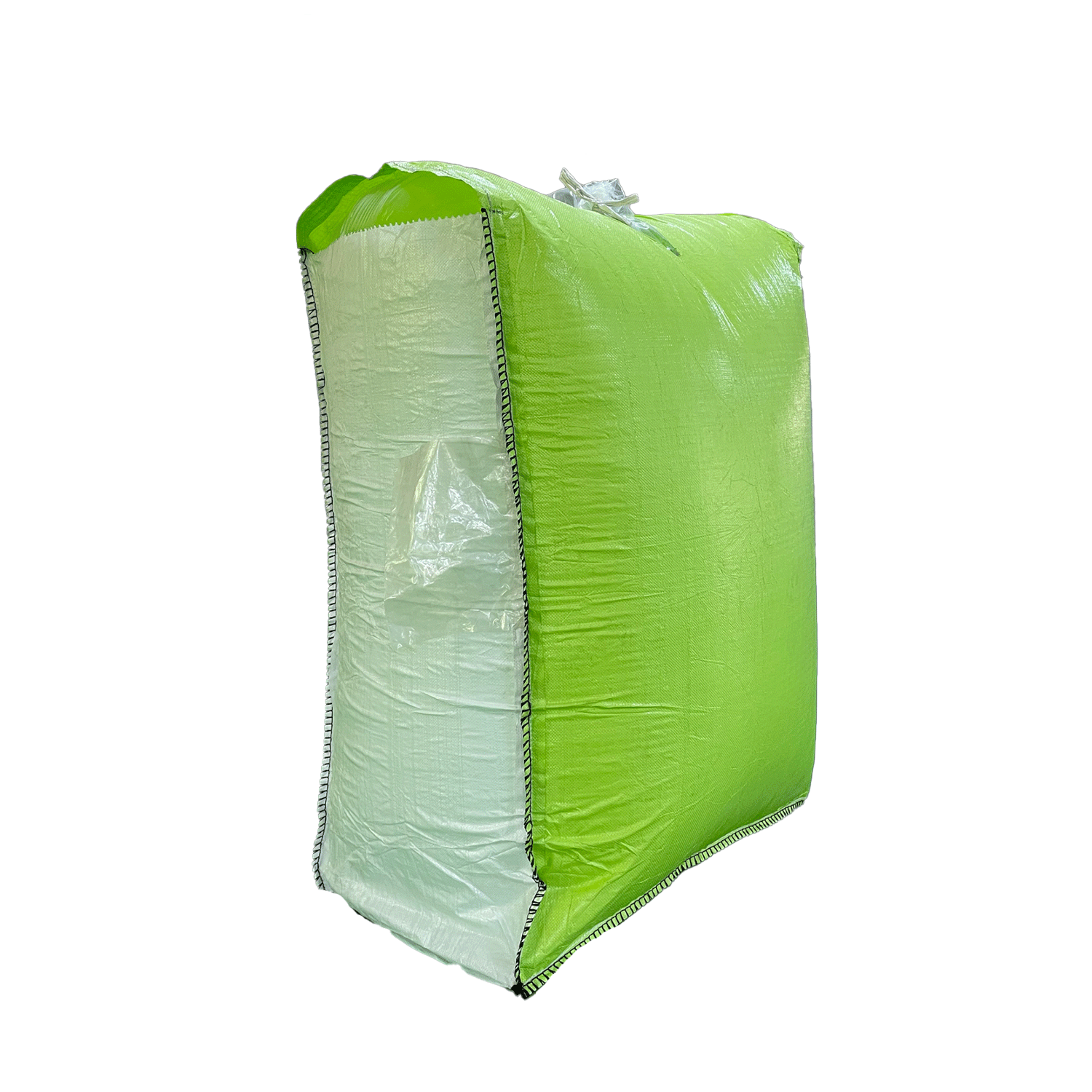 | FIBC Section Fertilizer Bag Range 1 & 2 Loop FIBC Bulk Bags Deccan Cans & Printers Pvt. Ltd. offers durable and cost-effective 1 & 2 Loop FIBC Bulk Bags, designed for the efficient... |
Frequently asked questions
How do you choose FIBC volume for fertilizer?
Start with bulk density and calculate the filled mass; a 1,000 kg bag is unsuitable if the product exceeds its SWL.
Which FIBC construction details matter for fertilizer?
Match the woven fabric, liner, seam construction and discharge arrangement to particle size, moisture sensitivity, dust and flow behaviour.
How should you set the FIBC safe working load?
Confirm the SWL against the actual filled mass, then choose a lifting design compatible with forklifts, hoists and handling procedures.
What storage controls protect fertilizer-filled FIBCs?
Keep bags on stable pallets, protect them from rain and prolonged sunlight, control stacking, and inspect packaging and documentation before use.
Related products
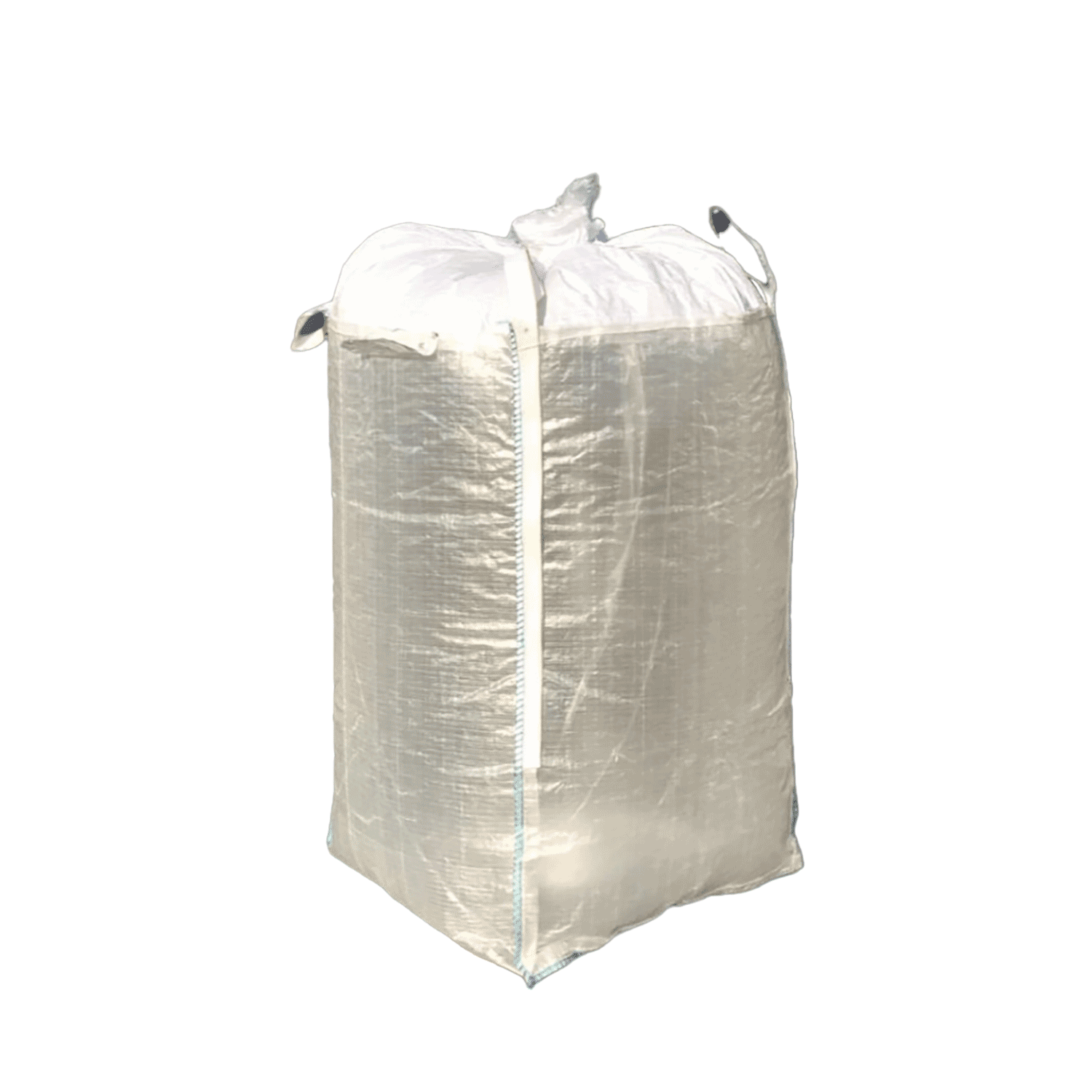 | FIBC Section Transparent Bags Transparent FIBCs – See-Through Bulk Bags Deccan Cans & Printers Pvt. Ltd. |
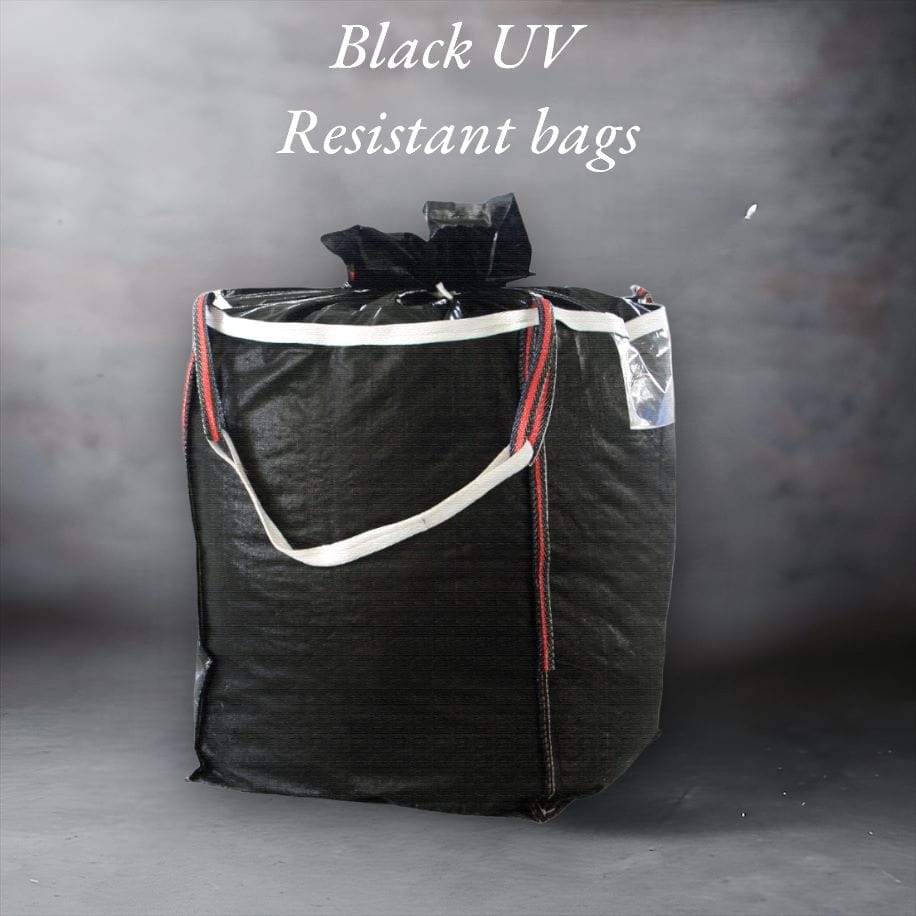 | FIBC Section Black Bags Black FIBC Bags – Enhanced UV Resistance & Extended Shelf Life UV exposure is one of the major challenges faced by the FIBC industry, as prolonged... |
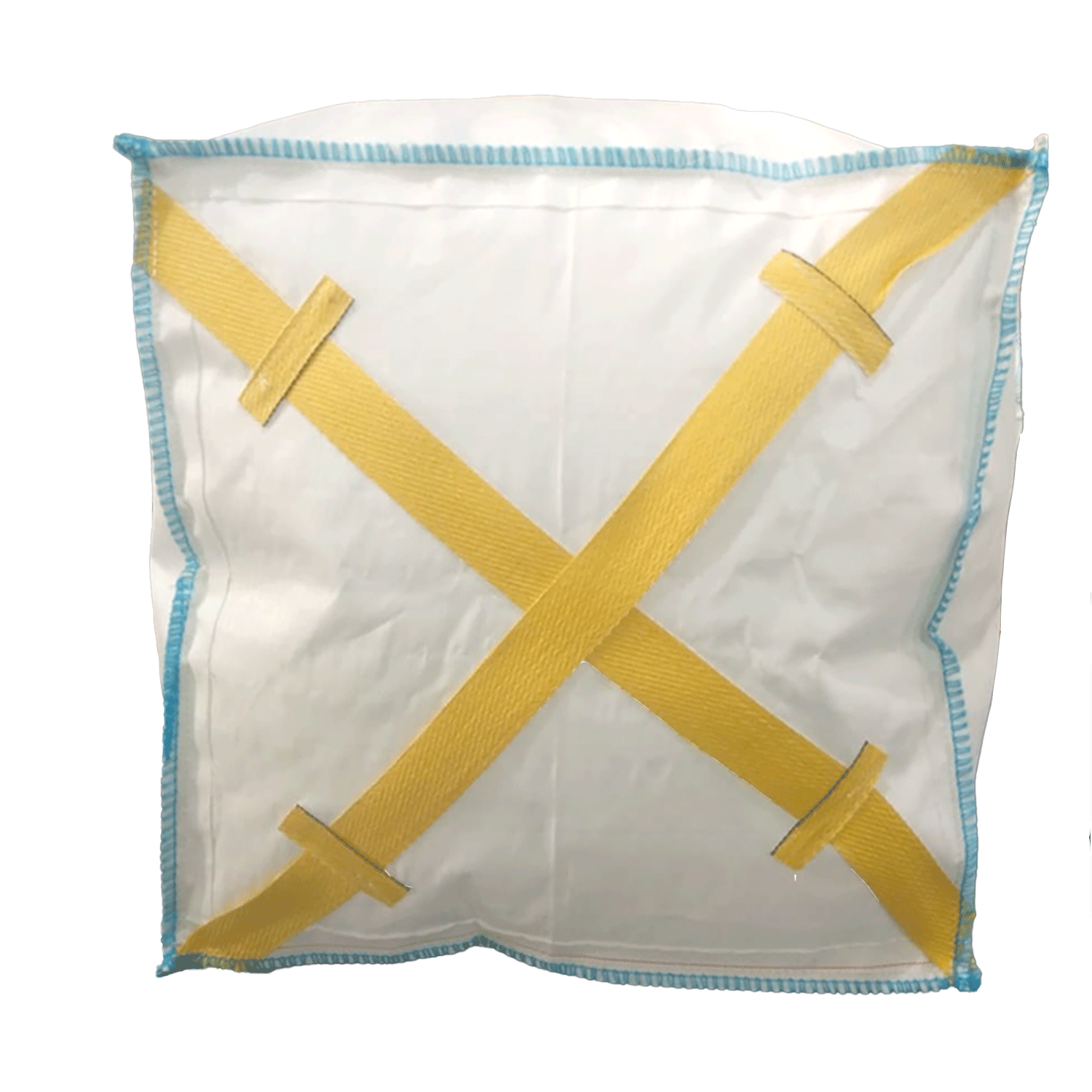 | FIBC Section Cross Bottom Sling Bags Cross Bottom Sling FIBCs – Bulk Bags Deccan Cans & Printers Pvt. Ltd. |
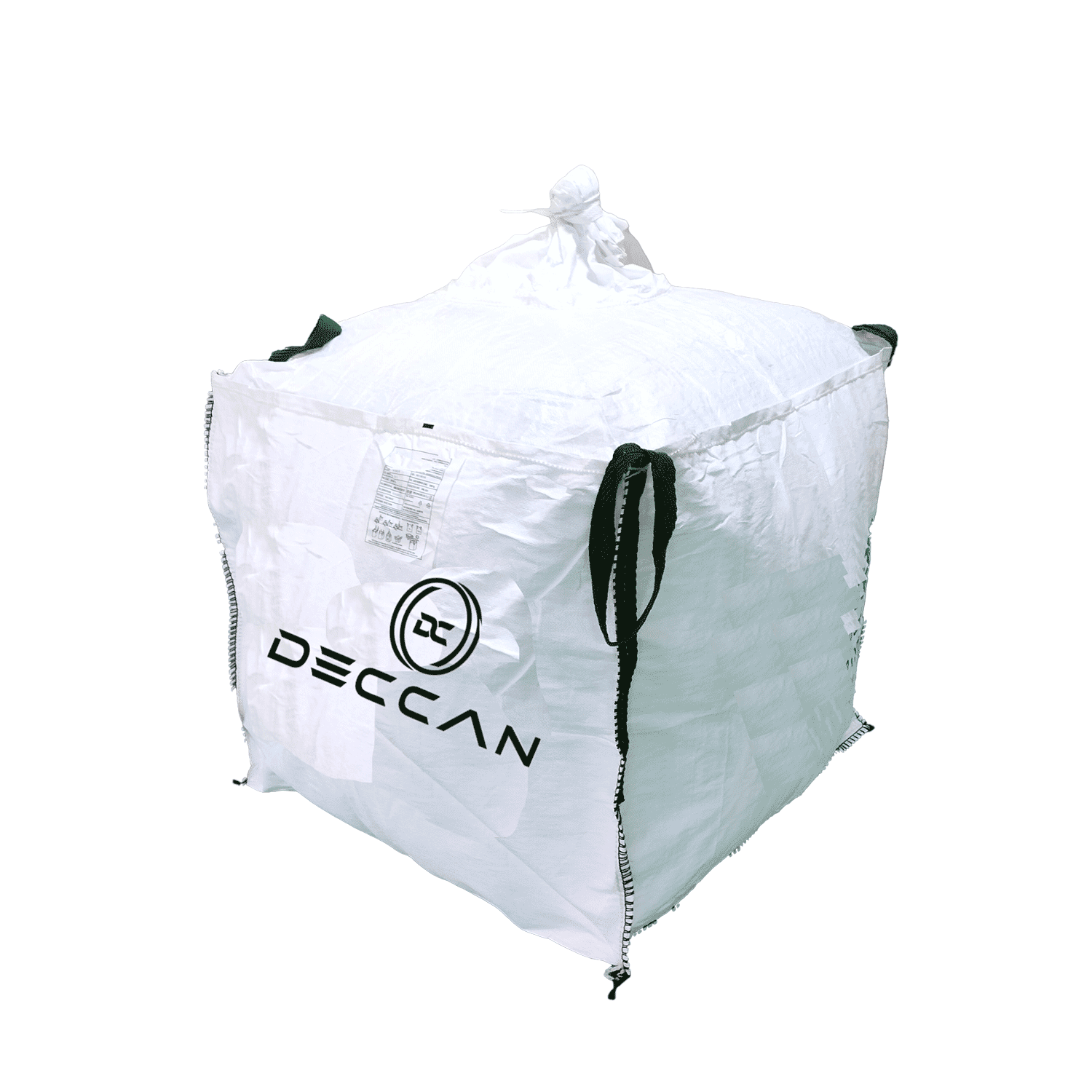 | FIBC Section Polyester Loop Bags/Multifilament Loops Polyester / Multifilament Loop FIBC Bags Deccan Cans & Printers Pvt. Ltd. |