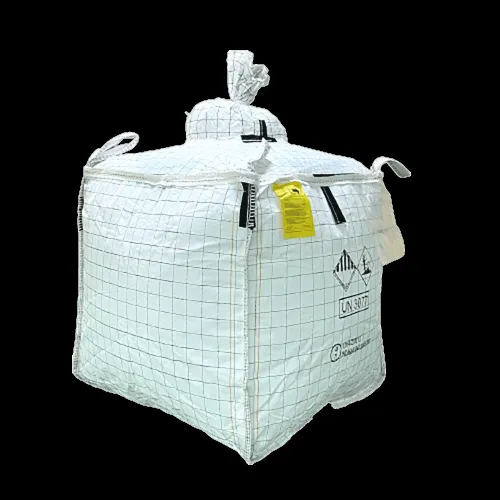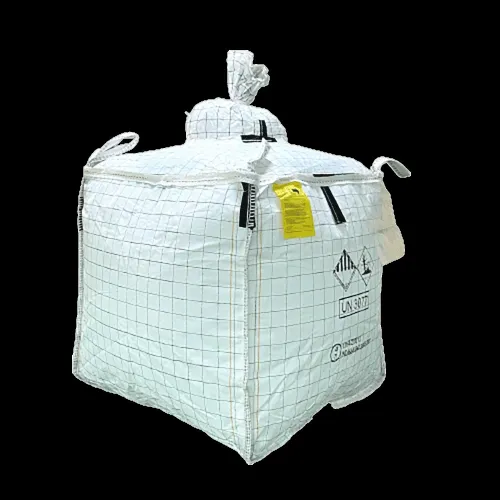

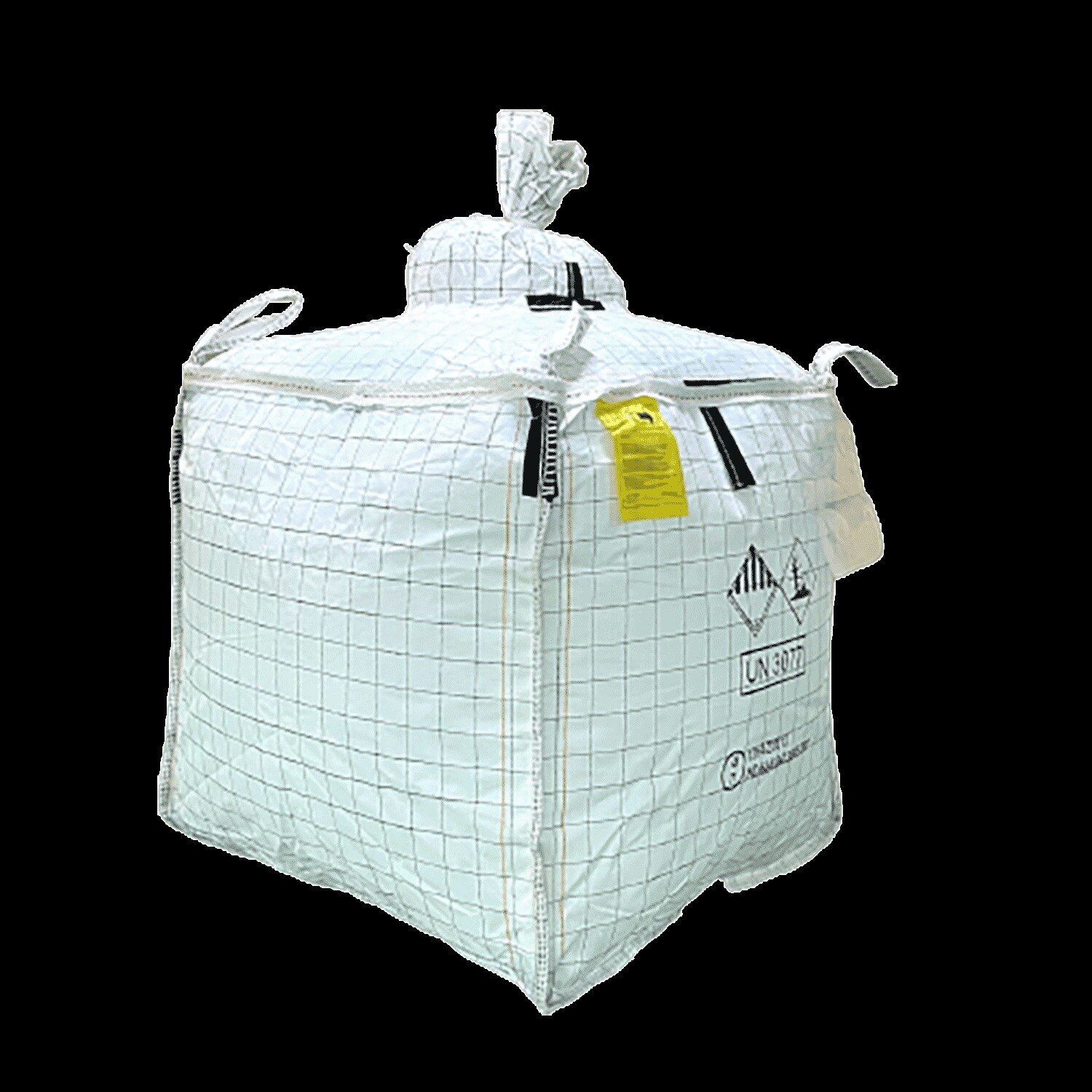
A food-contact FIBC is not proven safe by a “food grade” label alone: the polymer, liner, stitching, ink, handling conditions and hygiene controls all need evidence. By the end, you will know which documents and construction details to request, how to prevent contamination, and how to compare a Vadodara supplier’s specification with your product and process.
Key takeaways
- Ask for food-contact declarations, test reports and the manufacturer’s licence details.
- Match the liner material and seam design to the food, temperature and filling process.
- Specify antistatic or conductive construction when powders create ignition or discharge risks.
- Reject bags with damaged packaging, unclear traceability or uncontrolled reuse history.
What makes an FIBC suitable for direct food contact?
Polypropylene alone does not make an FIBC suitable for direct food contact. A genuine food grade FIBC must use materials selected for the intended food, temperature, filling conditions and storage period, with evidence that the complete construction meets food-contact packaging requirements under India’s Food Safety and Standards (Packaging) Regulations, 2018.
Check that the specification covers every material touching the product or its environment:
- Woven polypropylene fabric, including the exact polymer grade and compliance with the applicable IS 10910 polypropylene standard
- Polyethylene liner, if fitted, against the applicable food-contact requirement, including IS 10146 where relevant
- Sewing thread, lifting loops, coating, adhesive and printing ink
- Odour, cleanliness, migration and hygiene controls for the finished bag
- Product-contact surfaces free from lubricants, loose fibres and manufacturing residues
A “hygienic” description without these details is marketing, not proof. Ask for a declaration covering the exact bag design, a material specification, migration-test evidence for the intended use and batch traceability; the next section explains these records.
Do not confuse performance certification with food-contact status. A UN-marked FIBC has passed dangerous-goods packaging tests, not food-contact or low-odour tests. ISO 21898 addresses FIBC design and performance for non-dangerous goods, but it does not prove hygienic manufacture.
IEC 61340-4-4 classifications such as Type B, Type C and Type D address electrostatic risk, not food safety.
Documents to request before approving a food-contact bag
Approve an FIBC only when its documents identify the exact construction, lot and intended food use. A generic “food grade” letter does not prove that the finished sewn bag, liner, thread, loops, coating and ink are suitable.
Request these documents:
- Declaration of Compliance naming the woven polypropylene, liner resin and additives, plus the food types, temperature range and contact duration. Check whether it cites India’s Food Safety and Standards (Packaging) Regulations, 2018, EU Regulation (EC) No 1935/2004, EU Regulation (EU) No 10/2011, or applicable FDA 21 CFR provisions.
- A migration-test report covering the actual food-contact surface, especially the liner. Match its food simulants, test temperature and exposure time to your product and process.
- A certificate of analysis for the supplied lot, not only the raw polymer. Check the bag or liner specification, odour, contamination controls and any test limits.
- A batch traceability record linking the bag lot to resin batches, liner production, sewing records and release inspection.
- The material specification and hygiene-control evidence, including protected packing, cleaning, pest control and foreign-matter checks.
| Document | What it proves | What it does not prove |
|---|---|---|
| Declaration of Compliance | The stated legal and use conditions | Cleanliness of every delivered bag |
| Migration-test report | Chemical transfer under tested conditions | Mechanical performance |
| UN marking | Dangerous-goods packaging performance | Food-contact suitability |
| ISO 21898 conformity | FIBC design and testing for non-dangerous goods | Food-contact compliance or hygienic manufacture |
Reject documents that omit the liner, lot number or use conditions. UN certification and ISO 21898 cannot replace food-contact evidence.
Match the liner, seams and static controls to the product
Fine powders need a sift-proof bag, not simply a food-contact label. Specify coated woven fabric, sift-proof seams, low-lint sewing thread, and a fitted FIBC liner that prevents product escaping through needle holes. Require seam or leak testing, and state the test method and acceptance limit.
Choose the liner against particle size, flow behaviour, temperature and filling equipment. Record the resin, additives, closure design and polyethylene liner thickness; do not accept “heavy-duty liner” as a specification. A heat-sealed liner reduces leakage paths, but a loose or badly fitted liner can fold into the discharge spout and block flow.
Specify separate filling and discharge spouts with secure closures.
| Product or handling condition | Construction to specify | Main failure to prevent |
|---|---|---|
| Fine powders | Fitted heat-sealed liner, coated fabric, sift-proof seams and tested spout closures | Dust escape, yield loss and external contamination |
| Granules | Liner thickness matched to drop impact and abrasion, reinforced seams and a discharge spout sized for flow | Liner puncture, bridging and slow discharge |
| Dusty ingredients | Sift-proof stitching, sealed liner joints and controlled filling and discharge | Dust clouds and cross-contact on equipment |
Treat electrostatic control as a separate requirement under IEC 61340-4-4. State the FIBC type, test method and operating instructions: Type C requires a verified ground connection during filling and discharge, while Type D relies on dissipative construction and defined conditions.
Require inspection and rejection criteria for damaged, dirty or interrupted conductive paths; “anti-static” alone proves nothing. ISO 21898 performance does not replace these controls or food-contact requirements.
Prevent contamination from production through reuse and storage
Keep FIBCs clean, dry and sealed at every handover; one lapse can introduce insects, fibres, metal fragments or moisture into an otherwise compliant product.
At receipt, quarantine bags with torn outer wrapping, wet patches, stains, insects, visible foreign matter, unusual odour, damaged liners or open seams. Check the bag label against the purchase specification, lot number and delivery documents, then record the inspection before release.
Use line clearance and foreign-body prevention before filling. Remove loose tools, damaged pallets and exposed cardboard from the filling area. Keep discharge spouts closed, minimise open time, and use clean, covered handling equipment. Store bags off the floor, away from walls, direct sunlight, rain, condensation, sharp pallet edges and rack projections.
A dry, pest-controlled room protects polypropylene fabric and its contents; UV exposure can embrittle the fabric.
A single-use FIBC removes the uncertainty of previous contents and suits allergenic, odorous or microbiologically sensitive powders. Reusable bulk bags need a documented FIBC cleaning procedure or validated decontamination method, a record of previous contents, defined inspection points and written rejection criteria.
Do not reuse a bag after contact with an incompatible allergen, strong odour, infestation or unremovable residue.
- Keep cleaned bags in sealed protective wrapping until use.
- Reject bags with unknown history or failed traceability.
- Segregate allergen-contact bags by label and storage location.
- Investigate any wet, pest-damaged or tampered shipment before it reaches production.
India’s Food Safety and Standards (Packaging) Regulations, 2018 require food-contact packaging to be food-grade, suitable, clean, hygienic and tamper-proof; your records must demonstrate those controls for the finished bag.
How to compare food-grade FIBC suppliers in Vadodara
Compare FIBC suppliers in Vadodara against a written specification and a finished-bag inspection, not a “food grade” claim. Your specification must identify the food, filling and discharge conditions, bag construction, and acceptance evidence.
| Requirement | Acceptable evidence | Reject or query |
|---|---|---|
| Polymer | Exact polypropylene grade; compliance with FSSAI Packaging Regulations and IS 10910. Use IS 10146 for polyethylene. | “Food-safe polymer” without grade or standard |
| Construction | Food-contact suitability for fabric, liner, coating, thread, loops and ink | Declaration covers resin only |
| Performance | ISO 21898 test or conformity record, with safe working load and safety factor | ISO 21898 presented as proof of food-contact compliance |
| Static control | IEC 61340-4-4 classification; Type C includes a verified grounding procedure, while Type D requires specified operating conditions | Static type omitted for dusty powders |
| Traceability | Declaration of compliance, migration report where relevant, certificate of analysis, production lot and batch link | Resin sample tested but finished bag unverified |
Use an incoming inspection checklist for every received lot. Check:
- Unbroken outer packaging, dry storage condition and correct bag label
- No odour, insects, soil, moisture, foreign matter or visible staining
- No liner punctures, open seams, damaged loops or contaminated discharge spouts
- Matching lot number, material declaration and certificate of analysis
Ask Deccan Cans & Printers Pvt. Ltd., like any shortlisted supplier, to complete the same specification rather than accepting a catalogue description. For reusable bags, add previous contents, cleaning validation, inspection records and rejection criteria; dedicate bags for allergens or strong odours.
Related product
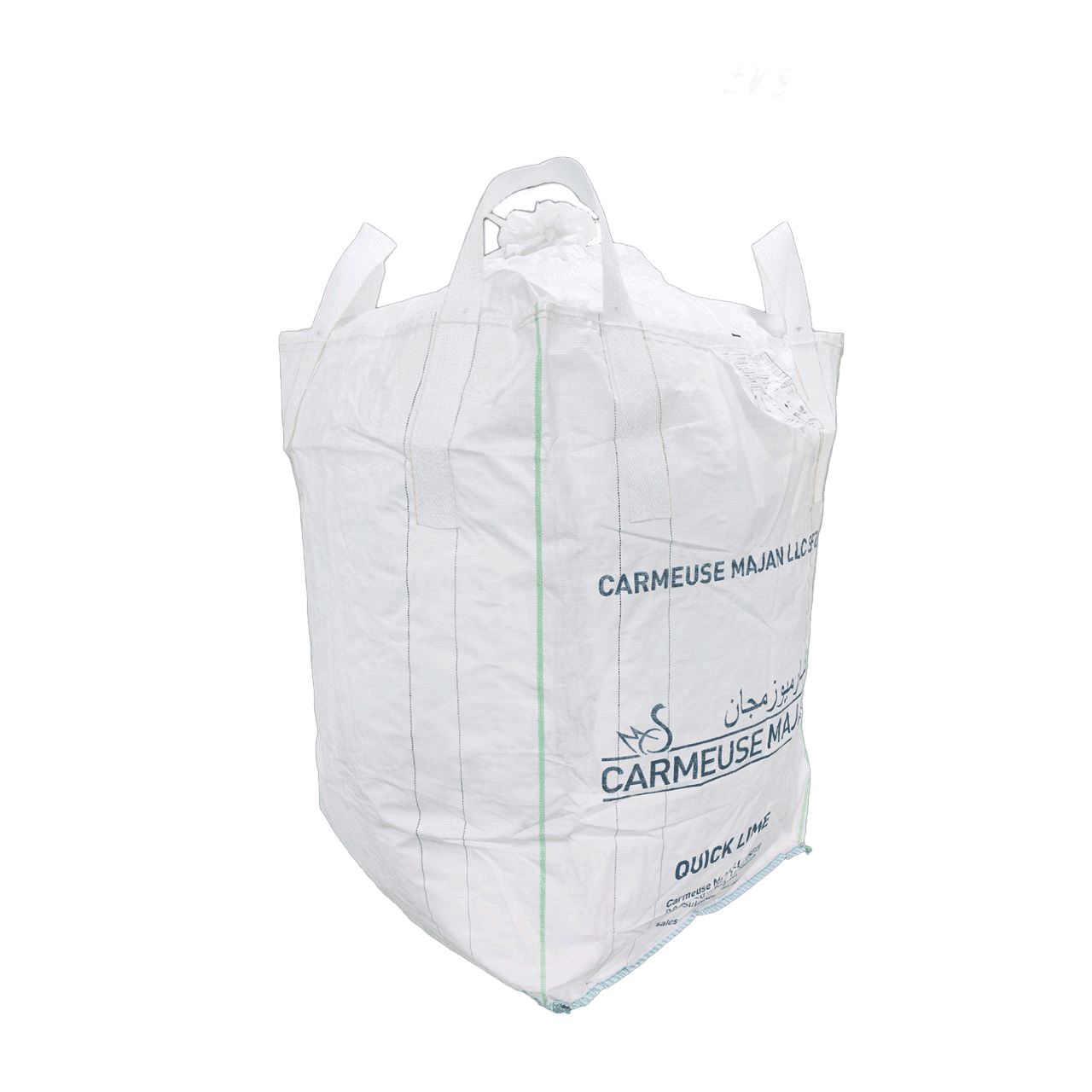 | FIBC Section Bags With Liners FIBC Liners – Bulk Bag Liners Deccan Cans & Printers Pvt. Ltd. |
Frequently asked questions
What makes an FIBC suitable for direct food contact?
The complete bag construction—not polypropylene alone—must use materials suitable for the intended food, temperature, filling conditions and storage period, with evidence of compliance with India’s Food Safety and Standards (Packaging) Regulations, 2018.
Which documents should you request before approving a food-contact FIBC?
Request a food-contact declaration, material and additive details, applicable test reports, batch traceability information, and the manufacturer’s relevant licence or registration documents. Check that the documents identify the bag construction you are buying.
How do you match an FIBC liner, seams and static controls to the product?
Select the liner for the product’s moisture, fat, acidity, particle size and temperature exposure. Confirm seam construction prevents leakage, then specify antistatic, dissipative or conductive controls when the powder and handling process create static-discharge risks.
How can you compare food-grade FIBC suppliers in Vadodara?
Compare documented food-contact compliance, traceability, clean production controls, inspection records, customization capability and reuse guidance—not just polypropylene fabric weight or quoted price.