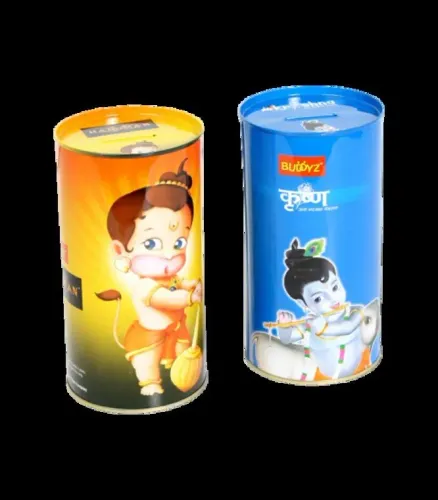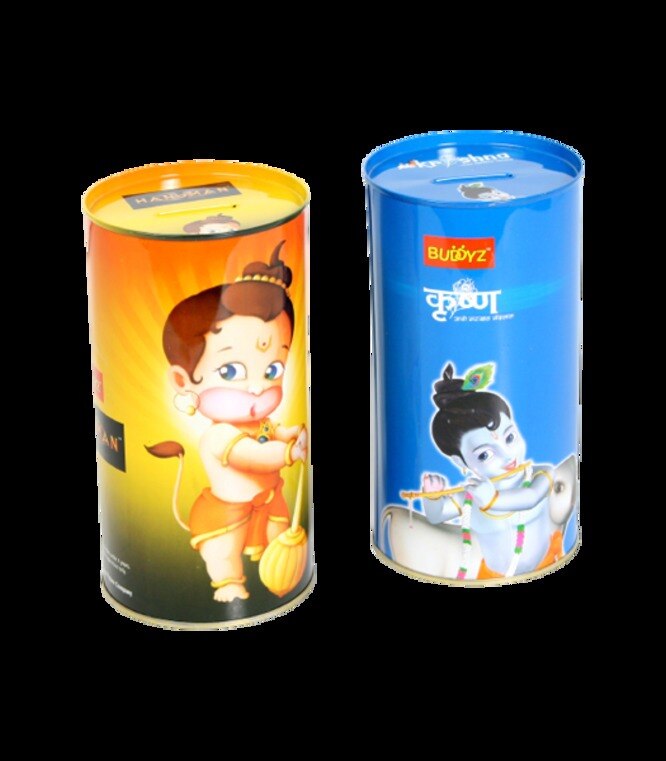
Choosing an industrial tin container requires more than comparing nominal capacity or the word “leak-resistant.” You need to match the tinplate, internal lacquer, closure, test evidence and transport approval to the material you will fill, then verify that a Vadodara manufacturer can supply the design consistently.
Key takeaways
- Request the tinplate grade, thickness, capacity and dimensional drawing.
- Match the closure and internal coating to the product’s chemistry.
- Verify UN approval, leak-test records and stated handling limits.
- Use a product-specific RFQ to compare Vadodara manufacturers fairly.
Start with tinplate, capacity and construction—not the label “tin”
Ask for a material specification and dimensional drawing, not a catalogue claim that simply says “tin.” Industrial tin containers are usually made from low-carbon steel sheet with a tin coating: the steel provides strength, while tin improves corrosion resistance, solderability and appearance.
| Specification | Request from the manufacturer | Why it matters |
|---|---|---|
| Tinplate gauge | Sheet thickness in millimetres | A thin wall can deform under stacking or handling |
| Steel grade | Grade, temper and yield-strength data | These determine forming performance and mechanical strength |
| Tin coating mass | Coating mass on each face, in g/m² | Unequal or light coating can reduce corrosion protection |
| Capacity | Nominal volume, maximum fill volume and maximum fill weight | Density and headspace affect safe filling |
| Construction | Welded or soldered seams, body diameter, height and base design | Seams and geometry control leakage and stacking stability |
| Closure | RLT, EOE, screw cap, plug-in lid, lever lid or crimped closure | The wrong closure can leak, buckle or fail during opening |
Request the internal lacquer name, dry-film thickness and a documented product-to-lacquer compatibility assessment. For food-contact packaging, request migration or extractables data and confirmation against applicable Food Safety and Standards Authority of India requirements.
Also specify storage temperature, stacking load, external finish and whether the container needs leakproofness testing. Compare like-for-like only after every manufacturer quotes the same gauge, steel grade, tin coating mass, capacity and closure.
Match the can, closure and coating to the product
A solvent or acidic formulation can attack bare tinplate, while a sulfur-containing product can react with the metal or coating. Specify chemical compatibility before choosing the can; an internal lacquer is a performance layer, not a cosmetic finish.
Give the manufacturer these product and filling conditions:
- Chemical composition, pH and solvent content
- Density, viscosity and suspended solids
- Flash point, vapour pressure and gas generation
- Filling temperature, storage temperature and expected shelf life
- Required fill weight, headspace and dispensing frequency
Require a written product-to-lacquer compatibility assessment. For food or pharmaceutical contents, request migration or extractables data and the applicable declaration; industrial suitability alone does not establish food-contact compliance.
The closure must contain the product under its actual pressure and handling cycle. Specify the gasket or sealant chemistry, torque or crimp requirement, leak-test method and allowable leakage rate. An RLT closure can suit applications needing a secure removable lid, but its seal must match the formulation and temperature.
A screw cap industrial can supports repeated opening and controlled dispensing when the neck, thread, liner and torque are designed together. A closure that fits the opening can still leak if the liner swells or the cap is under-tightened.
Hot filling demands a container and seal that tolerate the filling temperature and subsequent cooling vacuum. Foaming liquids need controlled fill speed and headspace; powders need dust control and a closure that prevents fine material escaping. Confirm dimensional drawings, closure samples and test results before approving production.
Check UN approval, leak testing and handling limits
A steel body does not make dangerous goods packaging compliant. Require a UN performance certificate and test report that match the exact container design, closure, capacity or mass range, material, and intended packing group.
Check the UN marking on the container against the shipment details. It should identify the packaging code, performance level (X, Y or Z), manufacturer or approval reference, and limits such as maximum gross mass, liquid specific gravity, or hydrostatic test pressure where applicable.
A certificate for a different lid, liner, size, or closure does not cover your package.
Request this evidence before filling production containers:
- A drop test report showing the approved package survived the specified impact without leakage or dangerous deformation.
- A leak test report for liquid packages, including the test pressure, duration, closure configuration, and pass result.
- Stacking or load-test results showing the permitted load and stacking period.
- Pressure-test evidence when vapour pressure, internal pressure, or the approval scope requires it.
- A dimensional drawing, closure specification, material or coating declaration, and batch traceability record.
- Written handling limits covering maximum gross mass, lifting points, pallet use, stacking height, storage temperature, and transport orientation.
Read the approval scope, not just the logo. Reusing an apparently identical container outside its stated density, packing group, closure, or load limit can invalidate the approval. For FIBCs, ISO 21898 covers non-dangerous solid materials; it does not by itself create UN approved packaging. Food-contact use also needs separate FSSAI compliance.
Decide when a rigid tin can beats an FIBC
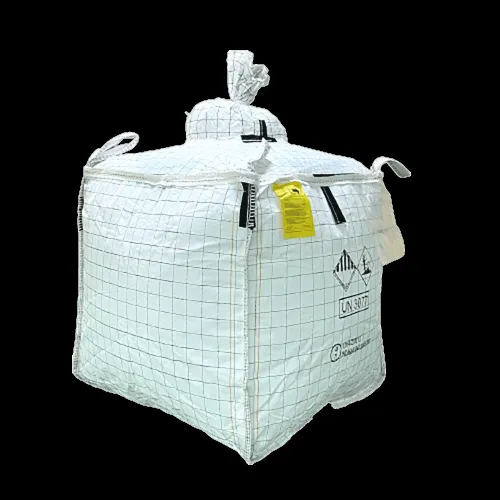
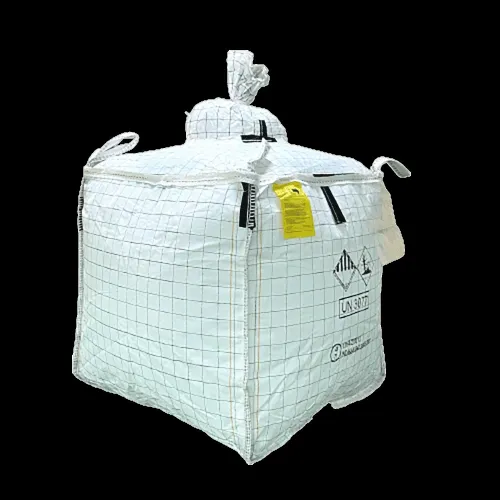
Choose a rigid tin container when your material needs a puncture-resistant barrier, predictable stacking, or protection from moisture, light and handling damage. Choose an FIBC when low packaging mass, forklift movement and economical bulk packaging matter more than rigid protection. The tin container vs FIBC decision is a handling-and-risk calculation, not an empty-package price comparison.
| Factor | Rigid tin container | FIBC |
|---|---|---|
| Protection | Resists punctures and keeps its shape | Needs fabric, liner and controlled handling |
| Storage | Supports stable stacking | Requires pallets, suitable racks and stacking limits |
| Movement | Suits drums, pallets and mechanical gripping | Suits forklifts, lifting loops and discharge stations |
| Cost beyond purchase | Adds weight, return logistics and disposal considerations | Reduces package mass but adds liner and handling controls |
Choose tin for sharp-edged solids, liquids that need a robust sealed closure, long storage, or warehouses where damaged bags would create contamination or product loss. Use an FIBC for free-flowing powders or granules moved in large batches through compatible filling and discharge equipment.
Specify the FIBC’s safe working load with its service rating: single-trip, limited reuse or repeated reuse. Check the loops, seams, bottom construction, density and stacking conditions; the printed load is not permission to use every arrangement.
For flammable powders, select an electrostatic FIBC only after reviewing grounding and bonding procedures. ISO 21898 covers non-dangerous solids, not automatic UN approval. Food-contact packaging follows FSSAI requirements, so neither format qualifies merely because it held a non-food chemical.
Qualify a Vadodara manufacturer with a product-specific RFQ
Verify the supplier against the exact pack you will fill, not against a catalogue or Vadodara address. Send an RFQ that names the product, fill quantity, density, viscosity, pH, flash point, vapour pressure, storage temperature and transport classification.
Ask each industrial packaging supplier to return these documents and samples:
- The Vadodara facility address, manufacturing scope, monthly capacity and whether it makes the container locally.
- A dimensional drawing stating capacity, height, diameter, gauge, tinplate grade, coating mass and maximum fill weight.
- Closure samples, such as RLT, EOE, screw cap, plug-in lid, lever lid or crimped closure, matched to your liquid or powder.
- Internal lacquer or liner declaration confirming compatibility with your formulation and filling temperature.
- A material certificate identifying the steel or tinplate supplied.
- Leak, seam, pressure or stack-test reports for the specified container.
- Batch traceability from finished container to raw-material lot, plus a written change-control procedure.
For dangerous goods, compare the UN mark and certificate with the substance, packing group, closure, maximum gross mass and specific gravity. An identical-looking can used outside those limits is not covered by the approval. Food-contact packaging needs separate Food Safety and Standards Authority of India compliance; industrial suitability does not prove food safety.
Ask Deccan Cans & Printers Pvt. Ltd. to state these details for the particular industrial can in your RFQ, rather than accepting a general range description. Reject a supplier that cannot identify the tested configuration.
Related product
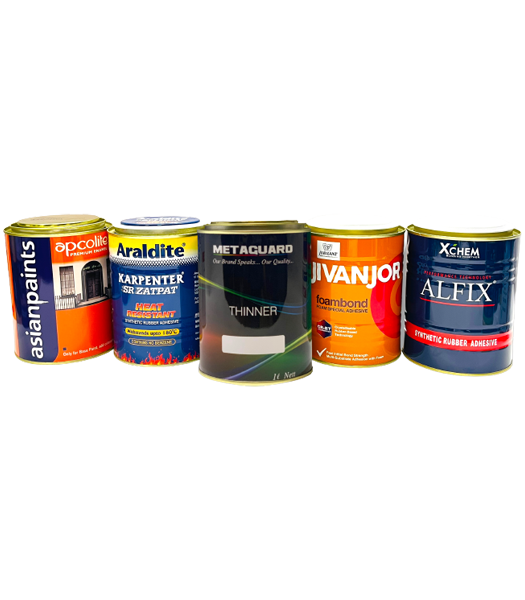 | Tin Containers Tin Containers Deccan Cans & Printers Pvt. Ltd. offers a robust range of Industrial Tin Containers, engineered to provide secure, durable, and... View product → |
Frequently asked questions
What should you ask for instead of a supplier’s “tin” claim?
Ask for the material specification, tinplate grade, sheet thickness, container capacity and dimensional drawing. Industrial tin containers usually use low-carbon steel sheet with a tin coating.
How do you match a tin container to its contents?
Check the product’s chemistry, required capacity, closure type and internal coating before choosing the can. The coating and seal must suit the material being packed.
What compliance checks matter for industrial tin containers?
Check UN approval when dangerous goods rules apply, then request leak-test records and the container’s handling limits.
When is a rigid tin can preferable to an FIBC?
Choose a rigid tin can when the product needs rigid protection, a sealed smaller pack or controlled dispensing. Compare an FIBC when bulk capacity, forklift handling and efficient storage matter more.