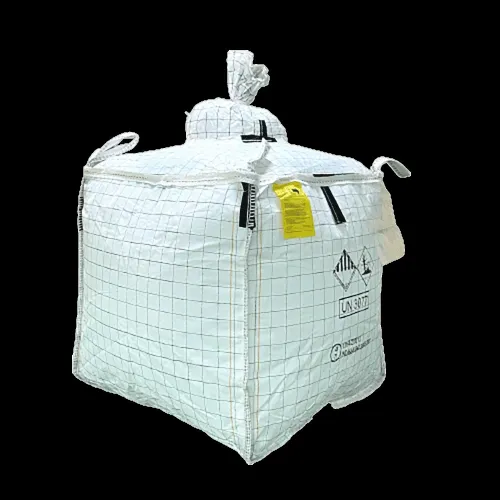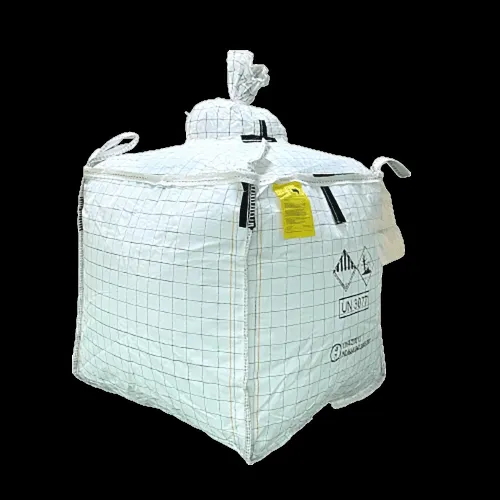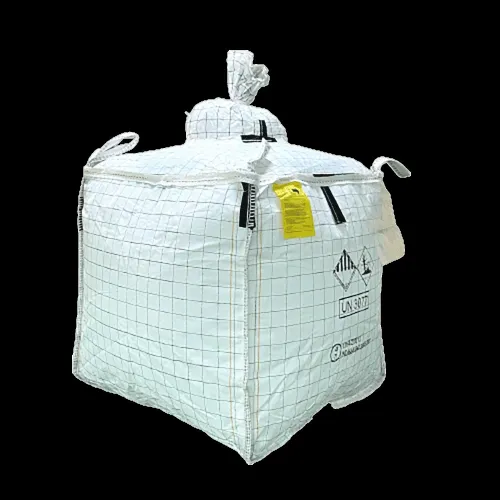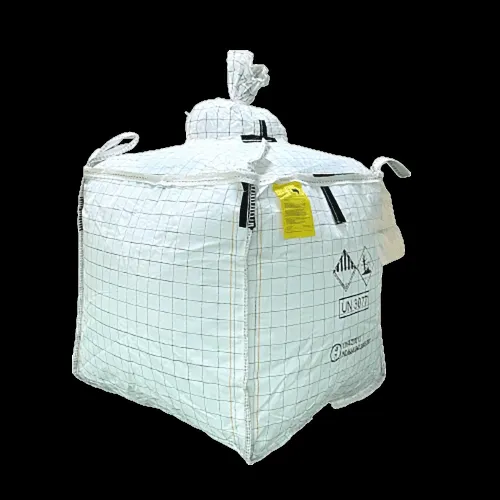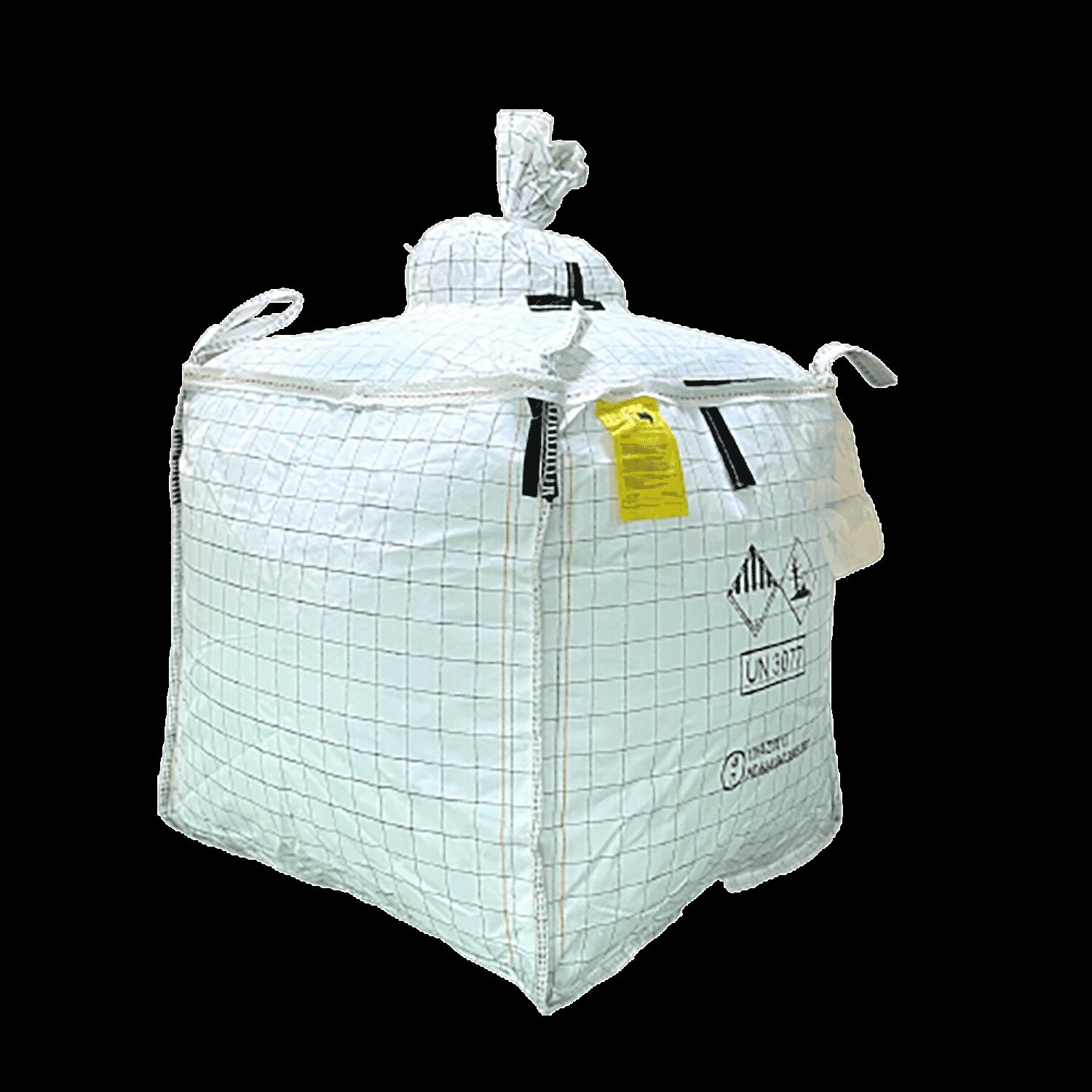
A heavy-duty FIBC is not defined by its appearance or by a large kilogram figure printed on the label. You need to match the bag’s tested load rating, construction, electrostatic controls, and handling method to the material and the risks at your site. By the end, you will have a practical specification for sourcing, inspecting, loading, storing, and retiring FIBCs in Ankleshwar.
Key takeaways
- Confirm SWL against material weight and the complete handling cycle.
- Match fabric, liner, discharge spout, and construction to the material.
- Use a controlled loading sequence and inspect every bag before reuse.
- Retire bags with damaged fabric, seams, loops, liners, or unclear history.
What makes an FIBC genuinely heavy-duty?
A heavy-duty FIBC is proven by its specification and test record, not by the label. Confirm the safe working load (SWL), often marked in kilograms, against the actual material and handling cycle.
A bag rated for 1,500 kg is not automatically safe for 1,500 kg of every powder: impact loading, uneven filling and bulk density change the forces on the fabric and seams.
| Specification | What to verify | Why it matters |
|---|---|---|
| SWL and safety factor | Rated load, test load, and 5:1 or 6:1 ratio | A 5:1 safety factor FIBC bags are commonly single-trip designs; reusable bags are commonly tested at 6:1 |
| Fabric | Denier, GSM, coating, and panel construction | Higher fabric mass alone does not prove strength; the woven grade must match the load and abrasion |
| Seams and lifting points | Stitch pattern, seam strength, loop configuration, and loop test results | Failed seams or stretched loops can drop a bag even when its body looks intact |
| Test method | Named design standard, lifting test, and required load cycles | Repeated handling requires cycle testing, not one successful lift |
Ask for dimensions, filling and discharge arrangements, and the intended number of trips. Specify whether the bag will be lifted, stacked or transported; stacking requires separate compression, stability and toppling evidence. Lift only through every designed loop or sleeve, never from the fabric body, and keep forklift tines away from the bag.
Match the FIBC to the material, not just its weight
A 1,500 kg rating does not make an FIBC suitable for every 1,500 kg load. Bulk density determines the filled volume and load distribution, while particle size and flowability affect pressure on seams, dust release, bridging, and discharge control.
Dense granules may need a stronger base; fine, free-flowing powder needs sift-proof seams and a controlled outlet.
Give the supplier these material facts before selecting the bag:
- Bulk density, required fill weight, and usable capacity
- Particle size, flowability, abrasiveness, and moisture sensitivity
- Product temperature at filling, storage, and discharge
- Chemical name, concentration, moisture content, and storage duration
- Whether the material forms combustible dust and what the site’s ignition-control assessment requires
Temperature can weaken polypropylene, liner film, thread, coating, or closure parts; hot material needs a confirmed temperature limit for every component. Chemical compatibility must cover the woven fabric, coating, thread, liner, spout, cord, and printing ink. Oxidisers, solvents, concentrated acids, and alkalis can attack a component that polypropylene alone appears to resist.
Static risk depends on the product and process, not its label. A polyethylene liner can improve moisture control while adding charge accumulation and compatibility concerns, so specify its resin, thickness, and antistatic or conductive construction with the outer fabric.
For combustible dust, match the bag to the site hazard assessment and explosion-protection design; ISO 21898 alone does not approve that application.
Choose the construction and follow a controlled loading sequence
Choose the bag around its handling points and product flow, not its advertised capacity. Specify SWL, 5:1 single-trip or 6:1 reusable safety factor, dimensions, test cycles, and whether the bag will be lifted, stacked, or transported.
Select coated fabric, sift-proof seams, and a sewn or welded liner for fine powders; use a duffle top or filling spout for controlled loading, and a closable discharge spout for dust-sensitive emptying.
| Option | Lifting arrangement | Best fit |
|---|---|---|
| 1-loop FIBC | One central loop | Dedicated lifting equipment and low-complexity handling |
| 2-loop FIBC | Two lifting loops | Equipment designed to engage both points |
| 4-loop FIBC | Four vertical loops | Forklift frames or hooks that support every loop |
| Cross-corner loops | Loops positioned at opposite corners | Forklift access where balanced four-point lifting is required |
- Inspect the body, seams, loops, spouts, and liner before filling; reject cuts, melted areas, contamination, or damaged lifting points.
- Place the empty FIBC on a stable pallet or approved filling frame, secure its loops, open the top fully, and connect dust extraction if the material requires it.
- Fill steadily to the specified mass or volume. Do not exceed SWL, overfill the bag, or create impact loading from a high drop.
- Close the top, secure the discharge spout, and lift only through every designed loop or sleeve. Keep forklift tines clear of the fabric; never drag the bag.
- Position the bag securely before opening the bottom spout, then empty gradually. Keep people away from beneath or beside a suspended, unstable, or collapsing bag.
Inspect, store, reuse, and retire FIBCs without guessing
Start with the records, not appearance. An FIBC inspection checklist should match the bag’s identification to its SWL, intended trips, applicable design and test standard, and test load.
A 5:1 safety factor is commonly specified for a single-trip FIBC; 6:1 is common for reusable FIBC bags, but neither ratio proves suitability without required load cycles and the intended handling duty.
Remove the bag from service after any of these findings:
- A cut, hole, or abrasion exposing the weave
- A stretched, torn, or damaged lifting loop
- A failed seam, distorted spout, or damaged closure
- Chemical attack, brittle fabric, melting, or UV degradation
- Contamination that changes electrostatic behaviour
- An impact, overload, or handling event beyond the design conditions
Apply FIBC storage requirements before accepting a bag into inventory. Keep empty bags dry, clean, shaded, protected from rodents, and away from sharp edges and heat. Polypropylene fabric can lose strength in sunlight; a waterproof cover does not block all UV, so follow the stated maximum outdoor exposure period and UV-stabilisation requirement.
Specify stack height, floor or pallet condition, storage duration, eccentricity, and compression or toppling tests separately from lifting tests.
Reuse only bags with traceable inspection records and an approved trip count. Visual inspection cannot restore a lost safety factor. Retire any bag with a listed defect, an unknown history, or contamination that prevents safe product or electrostatic control.
Turn the specification into a reliable Ankleshwar purchase
Give the supplier a completed FIBC specification checklist, not a request for a “heavy-duty bag.” The quote must describe your material, equipment, handling cycle, and site controls in measurable terms.
- Material: product name, bulk density in kg/m³, particle size, flowability, abrasiveness, moisture sensitivity, operating temperature, chemical compatibility, required net mass, and target volume.
- Bag design: dimensions, SWL, fabric construction, liner resin and thickness, liner attachment, top and bottom style, loop configuration, and whether the bag is for lifting, stacking, transport, or all three.
- Handling equipment: forklift tine length and spacing, crane or frame use, pallet requirement, every lifting point to be engaged, and a prohibition on dragging or fork contact with fabric.
- Service cycle: single trip or reusable, expected number of trips, loading and discharge frequency, drop or impact exposure, storage duration, and UV exposure.
- Site controls: dust-hazard assessment, ignition-control procedure, grounding and bonding method, ventilation or explosion-protection design, and the required electrostatic class.
Ask for the test load, safety factor, test method, marking, and reusable-cycle evidence. ISO 21898 FIBC covers non-dangerous goods, not every hazardous, combustible-dust, or aggressive-chemical application.
For an FIBC manufacturer Gujarat comparison, give Deccan Cans & Printers Pvt. Ltd. this same brief so its 1- or 2-loop proposal is judged against your actual lifting cycle, not capacity alone.
Related products
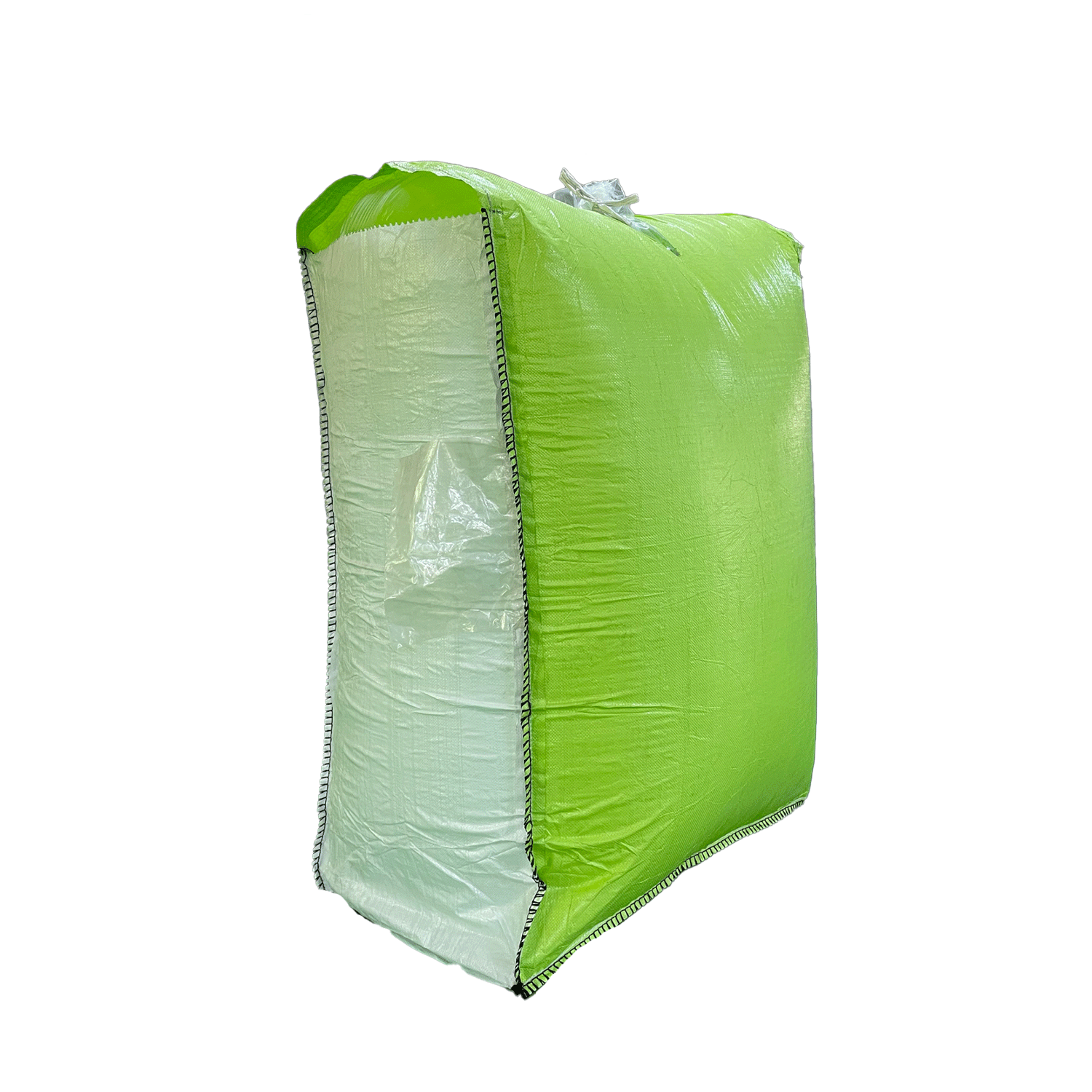 | FIBC Section Fertilizer Bag Range 1 & 2 Loop FIBC Bulk Bags Deccan Cans & Printers Pvt. Ltd. offers durable and cost-effective 1 & 2 Loop FIBC Bulk Bags, designed for the efficient... |
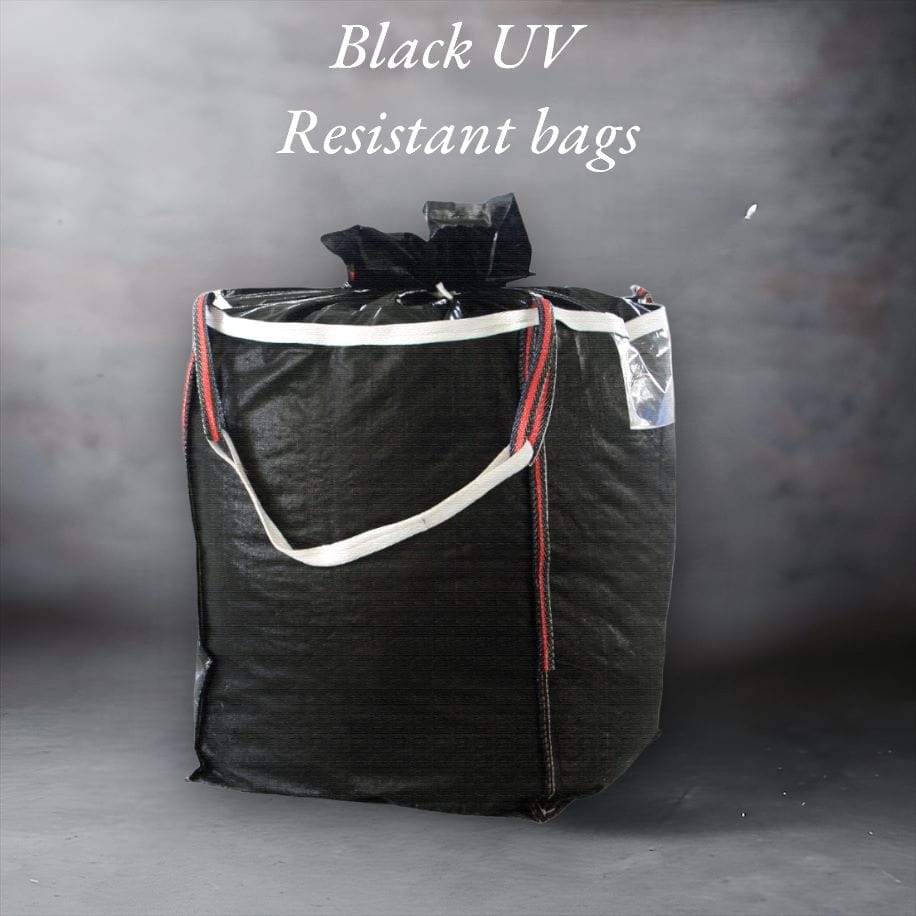 | FIBC Section Black Bags Black FIBC Bags – Enhanced UV Resistance & Extended Shelf Life UV exposure is one of the major challenges faced by the FIBC industry, as prolonged... |
Frequently asked questions
What makes an FIBC genuinely heavy-duty?
Check the safe working load, test record, fabric and seam construction, lifting loops, and handling cycle rather than relying on the label.
How do you match an FIBC to the material?
Specify the material’s weight, particle size, flow, moisture, temperature, chemical compatibility, dust risk, and discharge requirements before choosing the bag.
What is a controlled FIBC loading sequence?
Place the bag on suitable equipment, secure and open it correctly, fill without exceeding the SWL, settle the material, close the top, and lift only through the designed loops.
When should an FIBC be inspected or retired?
Inspect fabric, seams, loops, liner, closures, contamination, and labels before use; retire the bag after critical damage, contamination, deformation, or an unknown handling history.
Related products
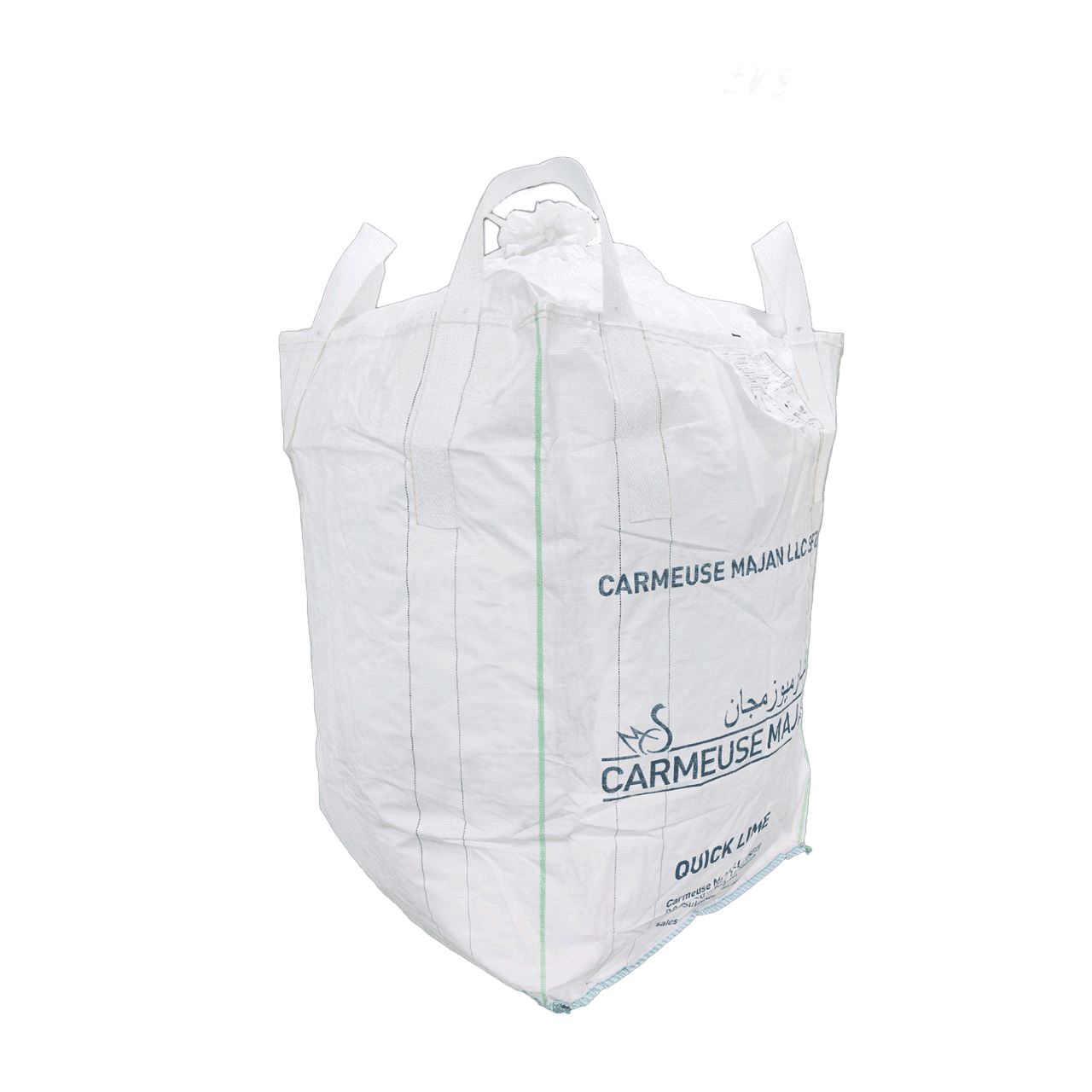 | FIBC Section Bags With Liners FIBC Liners – Bulk Bag Liners Deccan Cans & Printers Pvt. Ltd. |
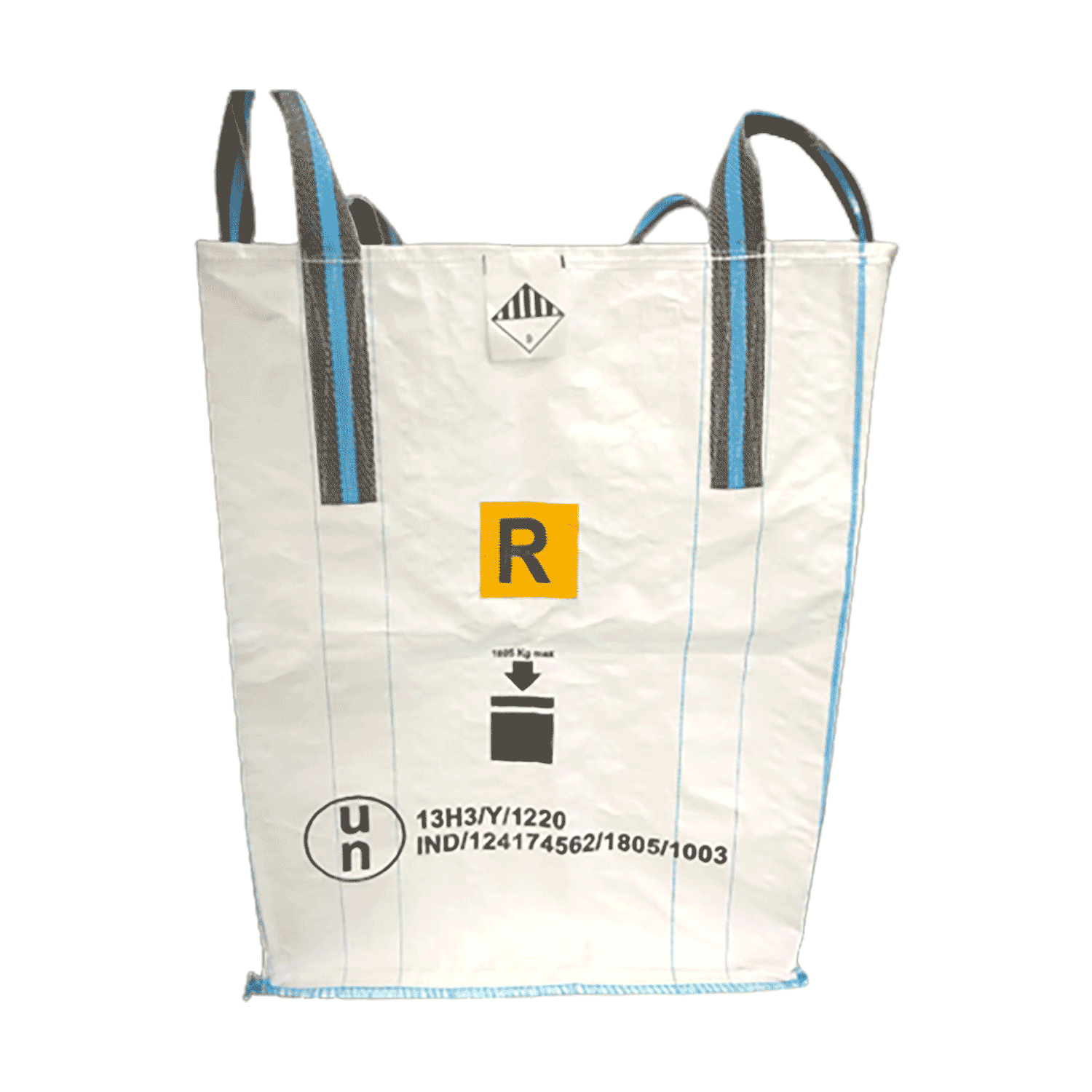 | FIBC Section Un Bags UN Certified Bulk Bags – Rigorous Performance Testing for Safety & Reliability Deccan UN Certified Bulk Bags are specially engineered for the safe... |
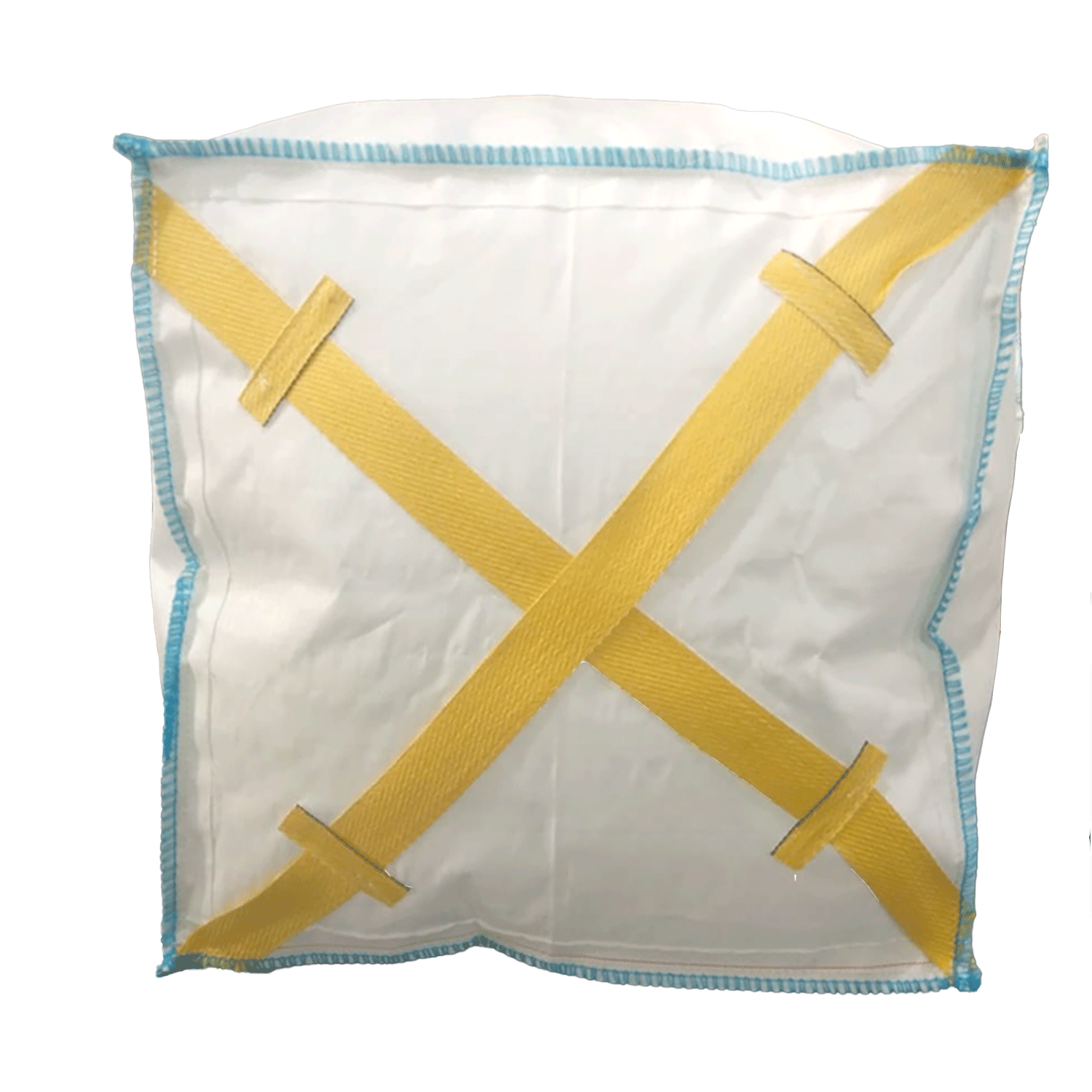 | FIBC Section Cross Bottom Sling Bags Cross Bottom Sling FIBCs – Bulk Bags Deccan Cans & Printers Pvt. Ltd. |
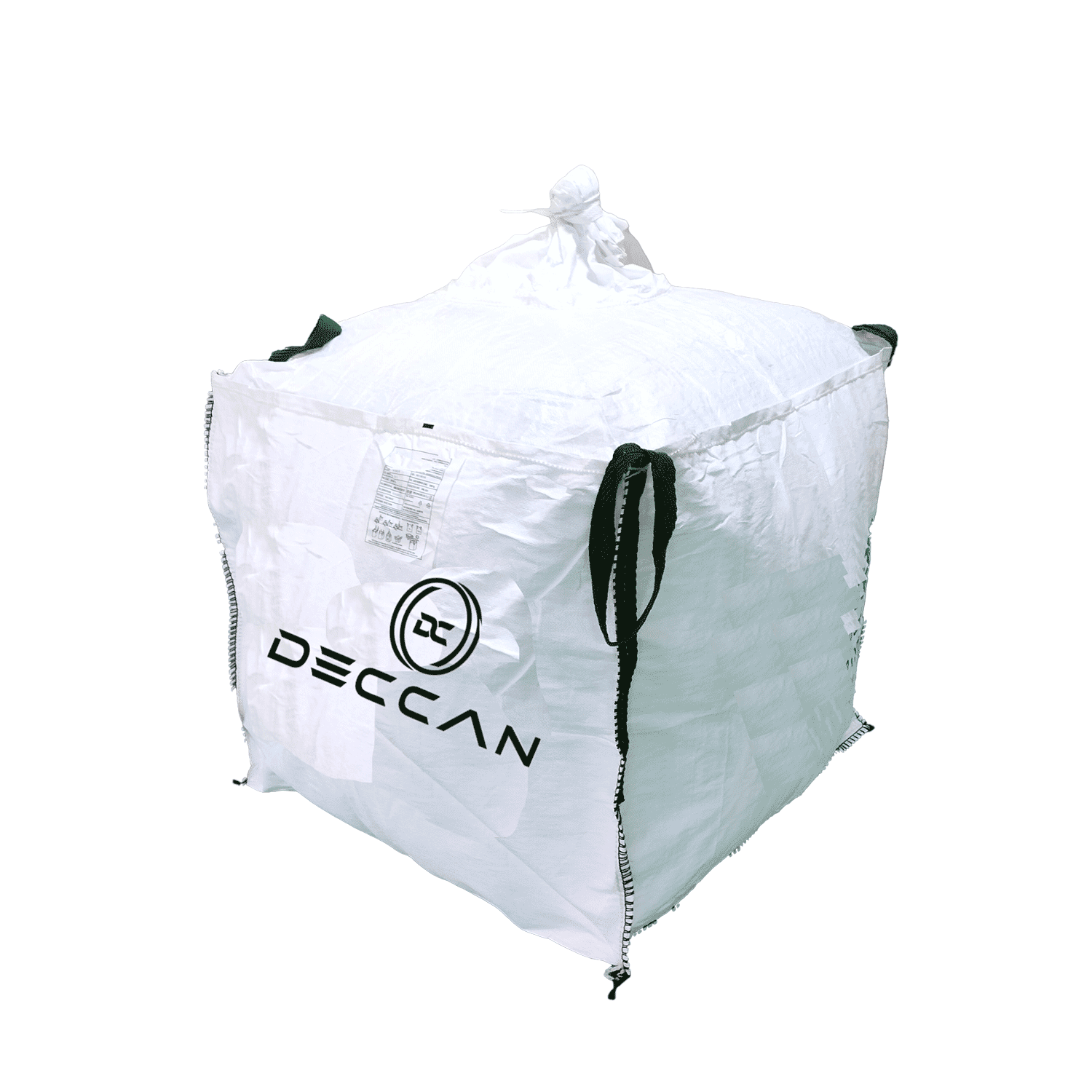 | FIBC Section Polyester Loop Bags/Multifilament Loops Polyester / Multifilament Loop FIBC Bags Deccan Cans & Printers Pvt. Ltd. |