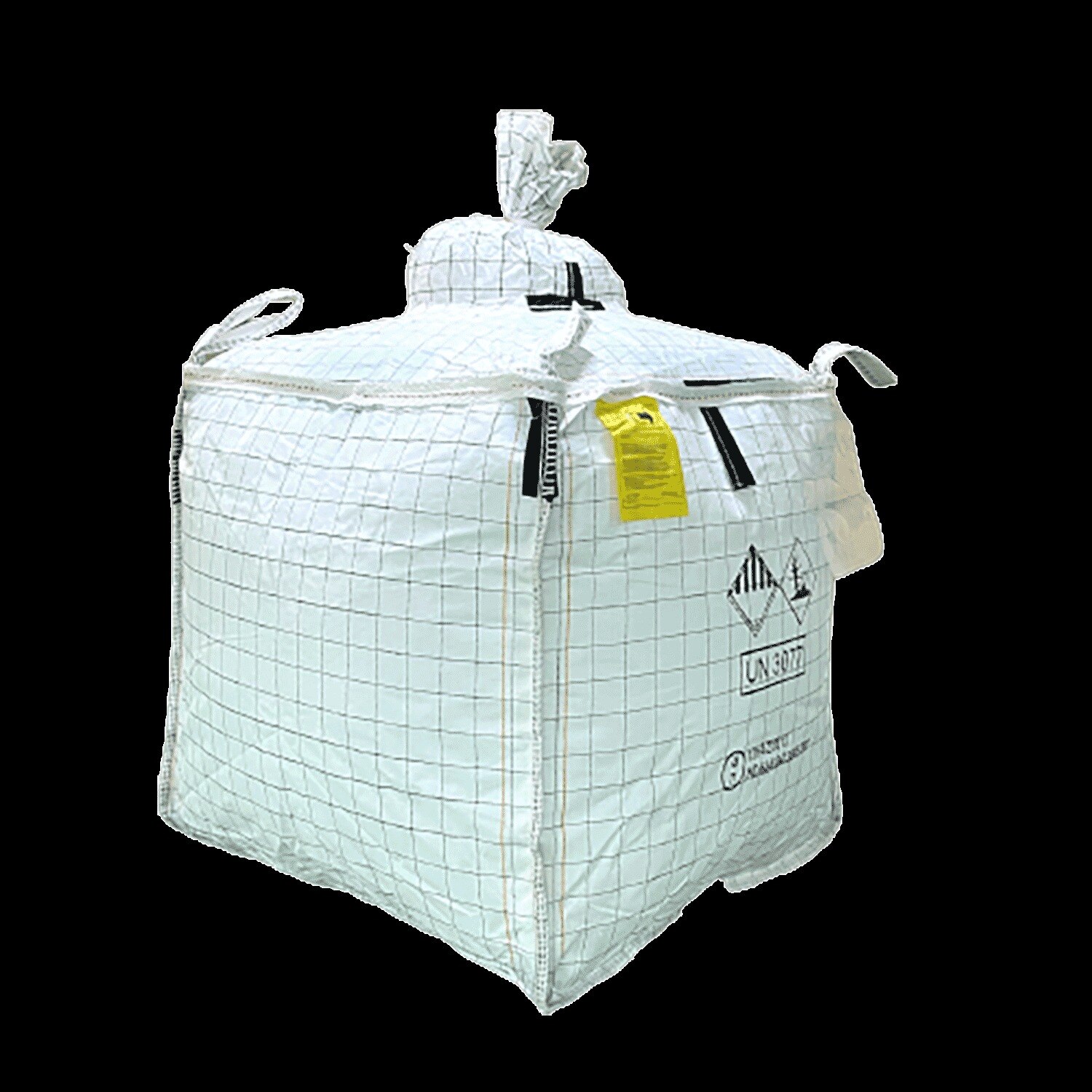
Choosing an FIBC manufacturer requires more than comparing a quoted kilogram capacity or a catalogue photograph. You need to match the bag’s lifting construction, filling and discharge system, material compatibility, safety controls, documentation, and production quality to your process. By the end, you will have a practical shortlist and a specification you can send to Bengaluru manufacturers for comparable quotations.
Key takeaways
- Specify lifting loops, SWL, safety factor, volume, and number of trips.
- Match fabric, liner, filling, and discharge design to the material.
- Request static-control details and UN dangerous-goods test documents.
- Inspect manufacturer samples, test certificates, and written specifications before ordering.
Start with the lifting method, SWL, and safety factor
Choose the lifting method before comparing FIBC quotations: forklift tines, a crane hook, or a dedicated sling determines whether a 1-loop FIBC, 2-loop FIBC, or four-loop construction fits your equipment. Confirm the safe working load (SWL), bag volume, dimensions, and intended number of trips; “1,000 kg capacity” alone is incomplete.
| Construction | Best fit | Quotation details to compare |
|---|---|---|
| 1-loop FIBC | One-hook or automated handling | Loop rating, length, SWL, and test basis |
| 2-loop FIBC | Two-hook lifting with accessible handling | Loop spacing, sling angle, SWL, and reinforcement |
| 4-loop FIBC | Forklift or four-point crane handling | Loop arrangement, fork access, SWL, and stability test |
Treat 5:1 and 6:1 as design factors, not extra payload. They describe the relationship between ultimate test failure load and declared SWL; they do not replace checks for filling, discharge, handling, stacking, or reuse. A reusable bag needs a stated trip count and inspection criteria.
Request quotations that state:
- SWL and safety factor, with the test standard and sample condition
- Filling method, discharge design, fabric GSM, seams, and lifting-point arrangement
- Bag dimensions, liner details, quantity, and price basis
- Test reports matching industrial bulk packaging and the actual handling cycle
Choose the lowest quote only after every line matches. For FIBC bag manufacturers in Bengaluru, ask whether the construction is standard or custom; redesigning after order placement costs more than a higher initial price.
Match the bag to your material, filling method, and discharge equipment
A “1,000 kg bag” is not a complete specification. Match the body fabric and coating to the material, then match the lifting points and discharge outlet to your equipment.
| Handling requirement | Suitable configuration | Why it fits |
|---|---|---|
| Powder or fine mineral | Coated body, sift-resistant seams, filling spout, closable bottom spout | Limits dust escape and product leakage |
| Granule, pellet, or fertilizer | Uncoated or coated woven body, filling spout, wide discharge spout | Promotes steady flow without trapping large particles |
| Forklift handling | 4-loop FIBC with loops accessible to the forks | Keeps lifting points aligned and reduces loop damage |
| Crane or frame lifting | Cross-corner-loop FIBC or cross-bottom sling FIBC | Suits hook, frame, or sling attachments rather than fork entry |
| Moisture-sensitive powder | FIBC liner selection with a specified polyethylene film, thickness, weld, and fit | Adds moisture and containment protection |
| Repeated handling | Reinforced body and tested seams, with the intended trip count stated | Reduces failure from lifting and repositioning |
Choose a top inlet that matches your filling machine: an open top suits manual loading, while a filling spout controls dust and attaches to enclosed equipment. Specify the loop length and seam type; a loop that cannot clear the forklift carriage is unusable.
Select the bottom spout from the receiving hopper or valve dimensions, not the bag’s nominal size. A larger outlet empties faster and leaves less residue; a smaller outlet or tie-and-flap closure gives better control for dusty powders. A liner does not make the bag liquid-tight or suitable for solvents without separate evidence.
Control static electricity and verify dangerous-goods approval
Choose the electrostatic class from the ignition risk and grounding conditions, not from a catalogue label alone.
| Type | What it means | When it applies |
|---|---|---|
| Type A FIBC | Ordinary insulating fabric with no static-control performance | Nonflammable products where no combustible dust, vapour, or gas ignition risk exists |
| Type B FIBC | Insulating fabric with low breakdown voltage, below 6 kV | Combustible dust service where flammable gases or vapours are absent; it does not dissipate charge safely |
| Type C conductive FIBC | Conductive yarns or panels requiring a continuous ground path | Combustible dust or solvent-risk service when you can ground and verify the bag during filling and emptying |
| Type D antistatic FIBC | Dissipative fabric system designed to control charge without a grounding lead | When grounding cannot be assured, provided the fabric system, product, humidity, and operating conditions match its tested scope |
A Type C conductive FIBC is not made safe by clipping a cord to an unverified bag. Specify resistance limits, the grounding procedure, and the inspection method. Do not substitute a Type A FIBC or ordinary polypropylene bag for a Type D antistatic FIBC in combustible-dust service.
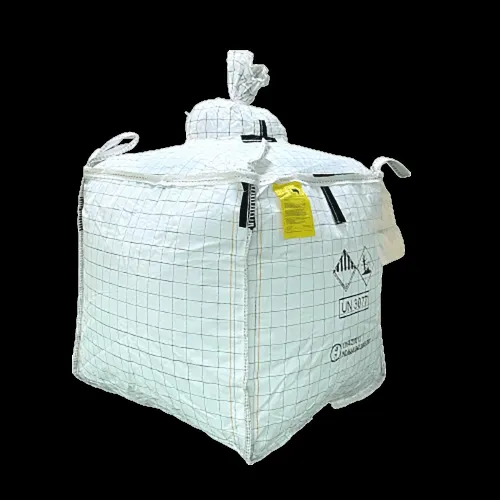
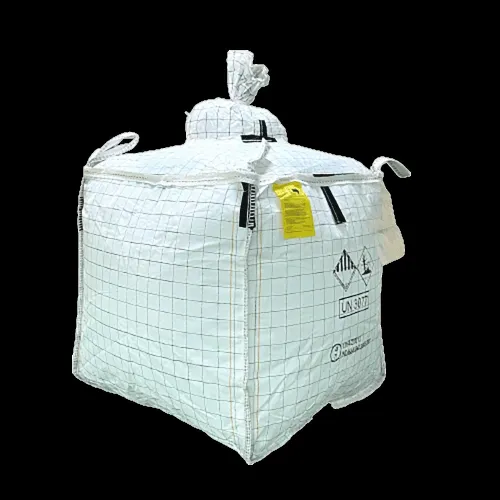
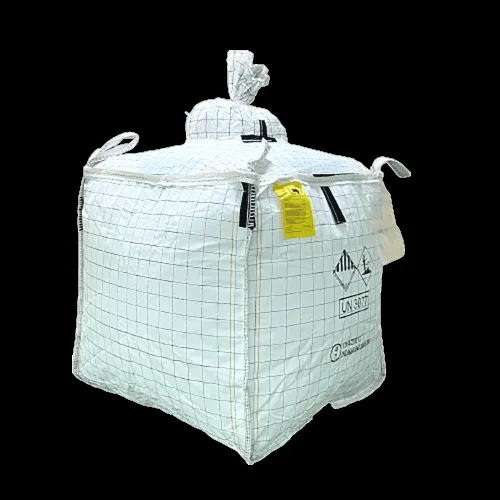
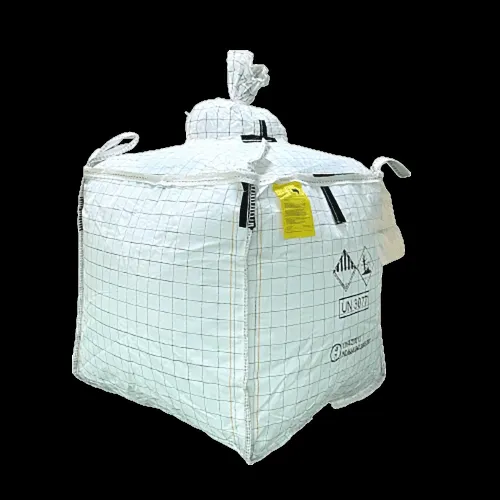
For dangerous goods, verify all of these before purchase:
- The UN packaging mark, such as the correct 13H code, performance level, maximum gross mass, and certificate or approval reference.
- The tested packing group and actual product, including chemical compatibility.
- The bag construction, seams, closures, and liner configuration covered by the approval.
- Performance-test evidence matching the production specification.
ISO 21898 covers non-dangerous goods; its declaration does not replace UN approval.
Qualify a Bengaluru manufacturer before placing an order
A sample proves that one bag exists; it does not prove that every production lot will match it. Before approving FIBC manufacturers Bengaluru, ask for a factory visit or an independent FIBC factory audit covering equipment, records, testing, and traceability.
1. Confirm the plant’s FIBC production capacity against your order size, delivery schedule, and minimum quantity. Inspect the looms, coating or lamination line, cutting equipment, sewing stations, and packing area. Ask whether standard bags and custom FIBC bags run on the same controlled process.
2. Trace materials from receipt to finished bag. Check polypropylene resin or tape records, fabric GSM checks, liner and coating specifications, lot coding, and the process used to quarantine rejected material. A supplier that cannot identify the fabric lot inside a finished bag has weak batch control.
3. Review test records from recent lots, not only a catalogue or sales sample. Require dimensional inspection, seam-strength results, SWL or top-lift testing, and the acceptance limits used. Confirm that the stated 5:1 or 6:1 design factor is tied to the declared SWL; “1,000 kg capacity” alone is incomplete.
4. Examine nonconformance reports, corrective actions, complaint trends, and retained samples. Ask how the factory controls loop placement, filling and discharge openings, liner fit, stitching, and final release. For static-sensitive service, verify the specified fabric system and handling controls rather than accepting an ordinary polypropylene substitute.
Deccan Cans & Printers Pvt. Ltd. belongs on your comparison list only after it answers these same questions with plant records and production evidence. Your approval should name the tested specification, batch traceability method, and release documents.
Related products
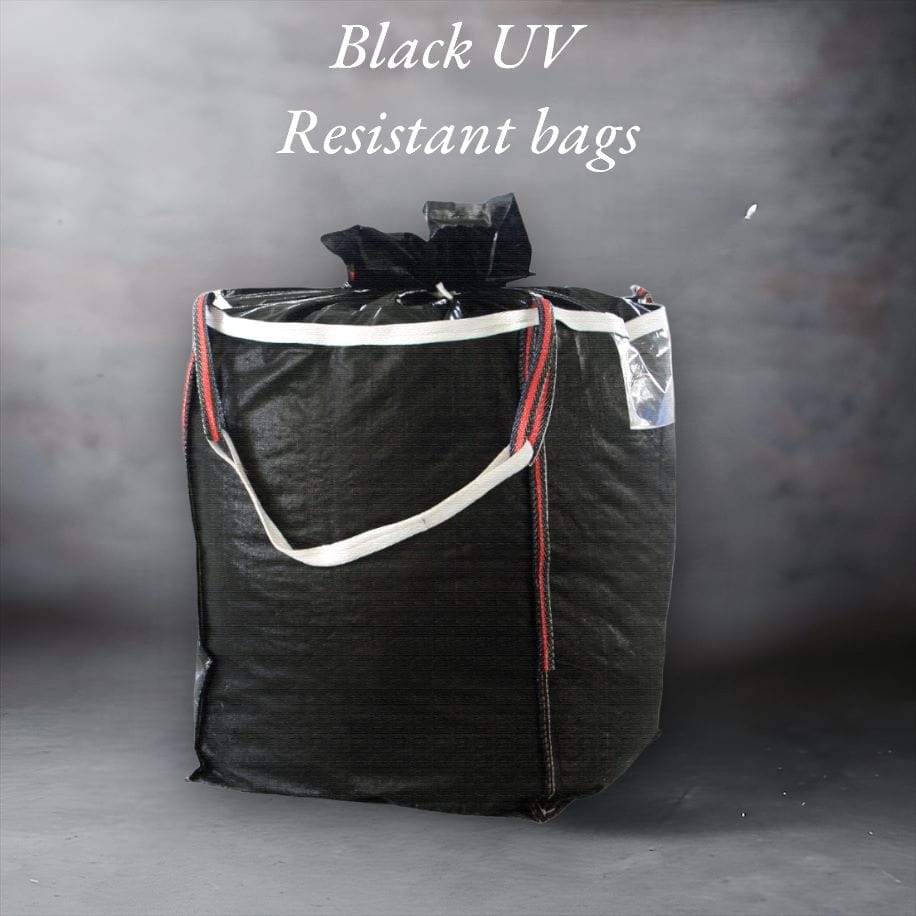 | FIBC Section Black Bags Black FIBC Bags – Enhanced UV Resistance & Extended Shelf Life UV exposure is one of the major challenges faced by the FIBC industry, as prolonged... |
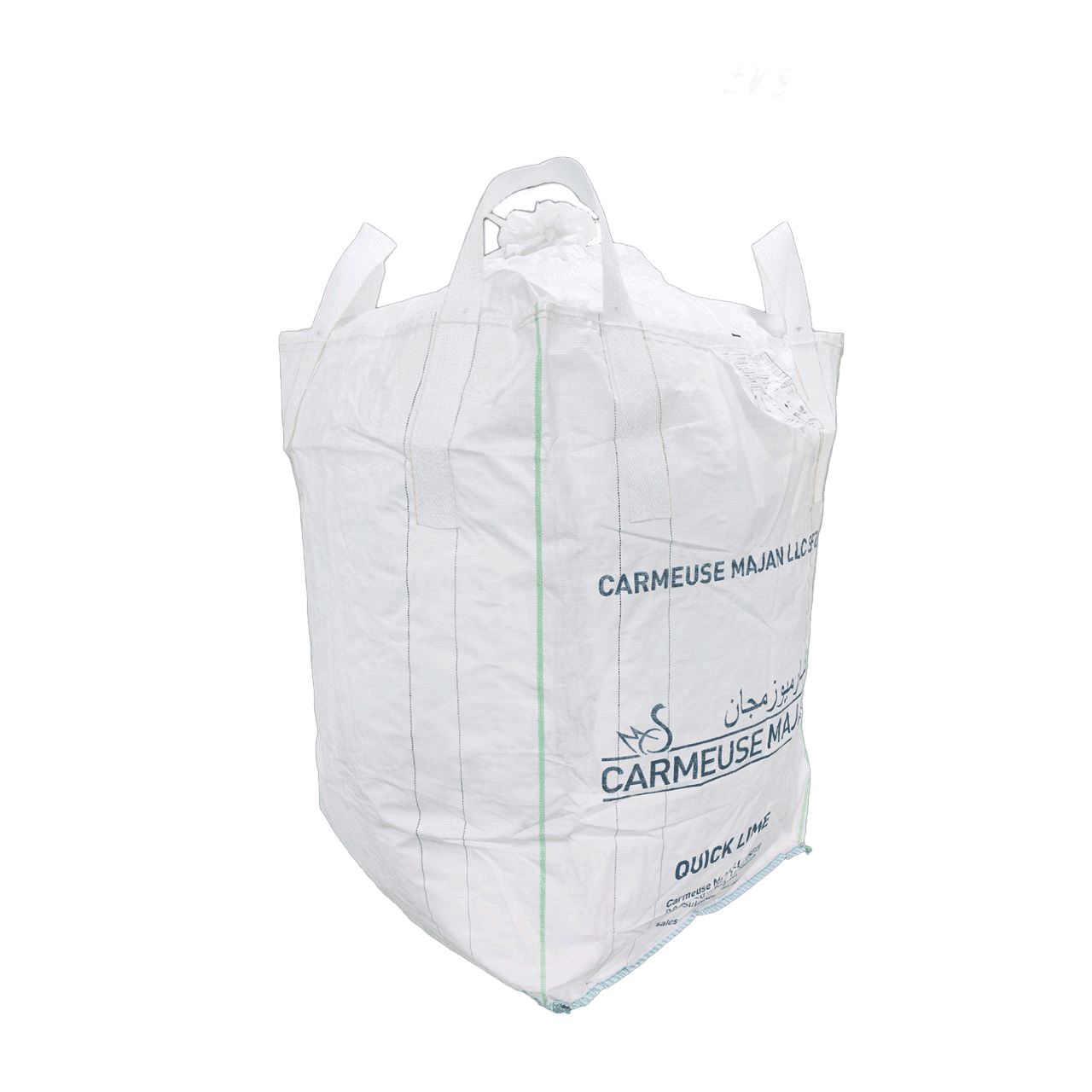 | FIBC Section Bags With Liners FIBC Liners – Bulk Bag Liners Deccan Cans & Printers Pvt. Ltd. |
Write a purchase specification that survives storage, transport, and inspection
Do not accept an FIBC production lot on a catalogue sample or a quoted “1,000 kg capacity.” Require a signed FIBC specification checklist stating SWL, design factor, dimensions, fabric GSM, loop arrangement, filling and discharge design, liner, intended trips, and approved drawing revision.
1. Request the raw-material certificate, fabric and coating or lamination records, seam-construction specification, and a certificate of conformity. Require batch traceability from polypropylene resin and fabric rolls to finished bags, including production date and lot number.
2. Require the SWL test report and test method, plus seam-strength, top-lift, dimensional, fabric-GSM, and visual-inspection results for the lot. For Type C bags, record resistance readings and the grounding-path inspection; for dangerous goods, verify the UN mark, packing group, tested contents, and liner configuration.
3. Approve a pre-production sample against the signed drawing, then inspect production samples from the actual lot. Check loop length, seams, spouts, liner fit, labels, stitching, and closures; retain an identified sample with photographs and inspection records.
4. Define acceptance limits, sampling quantity, nonconformance action, and release authority in the purchase order. Reject bags with mixed components, missing labels, damaged seams, unexplained dimensional variation, or broken batch traceability.
Keep released bags dry, covered, off the floor, away from sunlight, heat, sharp edges, chemicals, and rodents. Specify the supplier’s permitted UV exposure and FIBC storage period; do not accept an indefinite outdoor-use promise.
Frequently asked questions
How do I choose the correct FIBC lifting construction?
Choose from 1-loop, 2-loop, or four-loop construction according to your forklift tines, crane hook, or dedicated sling. Confirm the safe working load, safety factor, bag dimensions, volume, and required number of trips.
What should I check when matching an FIBC to my material?
Check the material’s bulk density, particle size, moisture content, temperature, flow behaviour, and chemical compatibility. Match those properties to the bag fabric, liner, filling method, discharge spout, and closure.
How can I control static electricity in an FIBC?
Specify the required electrostatic classification, grounding method, conductive or dissipative fabric, liner construction, and filling and discharge procedures. Ask for test evidence that matches the intended handling environment.
What should I verify before buying from an FIBC manufacturer in Bengaluru?
Review physical samples, SWL and safety-factor markings, test certificates, production controls, dangerous-goods approval when required, traceability records, and a purchase specification covering storage, transport, inspection, and intended trips.
Related products
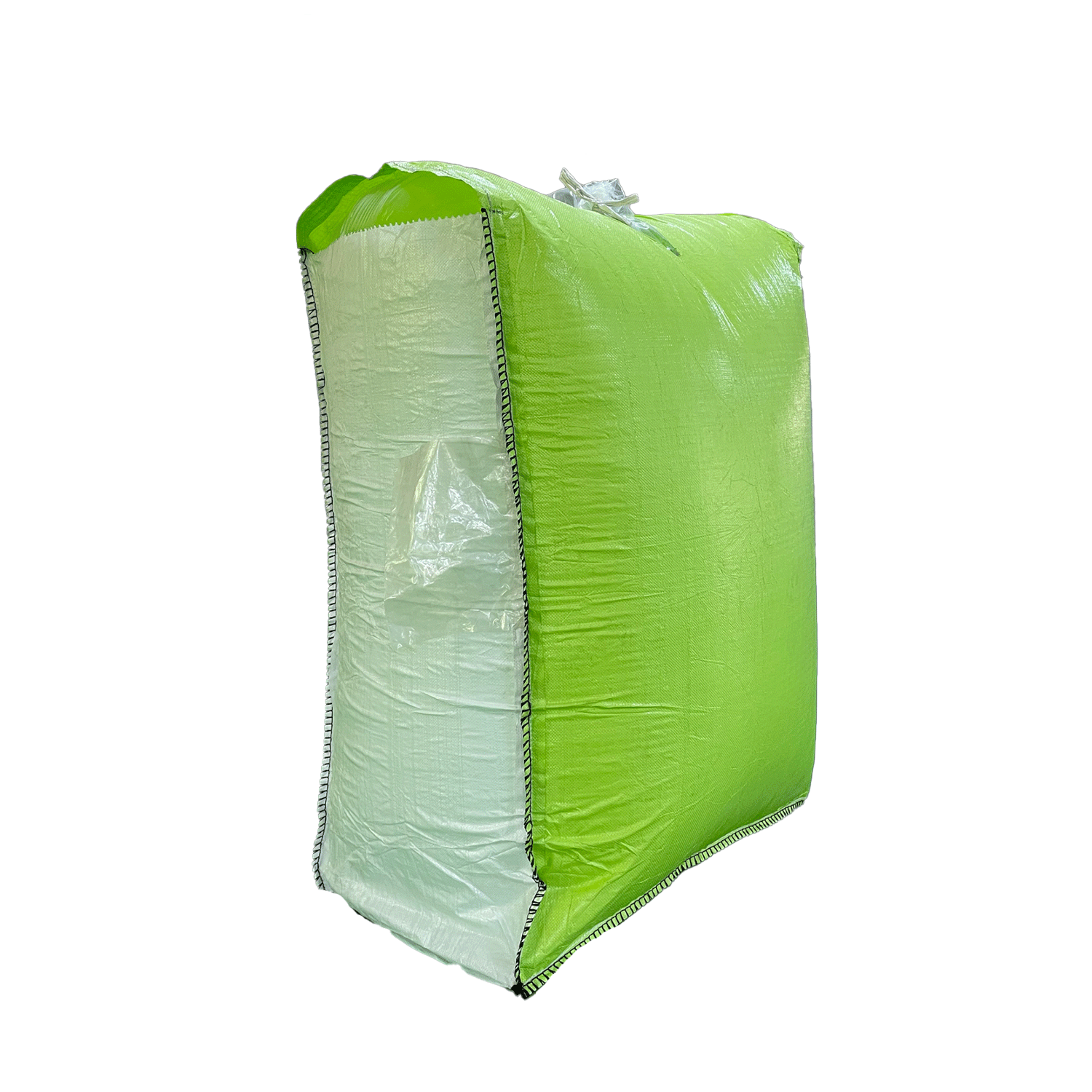 | FIBC Section Fertilizer Bag Range 1 & 2 Loop FIBC Bulk Bags Deccan Cans & Printers Pvt. Ltd. offers durable and cost-effective 1 & 2 Loop FIBC Bulk Bags, designed for the efficient... |
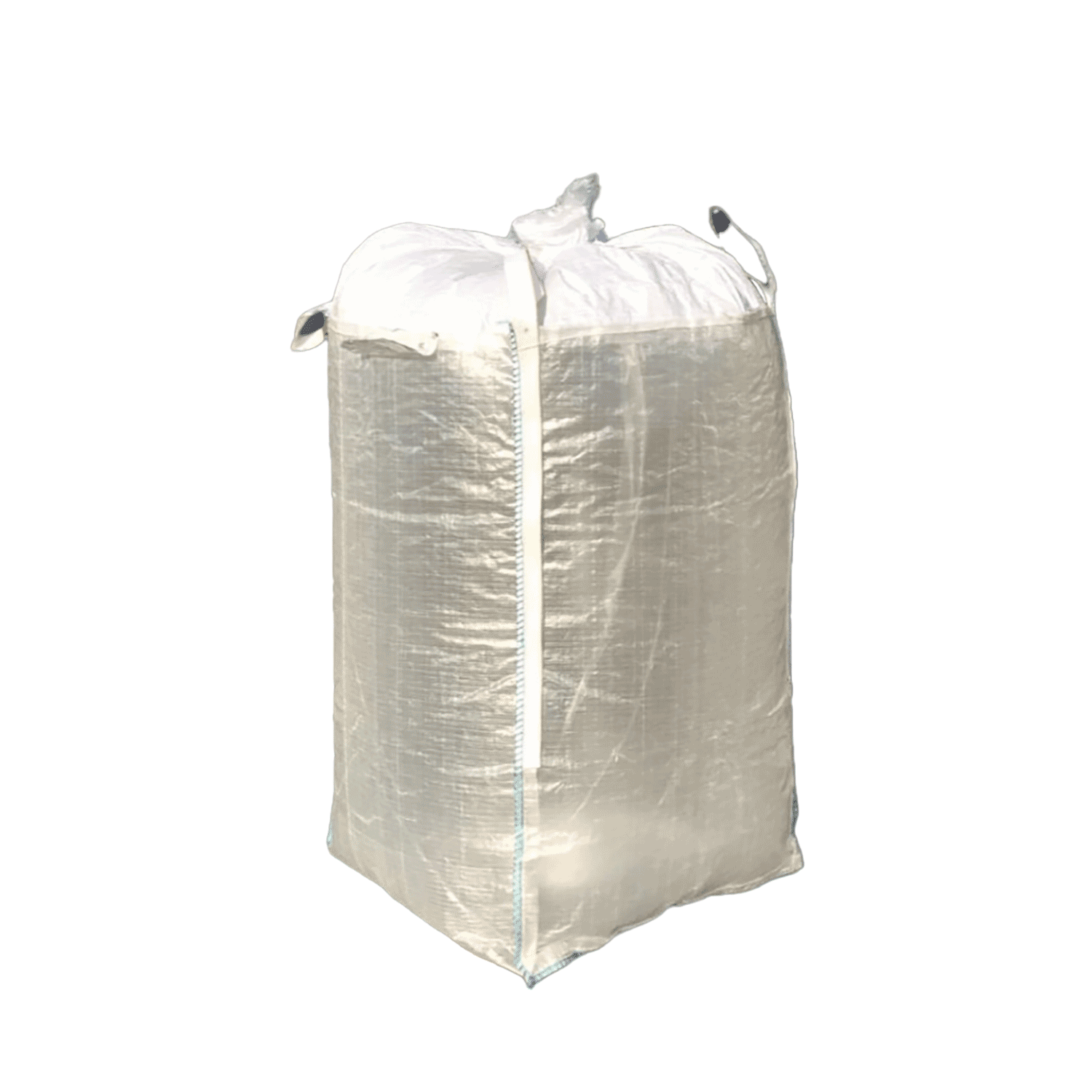 | FIBC Section Transparent Bags Transparent FIBCs – See-Through Bulk Bags Deccan Cans & Printers Pvt. Ltd. |
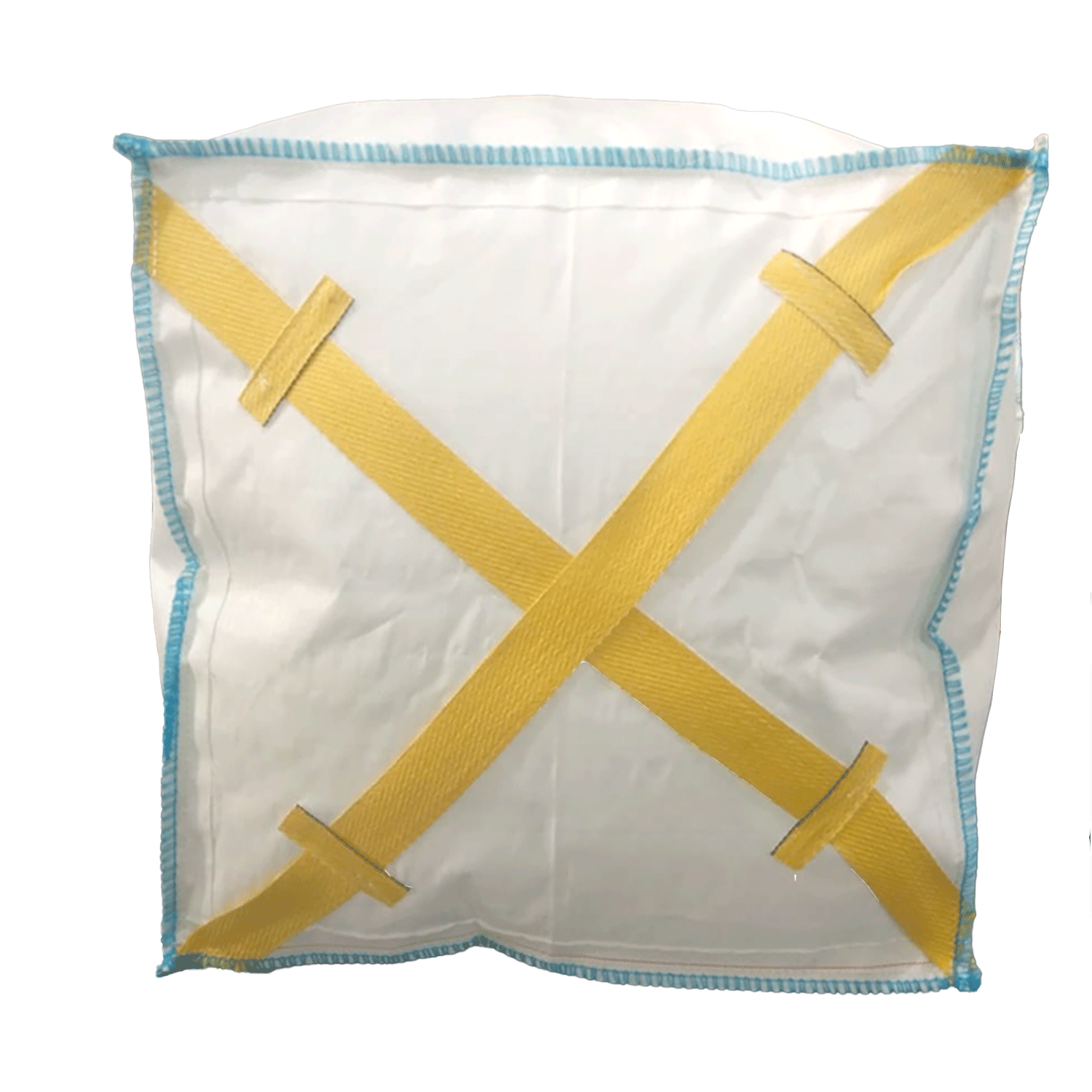 | FIBC Section Cross Bottom Sling Bags Cross Bottom Sling FIBCs – Bulk Bags Deccan Cans & Printers Pvt. Ltd. |
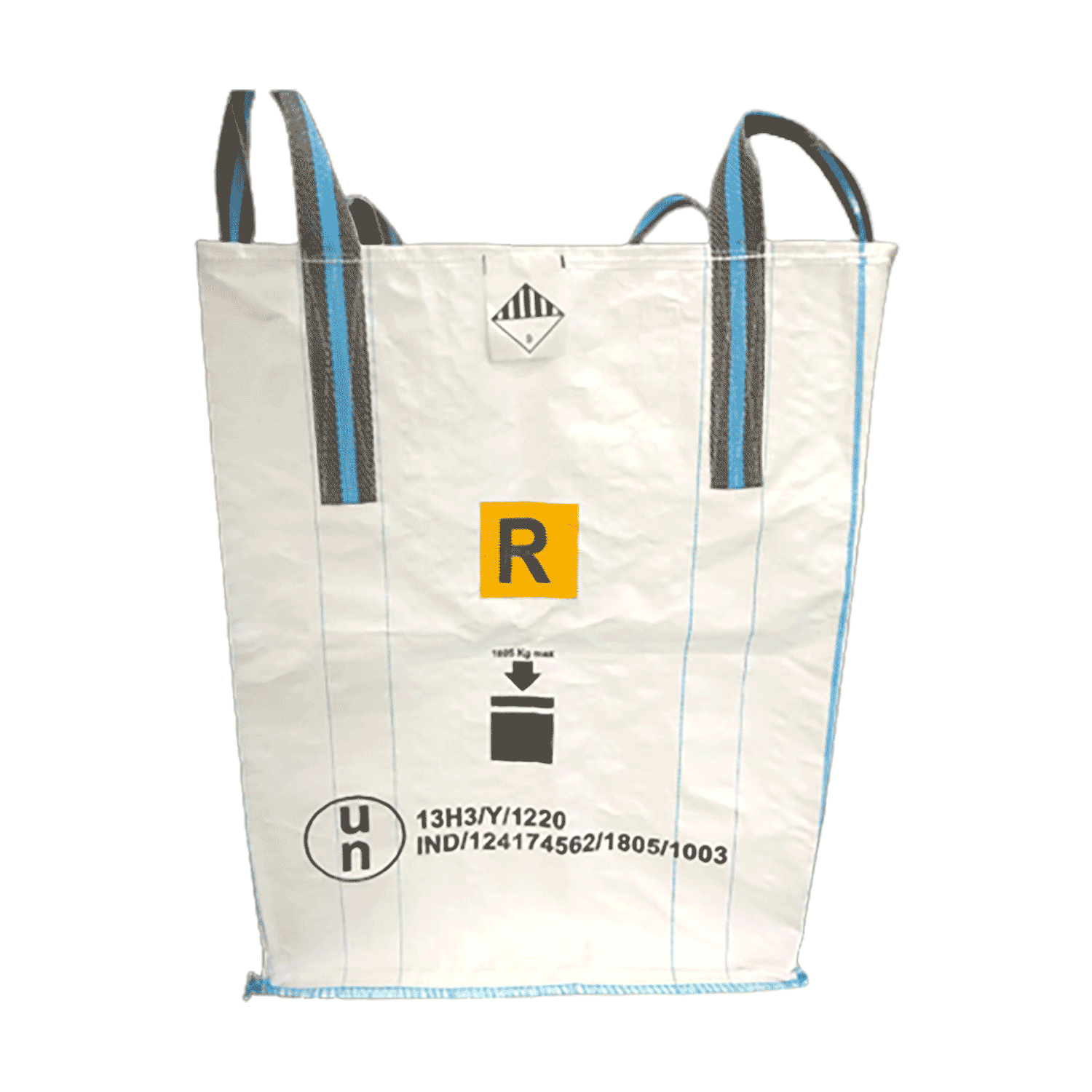 | FIBC Section Un Bags UN Certified Bulk Bags – Rigorous Performance Testing for Safety & Reliability Deccan UN Certified Bulk Bags are specially engineered for the safe... |