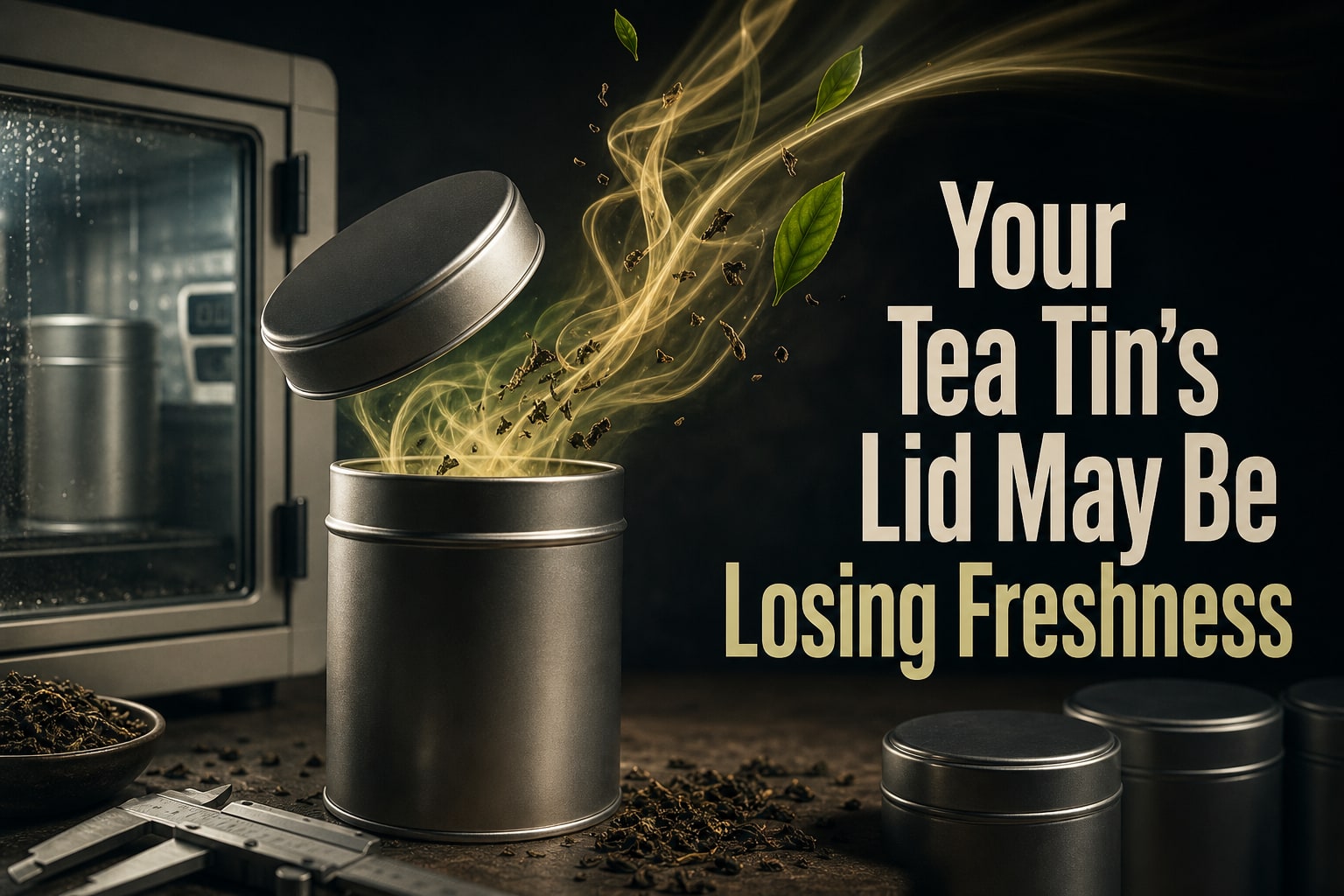
Bengaluru’s humidity can turn a well-designed tea pack into a weak freshness barrier when the lid, liner, coating or filling process is overlooked. You will learn how to compare tin formats, estimate the real tea weight a 275 ml pack can hold, and specify tests that reveal whether a container protects the blend after repeated opening.
Key takeaways
- Choose opaque tinplate containers with a tight, repeatable lid seal.
- Ask for the food-contact declaration and migration-test documentation.
- Match container volume to tea type, leaf size and expected turnover.
- Test filled tins for odour transfer, leakage and lid fit before ordering.
Why Bengaluru humidity exposes weak tea packaging
A continuous metal body gives tin containers an opaque, near-total barrier against light, oxygen and moisture. It also blocks outside odours and limits the escape of volatile aroma compounds, keeping tea fresher than an exposed pouch or open tin cans. The flat panel is rarely the first failure point.
During Bengaluru’s monsoon, inspect the closure for:
- A poorly fitting lid that admits humid air
- A damaged seam or joint that creates a leak path
- Scratches through the protective coating
- Pinholes in the metal or liner
- A crushed gasket or uneven sealing surface
The lid, liner and seal do not match the metal body’s barrier performance. Their moisture-vapour and oxygen resistance depends on material, fit and continuity, so ask for closure or leak-test evidence rather than assuming the container is airtight.
Every opening exchanges the dry headspace for Bengaluru’s humid air. After repeated openings, tea absorbs moisture, loses crispness and releases aroma faster; mould or other deterioration becomes more likely if the seal remains weak. A larger tea coffee tin range can therefore protect tea less effectively than smaller packs consumed quickly.
Use smaller tin containers, or add a resealable inner barrier beneath the decorative lid, when a pack will remain open for weeks.
Tinplate, tin cans and the food-contact specification you need
Tinplate containers are low-carbon steel sheets coated with a thin layer of tin, not containers made from solid tin. Steel provides rigidity and formability; tin improves corrosion resistance and protects the tea from direct contact with steel.
| Material | Main advantage | Limitation for tea |
|---|---|---|
| Tinplate | Strong, printable and suitable for formed cans | Scratches, pinholes and failed internal coatings expose metal |
| Aluminium | Lightweight and highly formable | Dents easily and still needs suitable internal coating |
| Stainless steel | Excellent corrosion resistance | Heavier and usually more expensive |
| Solid tin | Not the usual material for tea containers | Offers no practical advantage over tin-coated steel |
A food grade tin cans claim must cover every food-contact component: internal lacquer, gasket, adhesive and closure materials. The supplier must assess them for dry-food contact, the planned storage duration and the intended temperature range. “Food grade” describes compliance; it does not prove that every coating or closure suits tea.
Request these records before approval:
- Food-contact declaration and tinplate coating specification
- Migration documentation for the complete contact system
- Lacquer cure and adhesion evidence
- Written confirmation that decorative ink remains on the outside
Check incoming samples for coating continuity, exposed metal, ink transfer, foreign odour and metallic taint. A visually attractive tin fails if its inner lacquer is damaged or its print has transferred onto the tea.
How the lid determines whether a tea tin stays fresh
Choose the closure for humidity control, not appearance. A slip-fit lid exchanges humid air each time it is opened and must not be called hermetically sealed without leak-test evidence. A gasket or heat-sealed membrane creates a more dependable barrier, reducing moisture ingress, oxygen entry and loss of volatile tea aromas.
| Option | Closure design | Freshness implication |
|---|---|---|
| Slip-fit lid | Basic friction-fit metal lid | Convenient, but seal performance varies with fit, dents and repeated opening |
| Rolled-edge lid | Rolled edge compresses a gasket | Better resistance to humidity and air exchange when gasket compression remains continuous |
| Decorative outer lid | Outer lid covers an inner heat-sealed membrane | The membrane provides the primary seal; the outer lid protects it from damage |
Nitrogen flushing only lowers headspace oxygen; it cannot repair a leaking closure or moisture-permeable liner. Require the pack record residual oxygen after filling and state an allowable leak rate. “Nitrogen flushed” alone proves little.
Ask the supplier to verify:
- Lid fit across production samples, including opening and reclosing force
- Seal continuity and liner integrity
- Closure testing or a documented leak test with its method and acceptance limit
- Odour neutrality after filling, since lacquer, adhesive, gasket rubber or ink can taint tea
These checks apply to decorative food grade tin cans as well as plain tin cans: appearance does not establish barrier performance.
Match the 275 ml container to the tea, not just the label
A 275 ml tin does not hold a fixed weight of tea. Whole loose leaves occupy space differently from tightly rolled leaves; broken-leaf tea settles more densely, while tea bags, powdered tea and spice-heavy blends create different packing and headspace requirements.
The same volume in a tea coffee tin range can therefore produce very different filled weights.
Excess headspace leaves more humid air to exchange with the tea whenever the pack opens, accelerating aroma loss and moisture uptake. Overfilling creates the opposite failure: leaves or dust caught at the rim can stop the lid seating evenly, so the closure no longer reseals reliably.
Use the 275 ml format as a trial, not a claimed weight capacity. For each production blend:
- Fill several production samples with the actual blend, using the intended filling method.
- Measure the packed weight after settling; record it by blend and batch.
- Inspect leaf breakage, crushed tea bags, powder migration and trapped material at the rim.
- Close and reopen every sample repeatedly, then verify lid fit and closure performance.
- Compare filled-pack odour with an empty control before approving tin containers.
High-aroma teas and spice-heavy blends need odour-neutral lacquer, gasket and other contact materials, plus stronger resealing controls. A low-aroma powder is less demanding, but it still needs a closure that excludes humid air and prevents dust from fouling the seal.
Turn a tin supplier’s promise into an acceptance checklist
Do not approve a sample because the tin looks clean. Record acceptance criteria before ordering, then repeat them on incoming stock.
- Confirm external dimensions, internal dimensions and usable volume; fill production samples with the actual tea and record packed weight.
- Reject dents, exposed metal, scratches, pinholes, coating damage and ink transfer.
- Check every lid for fit, wobble, excessive force and complete seating.
- Request closure or leak-test results with the method, sample size and allowable leak rate.
- Review food-contact declarations for steel, lacquer, gasket, adhesive, liner and ink.
- Test lacquer cure and adhesion; reject flaking, tackiness or metallic taint.
- Conduct sensory odour tests on empty packs and on filled packs after storage.
Water-vapour transmission rate and oxygen transmission rate data matter chiefly for liners, gaskets and seals. An uninterrupted metal panel already provides an extremely high barrier; a weak closure can still admit humid air and lose aroma.
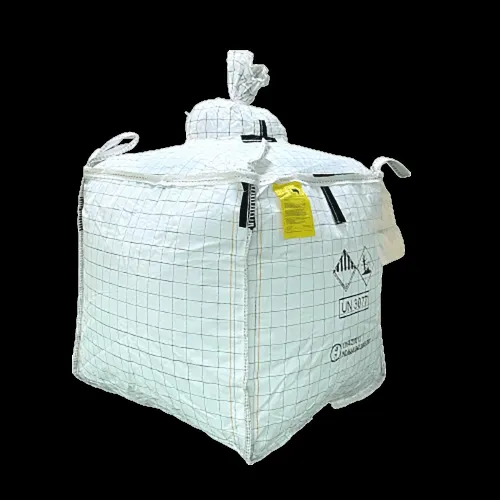
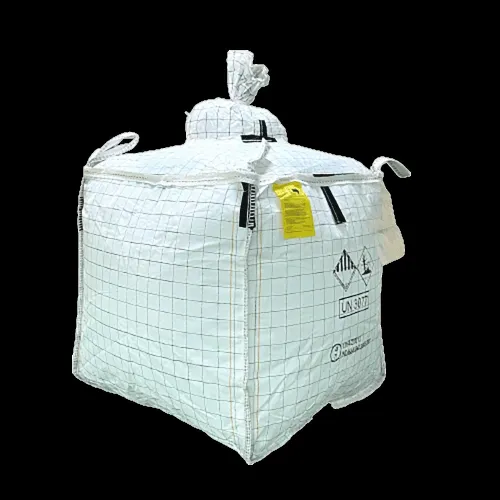
For bulk tea, require a woven-polypropylene FIBC with a food-contact polyethylene liner, controlled liner sealing, clean filling equipment and puncture protection. Specify safe working load, safety factor, liner thickness, filling and discharge configuration, cleanliness and electrostatic behaviour. A strong bag with a leaking liner still delivers damp, tainted tea.
| Workflow | Check the supplier against |
|---|---|
| Retail tins | Fill weight, lid fit, odour, closure and shelf handling |
| Bulk tea | Liner seal, puncture resistance, SWL, safety factor and transport handling |
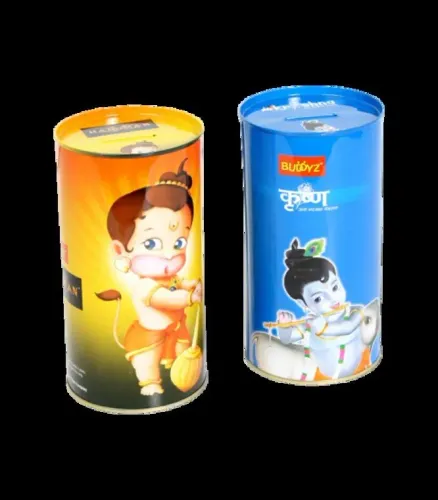
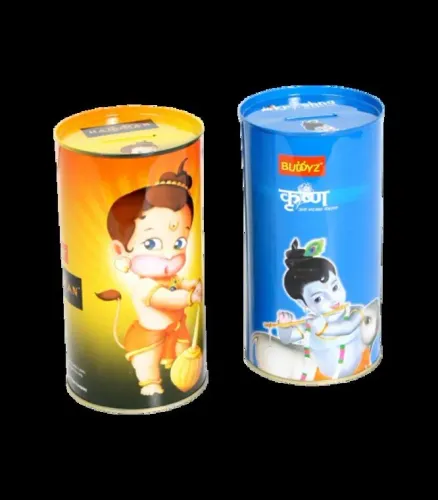
Deccan Cans & Printers Pvt. Ltd. should be assessed against this complete retail-and-transport checklist, not its Tea Coffee Tin Range alone.
Related product
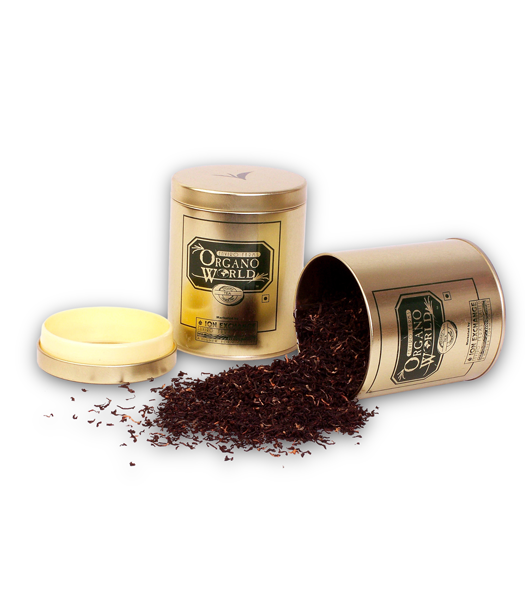 | Tin Containers Tea and Coffee Tins Range Tea & Coffee Tins Range – Product Descriptions Deccan Cans & Printers Pvt. Ltd. 1. |
Frequently asked questions
Why does Bengaluru humidity make tea packaging harder?
Humid air increases the risk of moisture entering through weak lid fits, seams and closures. Tea can lose crispness, absorb odours and develop a stale profile when the package does not seal consistently.
What food-contact information should you request for tea tins?
Ask for the metal specification, internal coating or lacquer details, food-contact declaration and migration-test records. For Indian sales, check that the documentation aligns with the Food Safety and Standards (Packaging) Regulations, 2018.
How does the lid affect tea freshness?
A well-fitted lid limits oxygen, moisture and aroma exchange. Compare lid force, gasket or friction fit, seam quality and repeatability across samples instead of judging the flat metal body alone.
How do you choose the right tea tin capacity?
Match the container’s usable volume to the tea’s bulk density, leaf size and sales quantity. Leave enough headspace for filling without leaving excessive empty air that accelerates aroma loss.