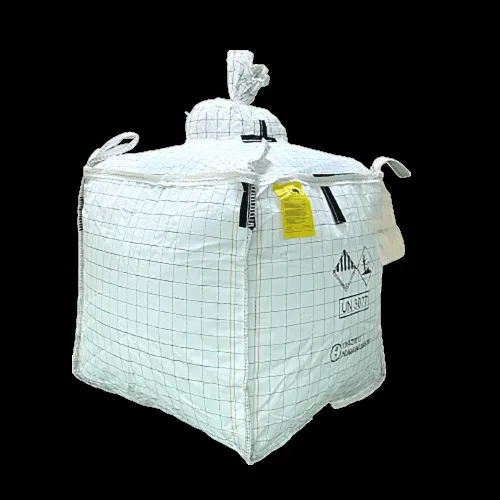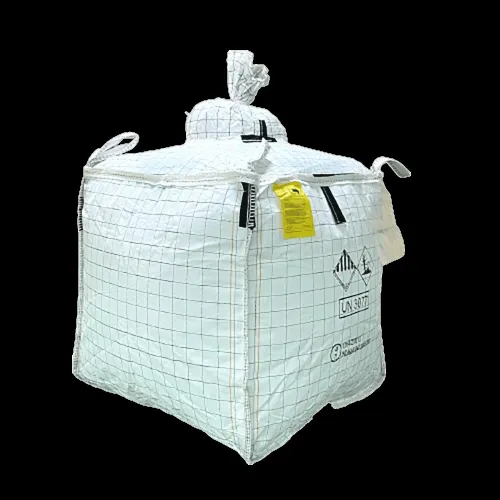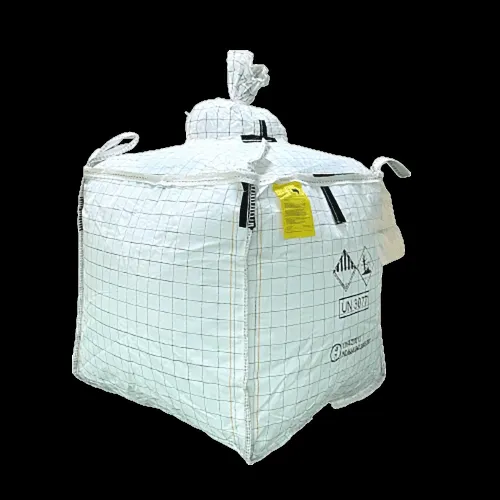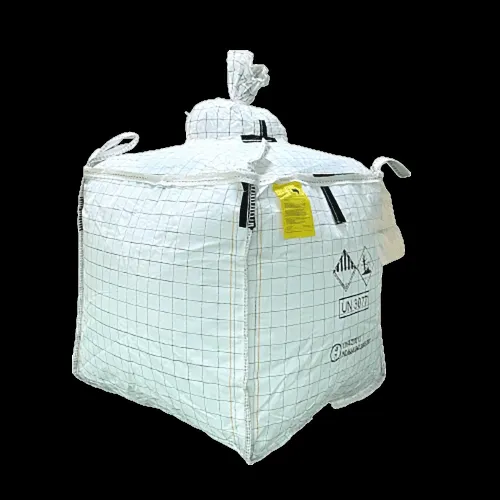

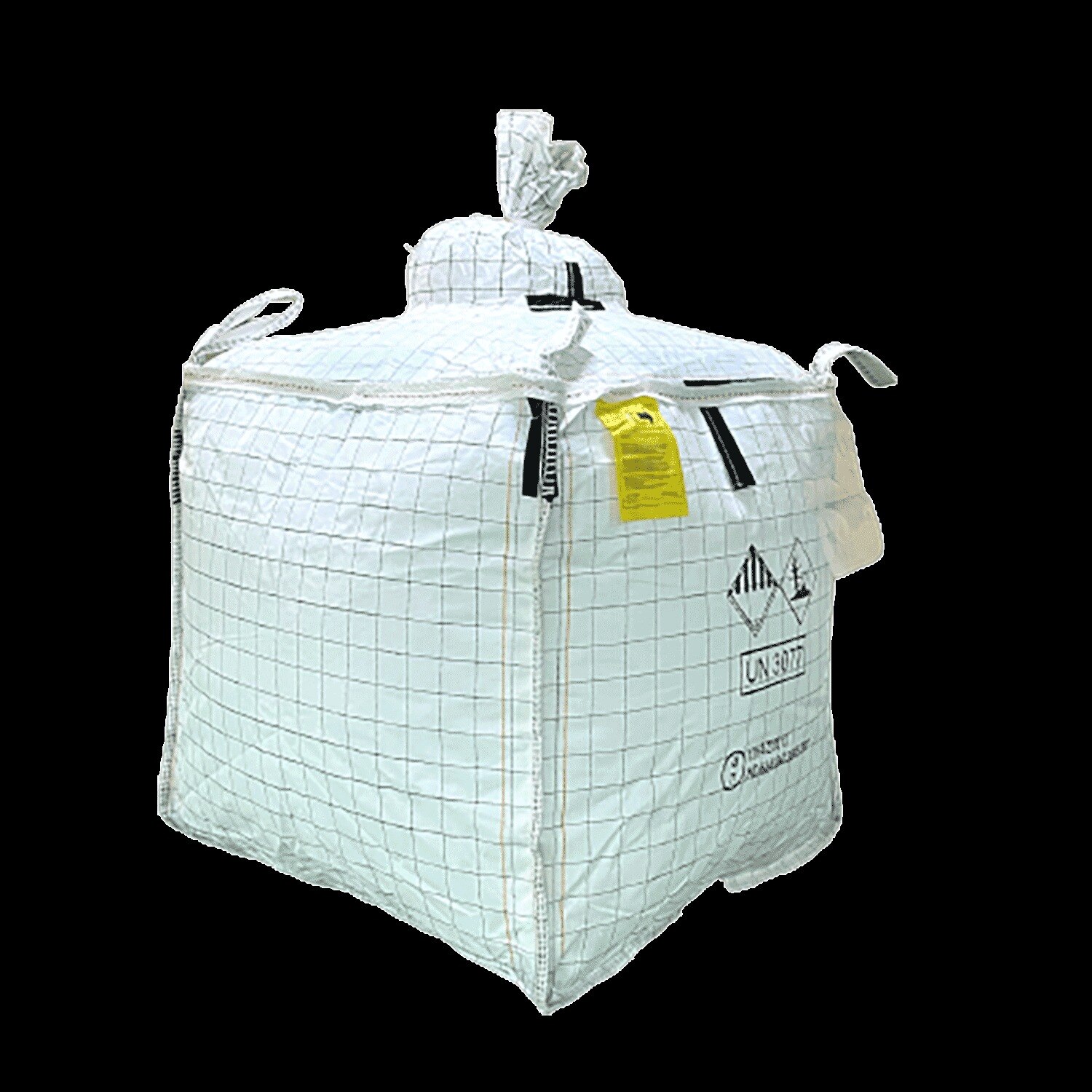
The right FIBC depends on more than the material name: bulk density, flow behavior, dust hazard, lifting method, discharge equipment, and Houston storage conditions all affect the specification. You will be able to select the bag construction, dimensions, closures, electrostatic controls, and handling requirements that fit your process without overloading the package or creating avoidable leakage and ignition risks.
Key takeaways
- Select bag construction from bulk density, flow behavior, dust risk, and moisture sensitivity.
- Calculate bag capacity, safe working load, dimensions, and lifting clearances before ordering.
- Match liners, closures, fabric, and discharge equipment to the filling and emptying process.
- Control static, dust, weather exposure, and reuse through documented handling procedures.
Match the FIBC construction to the material and process
Choose the FIBC construction from bulk density, flow behavior, dust risk, and moisture sensitivity—not from nominal volume alone. A one-cubic-metre bag of pellets can weigh far more than the same volume of flakes, while cohesive powder can bridge or rat-hole during discharge.
| Material or process | Suitable construction | Main control |
|---|---|---|
| Powders | Coated fabric with a sift-proof seam and polyethylene liner | Limits leakage and moisture entry; specify a discharge cone, liner fit, and feeder that prevent bridging |
| Granules and pellets | Standard uncoated fabric for dry, free-flowing product; coated fabric for fine dust or moisture | Use reinforced seams when abrasion or drop impact is high |
| Flakes | Flexible fabric with a wide outlet and flow-aiding design | Prevents arching caused by low bulk density and irregular particles |
| Fertilizer | Coated, moisture-resistant fabric with a compatible liner | Reduces caking; verify chemical compatibility before extended storage |
| Minerals and abrasive raw materials | Heavy-duty fabric with reinforced lifting loops and seams | Resists abrasion; protect the bottom during dragging and discharge |
Powder bulk bags and granule bags are not interchangeable by appearance. Pellet bags need enough fabric strength for mass and impact, whereas fine powders need sift-proof construction and controlled discharge.
State the required safe working load, safety factor, filling ratio, lifting arrangement, dimensions, and single-trip or reusable status. For combustible dust, select Type B, C, or D from minimum ignition energy, Kst, Pmax, and grounding conditions; Type B is not a substitute for a groundable Type C or Type D bag.
UN-marked bags require the tested liner, closure, dimensions, and packing-group specification.
Calculate capacity, SWL, dimensions, and handling clearances
Start with the mass, not the bag’s nominal volume. Divide the required product mass by its settled bulk density, then allow for density variation, fill height, and headspace. A one-cubic-metre bag can hold very different masses of powder, granules, or mineral material.
Specify the safe working load (SWL) above the heaviest expected fill mass, with the lifting configuration and safety factor recorded.
Confirm these measurements before approving the FIBC dimensions:
- Measure the pallet footprint and ensure the filled bag does not overhang or block pallet entry.
- Measure forklift tine length, width, spacing, and maximum lift height; include clearance beneath the bag and between lifting loops.
- Measure the hopper opening, grate, and discharge height so the bag body and spout clear every obstruction.
- Measure rack bay width, depth, beam height, and the maximum loaded height, including bag bulging.
- Measure the truck’s usable width, door opening, interior height, and loading pattern.
- Measure the narrowest warehouse aisle and turning space for the loaded pallet or forklift.
A 5:1 marking is a safety-factor designation, not permission to load the bag to five times its SWL; it generally identifies single-trip construction. A 6:1 design is commonly selected for reuse, but the specification must state the intended handling cycles and inspection requirements.
Reject any bag with cut fabric, seam damage, distorted lifting loops, severe abrasion, UV degradation, contamination, wetting, or unauthorized repairs. Damaged lifting components are a safety-critical failure.
Choose closures, liners, fabric, and discharge equipment together
Start with the failure you need to prevent: a fine powder needs sift-proof seams and controlled discharge, while a free-flowing granule may need ventilation and faster emptying. Select the top, fabric, liner, and outlet as one system rather than adding a liner after choosing the bag.
| Material or risk | Top and closure | Fabric and liner | Bottom and discharge |
|---|---|---|---|
| Fine powder, dust loss | Filling spout with tie or clamp closure | Coated fabric with a form-fit FIBC liner; seal the liner to its spouts | Conical or stepless discharge spout with cap; connect to a sealed feeder |
| Moisture-sensitive powder | Spouted top with a closed flap or tie | Coated fabric and barrier or foil-laminate liner | Protected discharge spout; use a mass-flow hopper to limit caking |
| Free-flowing granules or pellets | Duffle top for quick filling, with a drawcord or flap closure | Uncoated fabric for ventilation, or coated fabric for fines retention; use a liner only when cleanliness requires it | Standard bottom spout with cap; choose a larger outlet for faster flow |
| Cohesive powder or mineral | Closed filling spout | Form-fit or vented liner matched to the powder; specify liner attachment | Cone bottom, aeration, vibration, or a feeder designed to prevent bridging and rat-holing |
A loose liner improves cleanliness but can fold into the outlet and restrict flow. Specify the liner material, thickness, venting, spout dimensions, and connection on the approved drawing.
Polyethylene protects product from humidity but does not make the outer bag waterproof; keep every FIBC dry, shaded from prolonged sun, and off wet floors in Houston storage. Ground conductive equipment and control dust during filling and discharge: an antistatic bag alone cannot prevent a combustible dust cloud.
Control static, dust, weather, and reuse risks in Houston operations
A documented control plan protects people, product, and the bag; specifying conductive fabric alone does not. Filling and discharge can create a combustible dust cloud, while a liner, hose, probe, or ungrounded metal component can accumulate charge. A Dust Hazard Analysis under NFPA 652 must cover the complete handling system, not merely the FIBC fabric.
| Classification | Grounding control | Operating boundary |
|---|---|---|
| Type C FIBC | Connect the conductive path to ground and verify continuity | Keep the connection intact during filling and discharge |
| Type D FIBC | Dissipates charge without a grounding connection under specified conditions | Use only when the bag and process match its tested conditions |
| Type B FIBC | Prevents propagating brush discharges but provides no groundable path | Do not substitute it where conductive objects or process conditions can create incendive discharges |
Use this control checklist:
- Check the groundable interconnection, lead, and continuity before filling a Type C FIBC. A damaged or disconnected path can turn a compliant bag into an ignition source.
- Match antistatic bulk bags or another electrostatic classification to the dust hazard and equipment; do not rely on the label alone.
- Use closed connections and local exhaust during filling and discharge. Control leaks and clean settled dust with methods approved by the DHA.
- Store bags dry, off wet or contaminated surfaces, and shielded from prolonged Houston heat, rain, humidity, and ultraviolet exposure. A polyethylene liner does not make woven fabric weatherproof or hermetically sealed.
- During transport and repeated handling, protect lifting loops, seams, and fabric from dragging, sharp edges, overloading, and forklift contact. Inspect every bag before reuse and remove any bag with cuts, contamination, damaged loops, or an unreadable safety label.
Compare FIBCs with sacks, rigid containers, drums, and tankers
Choose an FIBC when one forklift move can replace many sack lifts, the material does not need a rigid barrier, and your route includes pallet, truck, or container transport rather than a fixed pipeline.
It offers the best balance for dry powders, granules, and raw materials handled in batches, especially when you can inspect and reuse the bags.
| Option | Main advantage | Choose it when |
|---|---|---|
| FIBC | High volume with fewer handling movements | You need efficient forklift handling and planned reuse |
| Woven polypropylene sacks or paper bags | Low individual-unit cost and easy manual dispensing | Quantities are small or workers must open partial amounts |
| Rigid intermediate bulk containers | Stackability and stronger impact protection | Product protection and repeated rigid handling outweigh empty-return space |
| Drums | Sealed, durable units for liquids or hazardous materials | You need robust segregation or smaller batch control |
| Tankers | Lowest handling per delivered bulk load | A compatible loading and discharge system stays at both sites |
Do not treat a liner as weatherproofing: Houston heat, humidity, rain, and sunlight still require dry, shaded storage off the floor. Ask Deccan Cans & Printers Pvt. Ltd., or any Houston supplier, to document:
- Finished-bag dimensions, safe working load, safety factor, empty weight, and lifting-loop design
- Fabric, seams, liner, closures, discharge parts, and inspection criteria for reuse
- IEC 61340-4-4 electrostatic type and grounding instructions
- UN design approval, packing group, gross mass, liner, and closure if dangerous goods are involved
- Finished-article food or pharmaceutical compliance, not merely resin documentation
Related products
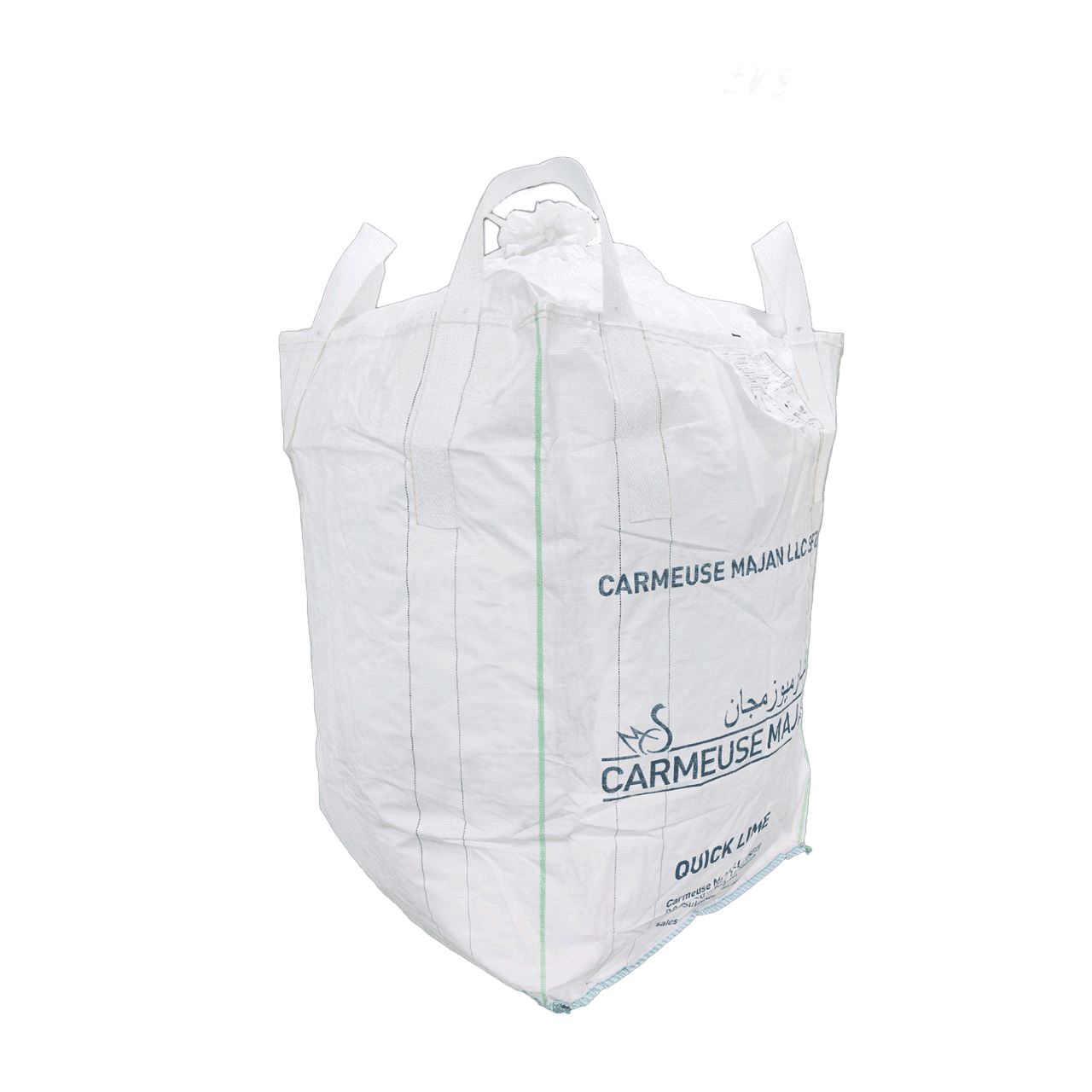 | FIBC Section Bags With Liners FIBC Liners – Bulk Bag Liners Deccan Cans & Printers Pvt. Ltd. |
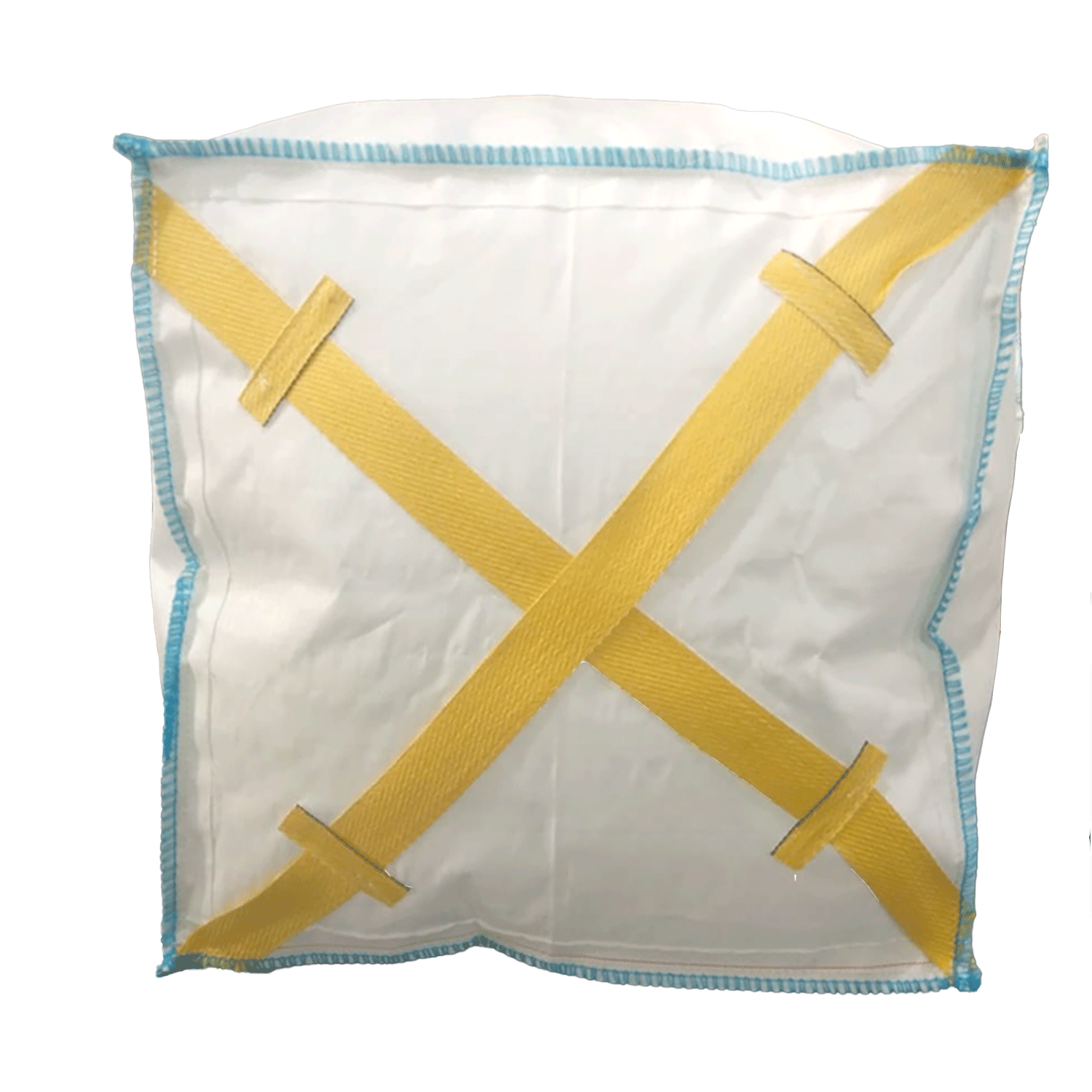 | FIBC Section Cross Bottom Sling Bags Cross Bottom Sling FIBCs – Bulk Bags Deccan Cans & Printers Pvt. Ltd. |
Frequently asked questions
How do you choose an FIBC for powders, granules, or raw materials?
Match the construction to bulk density, flow behavior, dust risk, and moisture sensitivity. Cohesive powders need discharge planning because they can bridge or rat-hole.
How do you calculate FIBC capacity and safe working load?
Use bulk density to convert volume into product weight, then confirm the bag’s safe working load, dimensions, lifting method, and required clearance at each handling point.
What FIBC features affect filling and discharge?
Choose the liner, top closure, bottom outlet, fabric, and discharge equipment as one system. The outlet must suit the material’s flow and the receiving equipment.
How can Houston operations manage FIBC static, dust, moisture, and reuse risks?
Specify grounding controls for combustible dust, contain dust at filling and discharge, protect bags from rain and humidity, and reuse them only under a documented inspection and cleaning program.
When should you use FIBCs instead of sacks, drums, rigid containers, or tankers?
Compare load size, material behavior, protection requirements, handling equipment, delivery method, cleaning, and return logistics before choosing the package format.
Related products
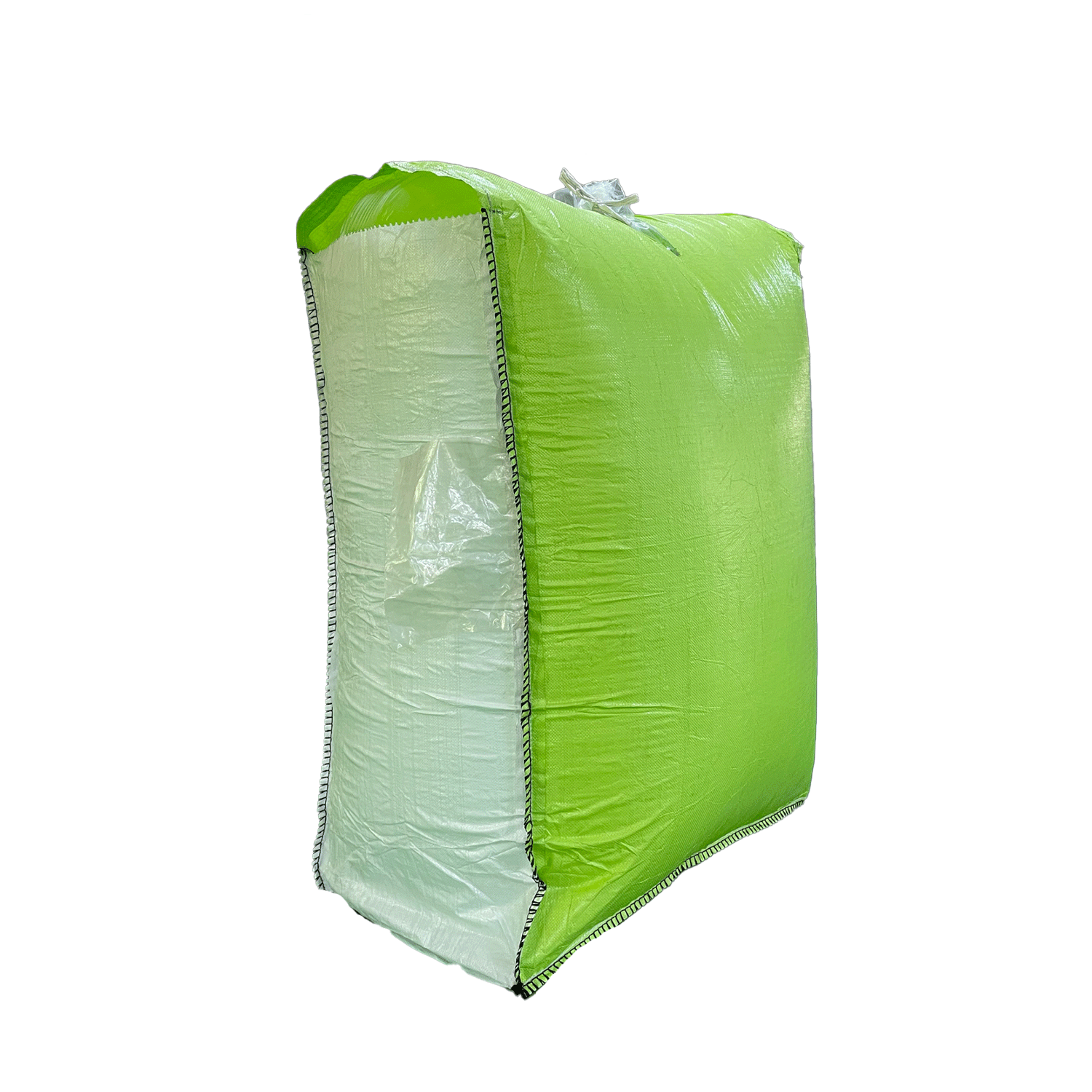 | FIBC Section Fertilizer Bag Range 1 & 2 Loop FIBC Bulk Bags Deccan Cans & Printers Pvt. Ltd. offers durable and cost-effective 1 & 2 Loop FIBC Bulk Bags, designed for the efficient... |
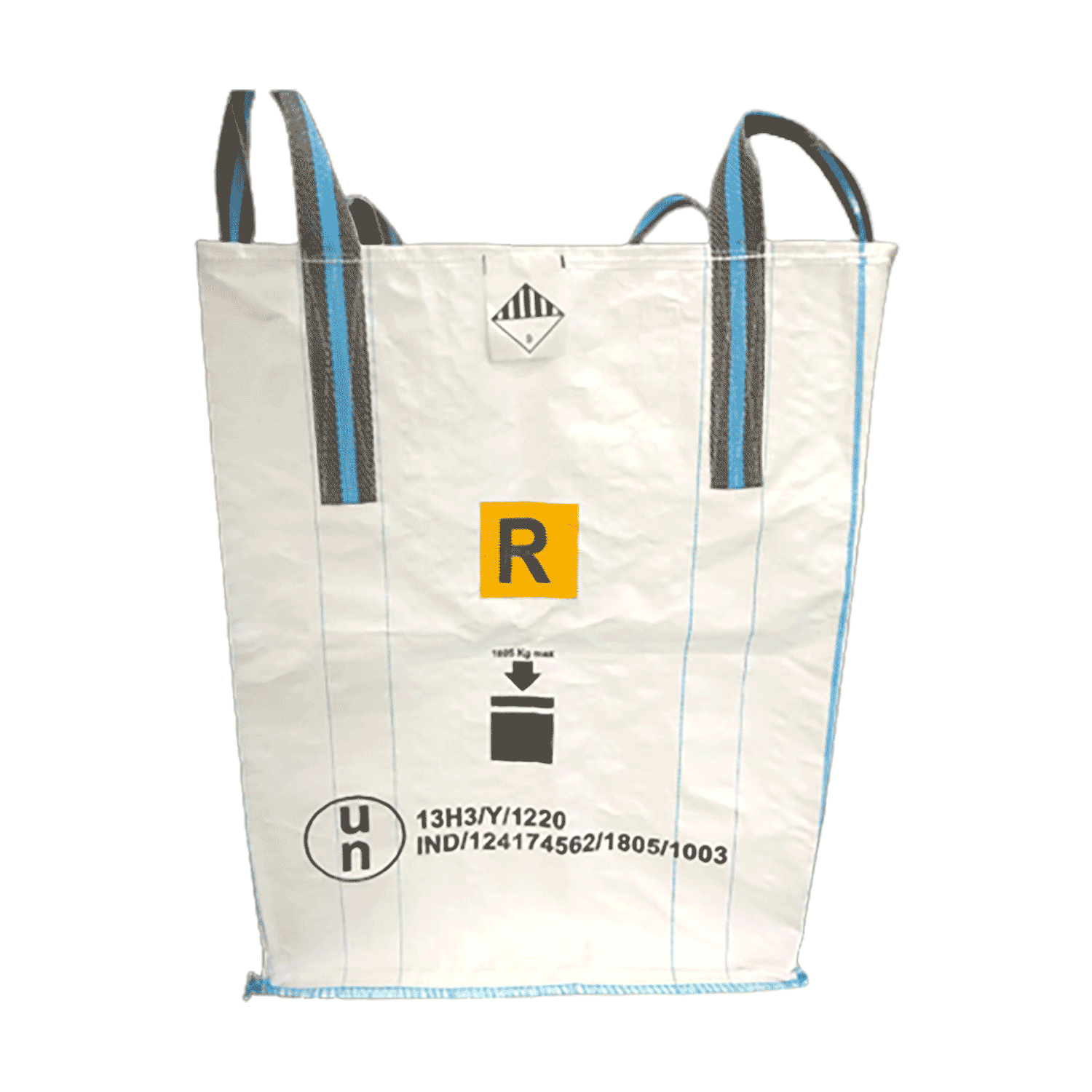 | FIBC Section Un Bags UN Certified Bulk Bags – Rigorous Performance Testing for Safety & Reliability Deccan UN Certified Bulk Bags are specially engineered for the safe... |
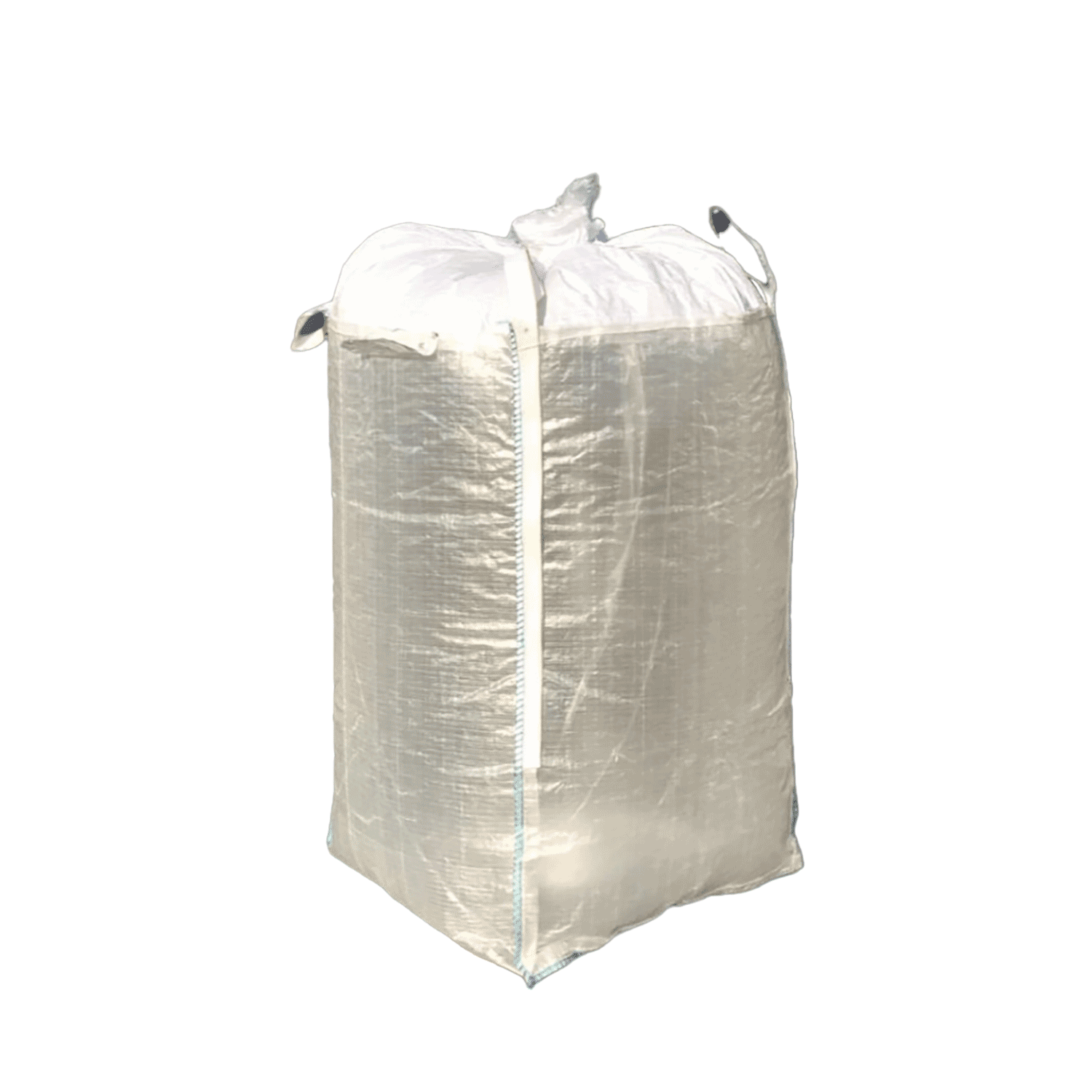 | FIBC Section Transparent Bags Transparent FIBCs – See-Through Bulk Bags Deccan Cans & Printers Pvt. Ltd. |
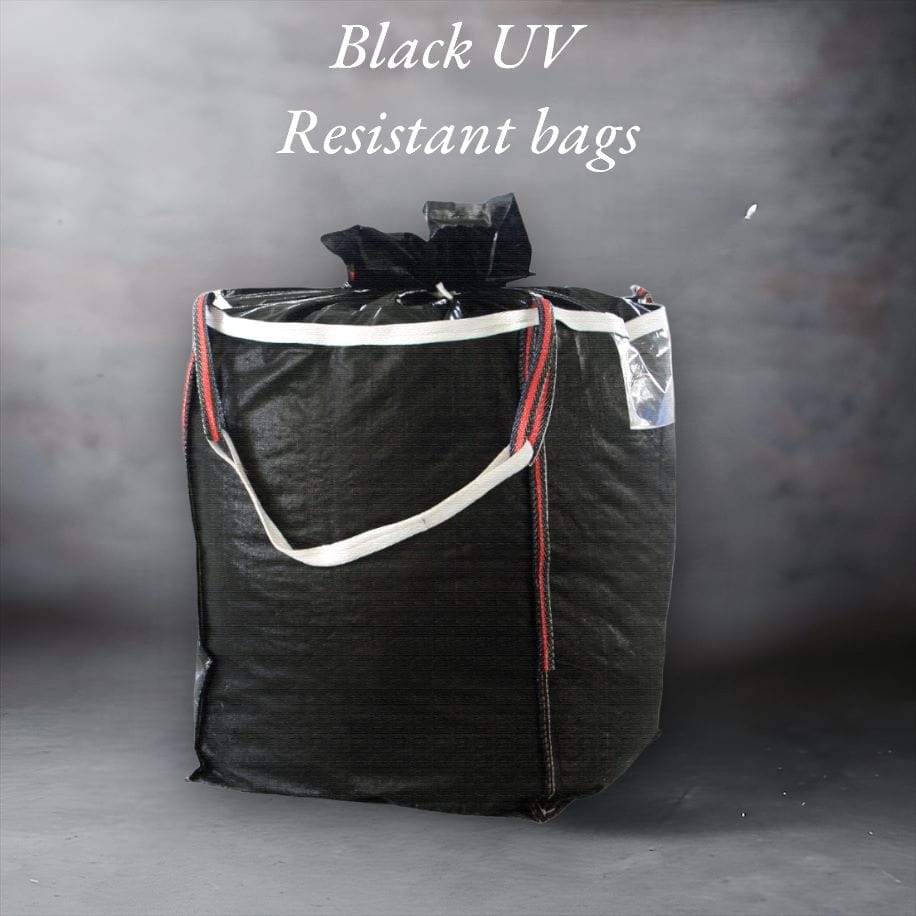 | FIBC Section Black Bags Black FIBC Bags – Enhanced UV Resistance & Extended Shelf Life UV exposure is one of the major challenges faced by the FIBC industry, as prolonged... |