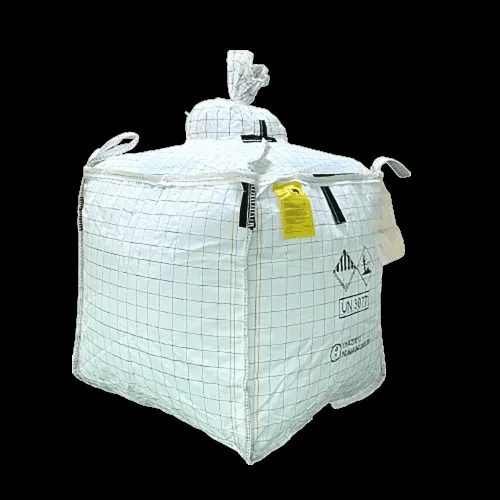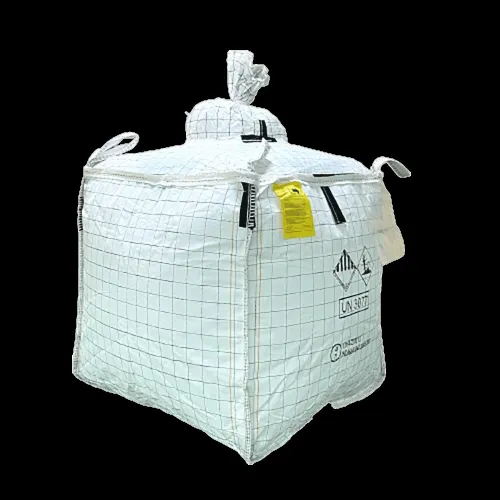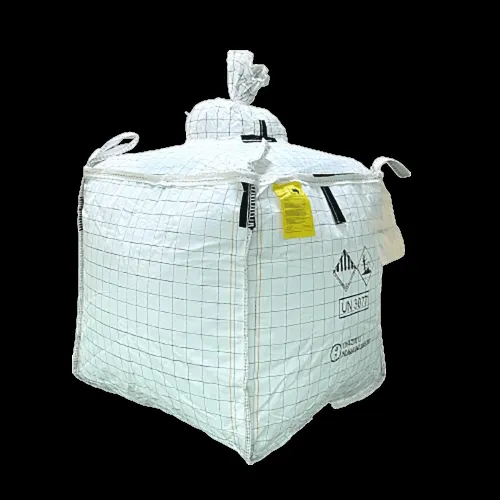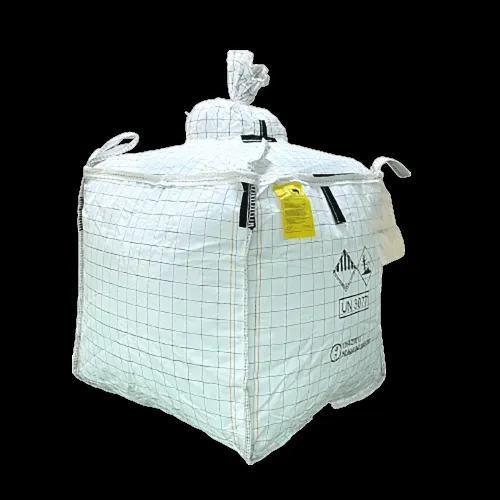
A polypropylene bulk bag is not suitable for hazardous material simply because it is strong, lined or described as chemical grade. You need to match the substance’s UN classification, packing group, approved FIBC construction, test evidence, marking and operating controls before accepting a shipment from a Mumbai supplier.
Key takeaways
- Start with the substance’s UN number, proper shipping name, class and packing group.
- Match 13H1, 13H2, 13H3 or 13H4 construction to the chemical and liner requirement.
- Ask for the UN test report, certificate, production records and a clear UN mark.
- Check drop, stacking, top-lift and handling controls before shipment approval.
What does UN approval cover for a hazardous-material FIBC?
Start with the substance’s UN number, proper shipping name, classification and packing group—not the supplier’s product label.
- Packing Group I means high danger.
- Packing Group II means medium danger.
- Packing Group III means low danger.
The UN packaging performance mark uses X for Packing Groups I, II and III; Y for Groups II and III; and Z for Group III only. A Y-rated bag cannot replace an X-rated bag for a Packing Group I substance.
The UN Recommendations on the Transport of Dangerous Goods approve a specific flexible bulk container design type. They do not approve every bag made by the same company, and they do not approve the filled shipment itself. The relevant dangerous-goods entry and packing instruction must permit an FIBC, and the design must suit the substance.
Approval applies to permitted solids such as powders, granules and flakes. It does not approve the bag for liquids. Road, sea and air rules, plus the destination carrier, can impose additional acceptance conditions.
“UN rated bulk bags” and “hazardous material bulk bags” are commercial phrases, not formal regulatory categories. A conventional agricultural or mineral FIBC is not automatically approved because it has strong polypropylene fabric, a liner or a high load rating. Check the exact design approval, performance mark and permitted substance before filling it.
A UN-tested bag is not a blanket guarantee of transport acceptance.
Which 13H construction and material specification matches the substance?
Choose the 13H code from the hazard’s containment needs, then verify that the supplied bag has the same tested construction.
| Code | Construction | Select it when |
|---|---|---|
| 13H1 | Woven plastic without an inner liner | The solid needs no sift-proof or water-resistant barrier |
| 13H2 | Sift-proof woven plastic construction | Fine powder must not escape through fabric or seams |
| 13H3 | Water-resistant construction | External moisture protection matters, but sift-proofing does not |
| 13H4 | Sift-proof and water-resistant construction | The contents need both barriers |
Uncoated fabric has open weave pores; coated fabric adds a polymer film that blocks passage and moisture. A coated-fabric bag may be supplied without a liner, or with a separate liner for additional containment. The certificate must match the actual fabric, coating, seams, liner, lifting loops, filling arrangement and discharge closure.
A strong-looking substitute is still an un certified fibc bags design.
Obtain a written compatibility declaration covering:
- The named chemical and concentration
- Liner material and liner-seal construction
- Storage period and intended temperature range
- Whether the contents permeate or attack polypropylene, the coating or liner seals
A liner can control siftage or moisture exposure; it does not create universal chemical resistance. Treat bulk density, maximum gross mass, maximum volume, free space and filling speed as design-specific limits, not universal figures. “Chemical bulk bags” is commercial language. Type A, B, C and D electrostatic classifications are separate from mechanical UN approval.
Which certificates, records and UN marks must a Mumbai supplier provide?
Ask for a design-specific evidence pack, not a generic claim about un certified fibc bags. Require the supplier to provide:
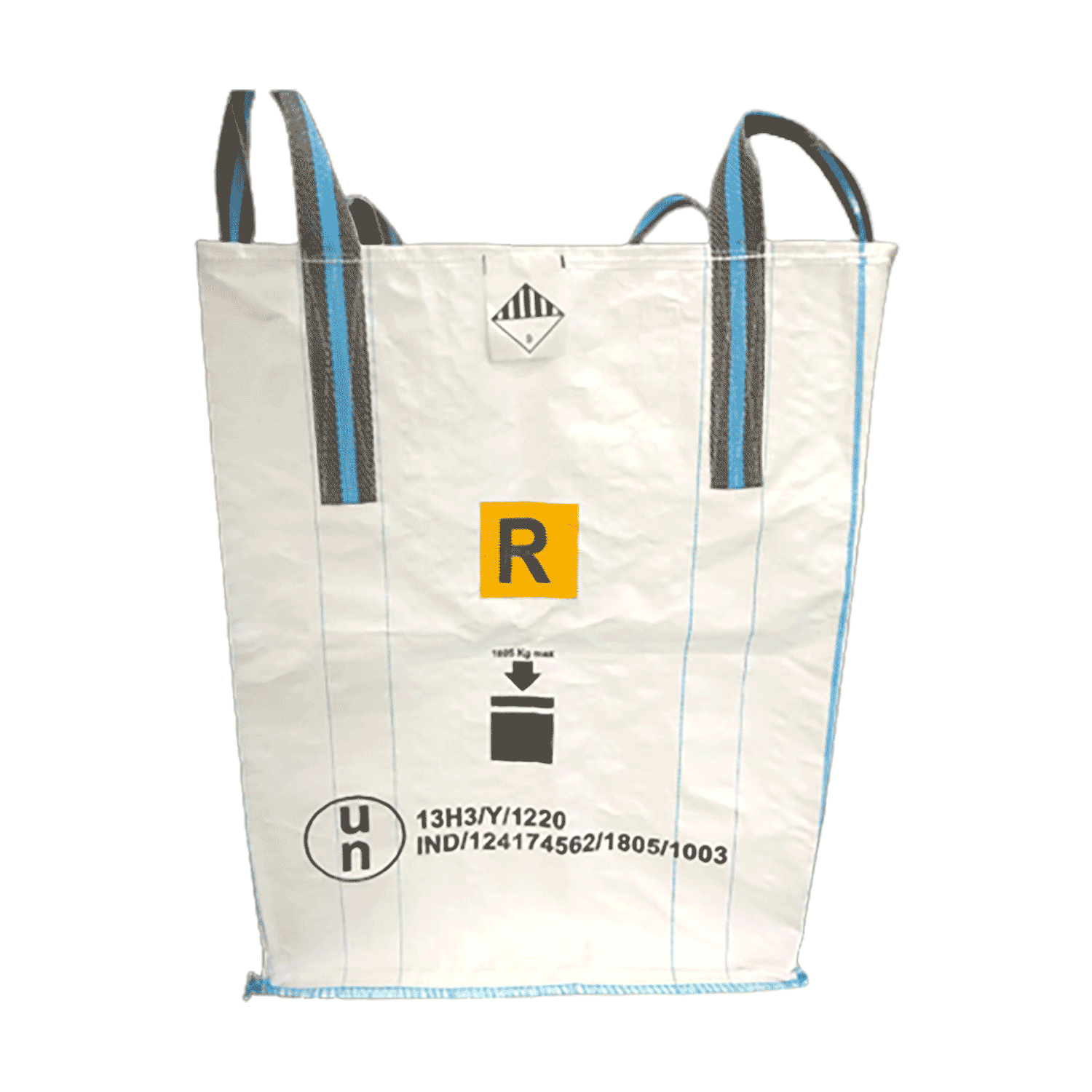
- The UN design-type certificate and complete test report, naming the approved FIBC type, exact 13H construction, X/Y/Z performance level, maximum gross mass, manufacturer or approval identifier, manufacture year and authorized UN marking format.
- A manufacturing or batch traceability record linking the supplied fabric weight, seam pattern, liner, closures, lifting loops and discharge arrangement to the tested design.
- The competent laboratory’s name and report number. For fibc manufacturers and exporters in india, ask whether the laboratory holds ISO/IEC 17025 accreditation; that supports laboratory competence but does not certify every production bag.
Read the physical mark against the certificate:
| Mark element | What to verify | Reject when |
|---|---|---|
| UN packaging symbol and 13H code | The symbol and code match the approved construction | Missing, illegible or altered |
| Packing-group designation and X/Y/Z level | The rating covers the named packing group | The mark claims a higher level than the certificate |
| Maximum gross mass and test pressure, where shown | Values match the design report | Values differ or are unreadable |
| Manufacturer or approval identification and year | Both match the certificate and traceability record | Identification or year is absent or inconsistent |
A laboratory photograph, fabric test result or generic supplier certificate does not prove that the delivered FIBC is the approved design. Deccan Cans & Printers Pvt. Ltd. is one supplier a buyer could ask to separate FIBC evidence from any tin-packaging approval.
Related product
 | FIBC Section Un Bags UN Certified Bulk Bags – Rigorous Performance Testing for Safety & Reliability Deccan UN Certified Bulk Bags are specially engineered for the safe... |
Which performance tests and handling controls should you compare?
Compare the complete UN design-type report for hazardous material bulk bags, not merely the nominal safe working load. The report must cover the supplied fabric, seams, loops, liner, closures and discharge arrangement.
| Test | What it demonstrates |
|---|---|
| Top-lift | The bag and lifting loops withstand a suspended load. |
| Drop | The filled bag retains impact integrity after a fall: 1.8 m for Packing Group I, 1.2 m for Group II and 0.8 m for Group III. |
| Topple and righting | The bag remains stable and can be recovered after tipping. |
| Tear | Damaged fabric resists further tear propagation. |
| Stacking | The bag carries its load under compression from stacked units. |
| Pressure or leak testing | The design meets required sift-proof or water-resistant performance. |
A changed fabric weight, seam pattern, liner or discharge closure can invalidate reliance on the original report. Compare those details line by line.
Operate within the approved limits:
- Stay below the approved maximum gross mass and volume; confirm bulk density and required free space before filling.
- Control filling speed, close the discharge spout, and prevent impact, abrasion, friction and dust clouds.
- For Type C FIBCs, verify the earth connection before filling or emptying. A broken lead or insulated contact defeats protection.
- Type D relies on specified handling controls, not a ground connection.
- Inspect every bag before use. Remove any bag with damaged seams, loops, fabric, liner or closures.
How should you approve the purchase and shipment before dispatch?
Approve the shipment only after the substance, bag design, documents and transport route match in writing.
1. Record the UN number, proper shipping name, physical form, packing group, moisture sensitivity, chemical concentration, storage temperature and transport mode. Confirm that the dangerous-goods entry and packing instruction permit an FIBC, and obtain acceptance from the destination carrier.
2. Compare the certificate and authorized UN mark with a production sample from the Mumbai supplier. Reject differences in 13H construction, fabric, coating, liner, seams, lifting loops, closures or discharge arrangement. Confirm the batch traceability record and written chemical-compatibility declaration.
3. Request written operating limits for filling mass, volume, free space, filling rate, discharge method, stacking, storage duration and liner replacement. For a flammable or static-sensitive powder, specify Type A, B, C or D separately from the UN mark. For Type C, define the grounding point and earth-continuity check.
Supplier comparison should look like this:
| Supplier evidence | Accept | Reject |
|---|---|---|
| UN design certificate and marking | Matches the sampled bag | Generic claim or altered mark |
| Batch and compatibility records | Traceable to the chemical | Missing or unrelated |
| Carrier and packing-instruction approval | Confirmed for the route | Assumed from the UN mark |
A UN-approved FIBC is not indefinitely reusable: write controls for inspection before each use, cleaning, liner replacement and return traceability. Tin drums, cans and jerricans also need their own UN design approval, capacity, closure and packing instruction.
Ask fibc manufacturers and exporters in india to separate that evidence from tin-packaging approval; “un rated bulk bags” is not universal compliance.
Frequently asked questions
What does UN approval cover for a hazardous-material FIBC?
UN approval covers a specific FIBC design, material, construction and performance-test result for dangerous-goods transport. It does not approve every bag a supplier produces or every chemical placed inside it.
Which 13H construction and material specification matches the substance?
13H1 is an uncoated woven-plastic FIBC; 13H2 has a coated woven-plastic body; 13H3 uses an uncoated body with a liner; and 13H4 combines a coated body with a liner. Select the construction after checking chemical compatibility, liner material, filling method and packing group.
Which certificates, records and UN marks must a Mumbai supplier provide?
Request the design-type approval or UN test report, certificate of compliance, material and liner specifications, production-batch traceability, inspection records and a photograph of the complete UN mark. Compare the mark with the approved design, including the packaging code, packing group, test pressure where shown, maximum gross mass and approval details.
Which performance tests and handling controls should you compare?
Compare results for the required drop, top-lift, stacking, tear, topple and righting tests, then confirm the tested bag matches the production design. Review safe working load, safety factor, lifting loops, discharge spout, closure, filling height, stacking method and protection from moisture or abrasion.
How should you approve the purchase and shipment before dispatch?
Confirm the substance’s UN number, proper shipping name, hazard class and packing group against the bag approval. Approve a production sample, verify the UN mark and batch records, inspect seams and closures, document the agreed handling limits, and release shipment only after the supplier’s records match the purchase specification.