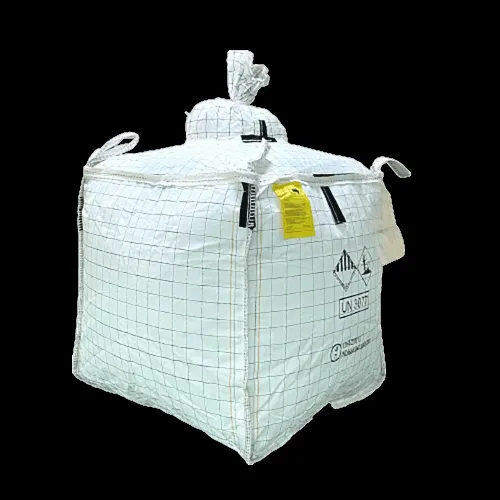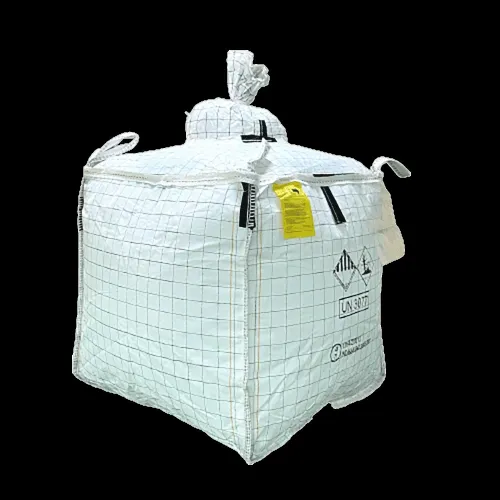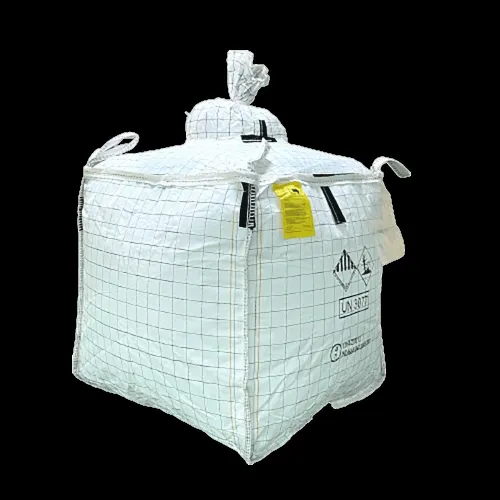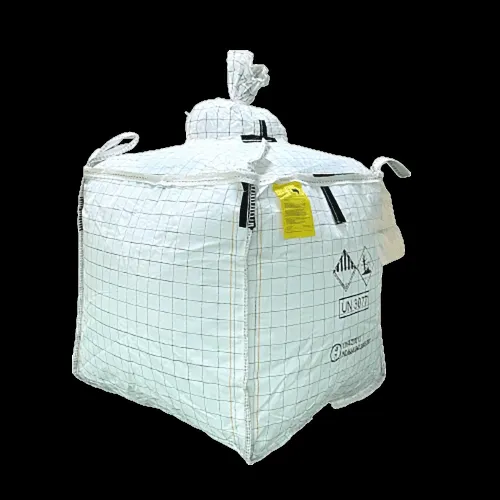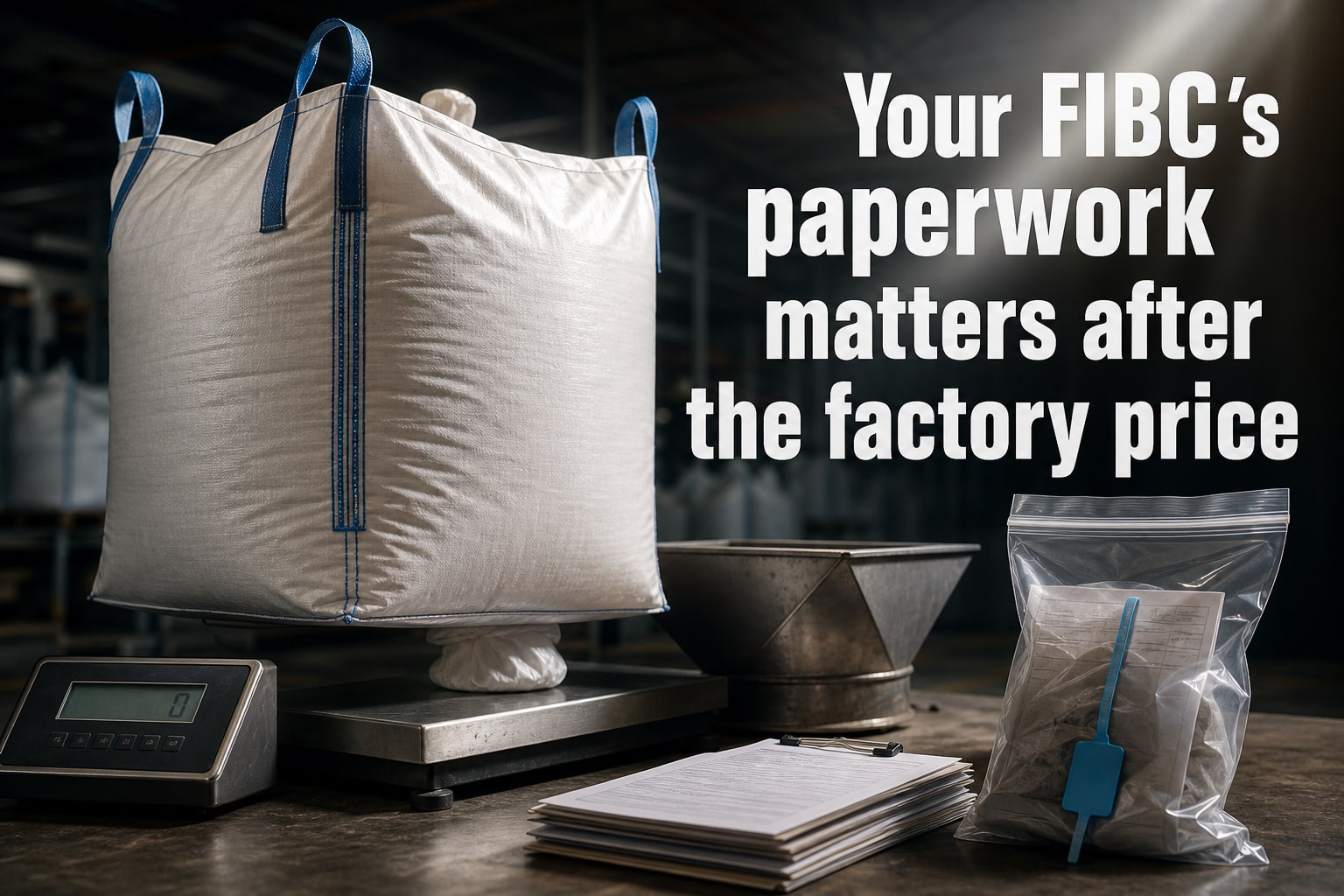
“Export quality” is not a technical grade, so a bag described as suitable for export still needs a defined construction, test basis and document trail. By the end, you will be able to compare FIBC specifications, verify safety and regulatory evidence, and assess whether a Pune supplier can protect the bags through the export handoff.
Key takeaways
- Define export quality with a written bag specification and complete-bag test records.
- Match fabric, liner, loops and discharge design to the product and filling method.
- Keep SWL, safety factor and destination-market compliance as separate checks.
- Request traceability, inspection records and shipping documents before dispatch.
Define export quality through a specification, not a sales label
Export quality is not a technical grade or a sales label. It means the FIBC matches a written specification, passes the required tests as a complete assembled bag, and arrives with records that link the shipment to those requirements.
For buyers comparing export quality FIBC manufacturers in India, the useful distinction is evidence, not country of origin. Ask for a specification stating the applicable standard: ISO 21898 for non-dangerous goods, or the relevant UN packaging requirements under ADR, IMDG, or ICAO rules for dangerous goods. ISO 21898 alone does not make an FIBC UN-certified.
Require an evidence pack containing:
- The approved design drawing, dimensions, SWL, safety factor, lifting-loop arrangement, filling and discharge construction
- Woven polypropylene denier and GSM, seam details, liner material, fit and closure type
- A test report for the complete assembled FIBC, not only a fabric certificate
- The inspection plan, batch identification and traceability procedure
- Packing instructions, container-loading method and agreed rejection or replacement terms
Fabric weight cannot prove lifting performance. Loop attachment, seam construction, corner reinforcement, fabric direction and load distribution determine how the finished bag behaves under load. For powders, require proof of sift resistance and specify how seams, top spouts and bottom spouts close; fines escaping during transit can make a visually strong bag unusable.
Match the bag construction to your product and filling process
Specify the product’s bulk density, flow behaviour, moisture sensitivity and handling cycle before choosing the bag. A “1-ton bag” can fail when its volume is too small, its powder bridges at the outlet, or its loops and seams face repeated lifting they were never designed to withstand.
| Product or process | Construction to specify | Consequence of mismatch |
|---|---|---|
| Fine powder | Coated woven polypropylene, suitable liner, controlled filling and discharge spout | Dust leakage, liner collapse or blocked discharge |
| Free-flowing granules | Fabric GSM and denier matched to density, wide filling inlet and bottom outlet | Overfilling, impact damage or slow emptying |
| Moisture-sensitive product | Form-fit polyethylene liner, sealed closure and protected seams | Clumping, contamination or water ingress |
| Electrostatic-risk product | Type C with verified grounding path, or Type D with documented dissipative performance | Ignition risk; antistatic additive alone is not proof |
Put these details into the purchase specification:
- State bag length, width, height, usable volume, product bulk density and required capacity. Define the SWL and safety factor separately: 5:1 commonly suits single-trip bags, while 6:1 suits reusable designs only when the handling cycle supports it.
- Specify four corner loops or another lifting arrangement, loop length, seam construction, corner reinforcement and intended lifting method. Fabric GSM or tape denier alone cannot prove lifting performance.
- Define the top inlet, bottom discharge spout, flap, drawcord, closure and liner fit. A liner that bunches below the outlet can leave product trapped.
- Require test results for the complete assembled FIBC, not fabric alone, and state whether stacking, forklift handling, container loading or repeated trips apply. Ask fibc suppliers in pune to record these choices on the drawing and inspection plan.
Separate SWL, safety factor and regulatory performance
Confirm capacity from the bag’s rated safe working load (SWL), not from a label such as “1-ton bag.” SWL is the maximum permitted product load for the stated handling conditions; it is not the load used to break or proof-test the bag.
The safety factor links those figures: a 5:1 design is common for single-trip FIBCs, while 6:1 is common for reusable FIBCs, but the correct value depends on lifting method, handling cycles and the agreed specification.
| SWL | Safety factor | What to verify |
|---|---|---|
| 1,000 kg | 5:1 | Single-trip design, 5,000 kg minimum design test basis |
| 1,000 kg | 6:1 | Reusable design, 6,000 kg minimum design test basis |
| Any rating | Not stated | Reject until the supplier provides the declared factor and test evidence |
Ask for test reports covering seam strength, lifting-loop performance, drop, stacking and the intended SWL. Agree sampling under ISO 2859-1 before production, but do not treat visual sampling as a substitute for engineering tests.
For dangerous goods, confirm the FIBC’s UN packaging approval, marking and destination-carrier acceptance against the product’s transport classification. Select electrostatic protection before manufacture: Type C requires a verified conductive path and grounding during filling and discharge; Type D relies on dissipative performance. An antistatic additive alone does not prove either classification.
Compare Indian FIBC manufacturers for export through this evidence, not a country-of-origin claim.
Build a document and inspection pack before shipment
A signed purchase specification must link every bag to its test evidence and production lot. Ask for the document pack before loading, not after a container-load complaint. This discipline helps you compare fibc manufacturers with international shipping on traceability rather than on a generic certificate or country-of-origin label.
| Record | Match it to | What it proves |
|---|---|---|
| Approved drawing and purchase order | Dimensions, SWL, safety factor, loops, seams, liner, spouts and closure | The ordered construction is the tested construction |
| Lot record | Batch number, manufacturing date, fabric or raw-material batch and quantity | The supplied bags came from an identifiable production run |
| Complete-bag test report | Lot number, test method, sample identification and acceptance limit | The assembled FIBC—not only its fabric—met load, seam, drop, stacking or electrostatic requirements |
| Inspection report | Agreed sampling plan, such as ISO 2859-1 AQL, defects found and disposition | The shipped quantity passed the agreed visual and dimensional checks |
| Packing and stuffing record | Bag count, pallet or bundle marks, container number, seal number, photographs and loading date | The inspected bags are the bags placed in the container |
Require these controls in the purchase contract:
- Print the lot number on bundle labels and cross-reference it to the invoice and packing list.
- Keep retained samples, test reports and inspection records for a stated period.
- Reject generic load-test certificates that omit lot identity.
- Record moisture-resistant packing, dry storage, and clean-container inspection, especially for Pune shipments during monsoon exposure.
Evaluate the Pune supplier’s export handoff, not only the factory price
The cheaper quote is not cheaper if damaged loops, wet liners or an untraceable container load leaves you arguing over replacement. Compare FIBC suppliers in Pune on the handoff controls that protect the shipment after sewing is finished.
| Check | Strong export handoff | Risk signal |
|---|---|---|
| Packing | Moisture-resistant outer packaging; bags kept off floors and protected from dust and rain | Loose bags exposed during warehouse or vehicle movement |
| Container loading | Clean, dry container; documented stuffing inspection; loading plan confirms payload, stacking height and liner protection | Brick-stacking that deforms loops, spouts or liners to save space |
| Traceability | Lot number, manufacturing date, fabric batch, sewing batch, inspection records and retained samples | A generic load certificate with no link to the supplied bags |
| Commercial risk | Written acceptance criteria, inspection timing, replacement period, claim evidence and responsibility for transit damage | Verbal promises about “export quality” |
Ask for photographs of the loaded container, the seal number and the final packing list. Specify monsoon transport controls in the purchase order, not in a later complaint.
Your inspection should cover finished bags: dimensions, loop identification, seams, spout and liner fit, cleanliness, marking, foreign material and moisture exposure. A fabric GSM certificate cannot prove assembled-bag lifting performance.
FIBC manufacturers with international shipping should explain who pays for rework, replacement freight and port delays when a lot fails inspection. Deccan Cans & Printers Pvt. Ltd. can be assessed by requesting these same records and contractual controls, rather than accepting its Pune location as evidence.
Related products
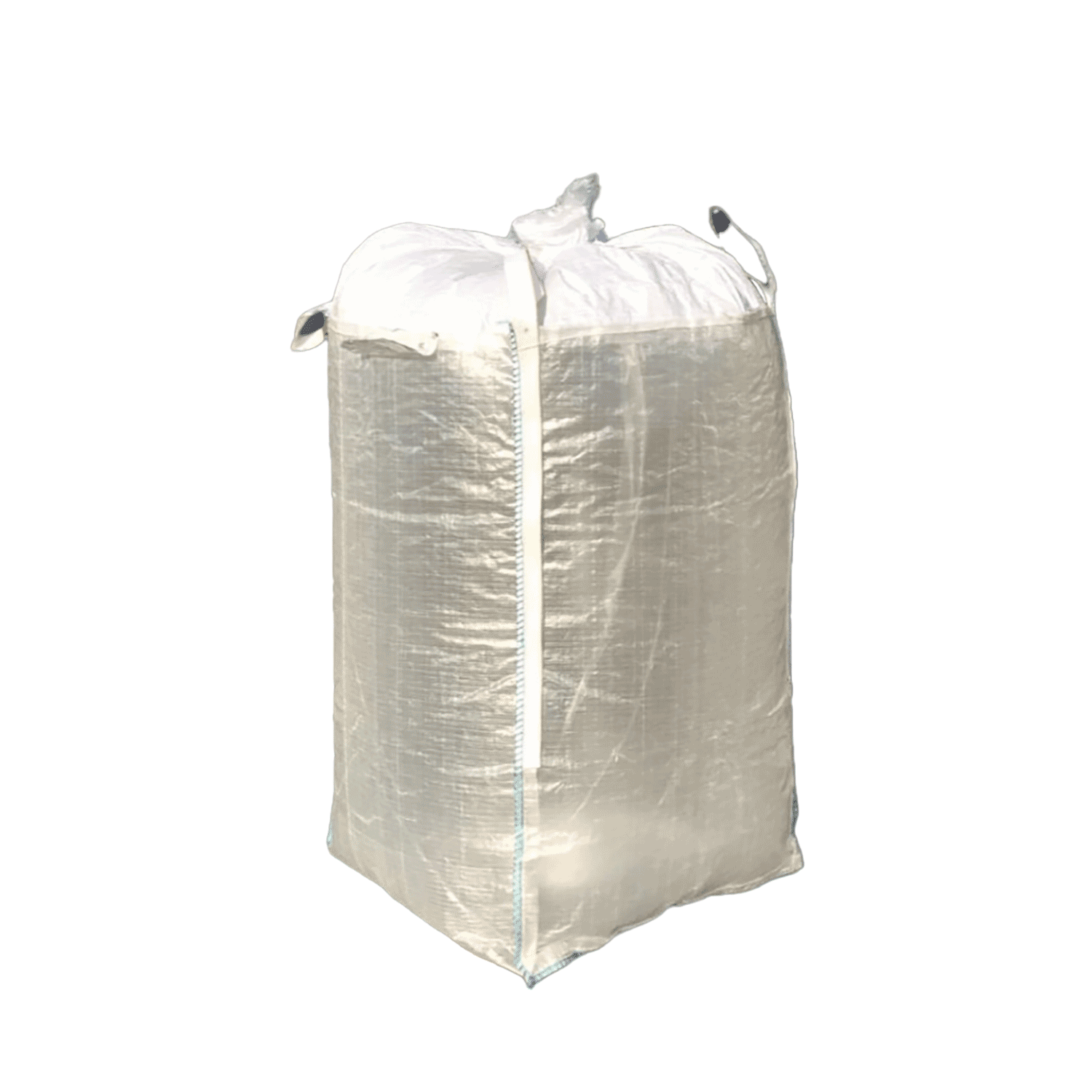 | FIBC Section Transparent Bags Transparent FIBCs – See-Through Bulk Bags Deccan Cans & Printers Pvt. Ltd. |
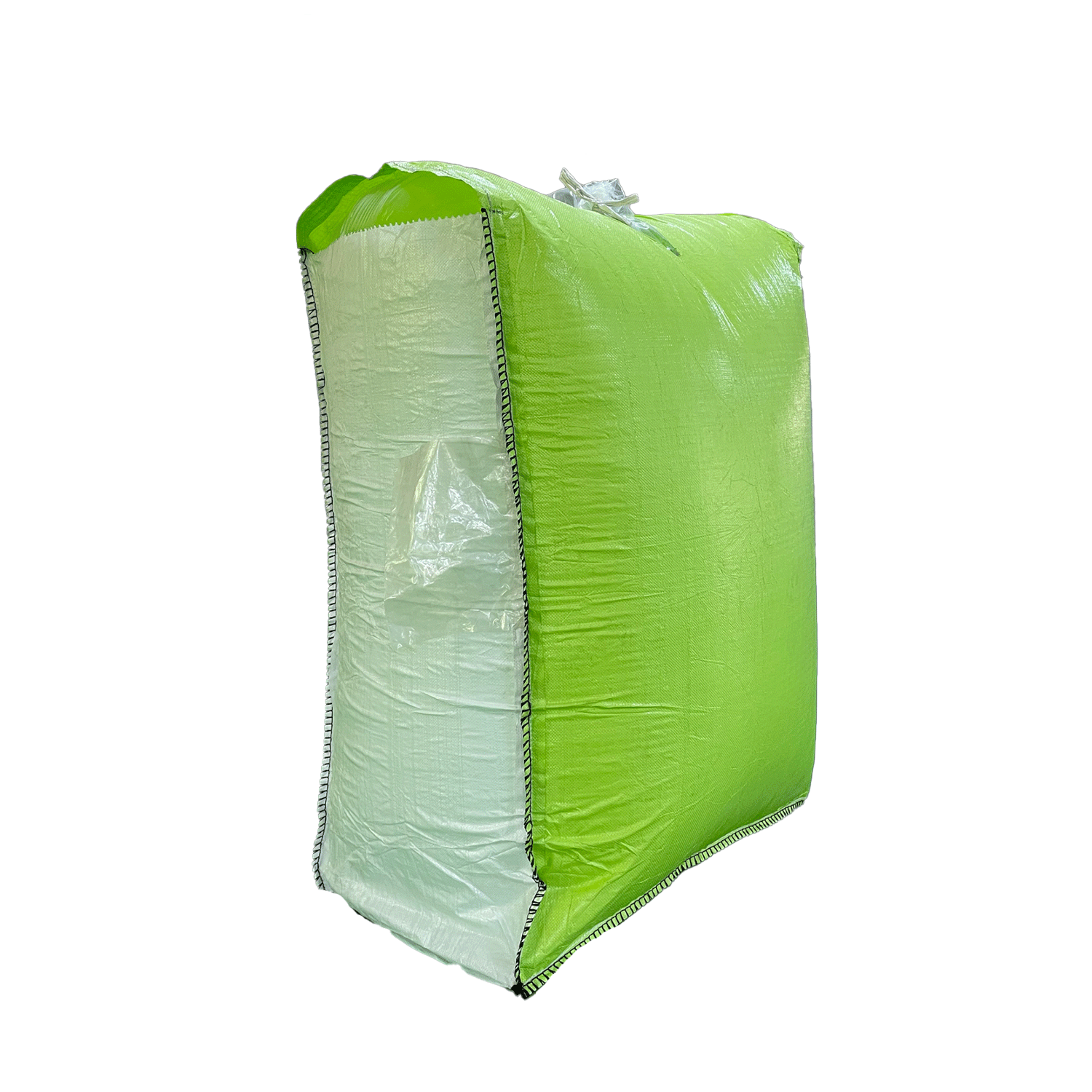 | FIBC Section Fertilizer Bag Range 1 & 2 Loop FIBC Bulk Bags Deccan Cans & Printers Pvt. Ltd. offers durable and cost-effective 1 & 2 Loop FIBC Bulk Bags, designed for the efficient... |
Frequently asked questions
What does export quality mean for an FIBC bag?
It means the assembled bag matches a written specification, passes the required tests and has records linking the shipment to those requirements.
How do you choose FIBC construction for a product?
Match fabric, liner, coating, seams, loops, filling inlet and discharge outlet to the product characteristics and filling process.
What is the difference between SWL and safety factor?
SWL is the maximum working load stated for the bag; safety factor compares the bag’s tested breaking strength with that working load. They are separate from destination-market regulatory requirements.
Which documents should accompany an export FIBC shipment?
Build a pack containing the approved specification, batch traceability, test reports, inspection records, packing details and shipping documents before dispatch.
How should you evaluate an FIBC supplier in Pune?
Assess its specification control, inspection and traceability systems, export documentation, packaging and freight handoff rather than comparing factory price alone.
Related products
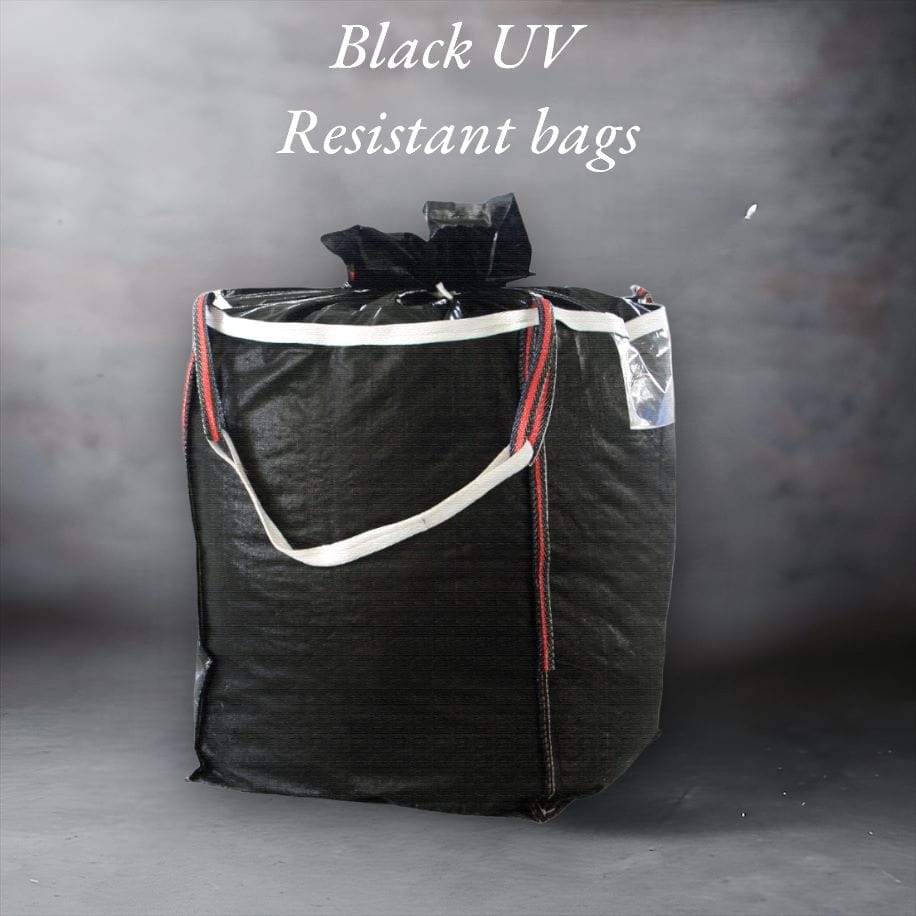 | FIBC Section Black Bags Black FIBC Bags – Enhanced UV Resistance & Extended Shelf Life UV exposure is one of the major challenges faced by the FIBC industry, as prolonged... |
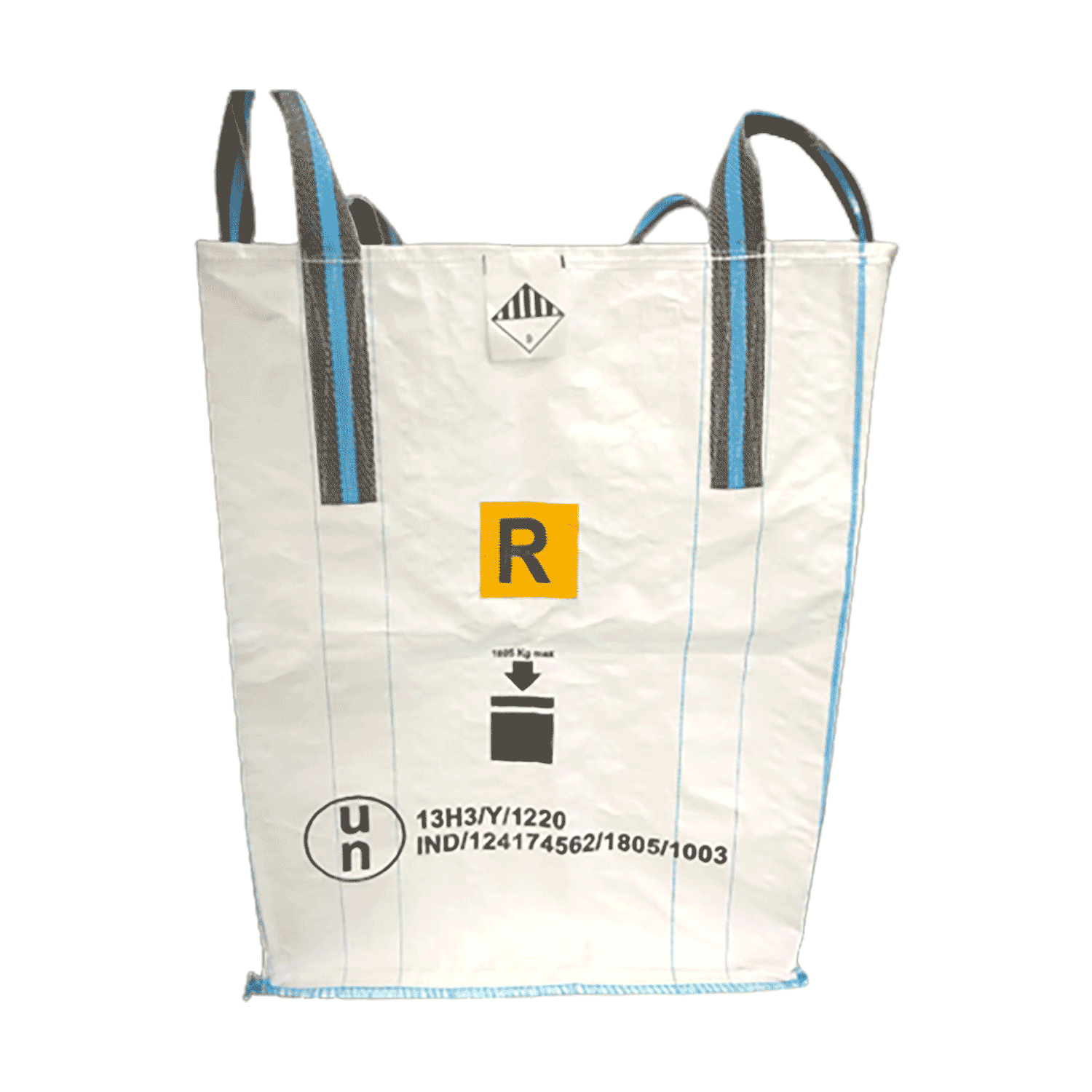 | FIBC Section Un Bags UN Certified Bulk Bags – Rigorous Performance Testing for Safety & Reliability Deccan UN Certified Bulk Bags are specially engineered for the safe... |
 | FIBC Section Bags With Liners FIBC Liners – Bulk Bag Liners Deccan Cans & Printers Pvt. Ltd. |
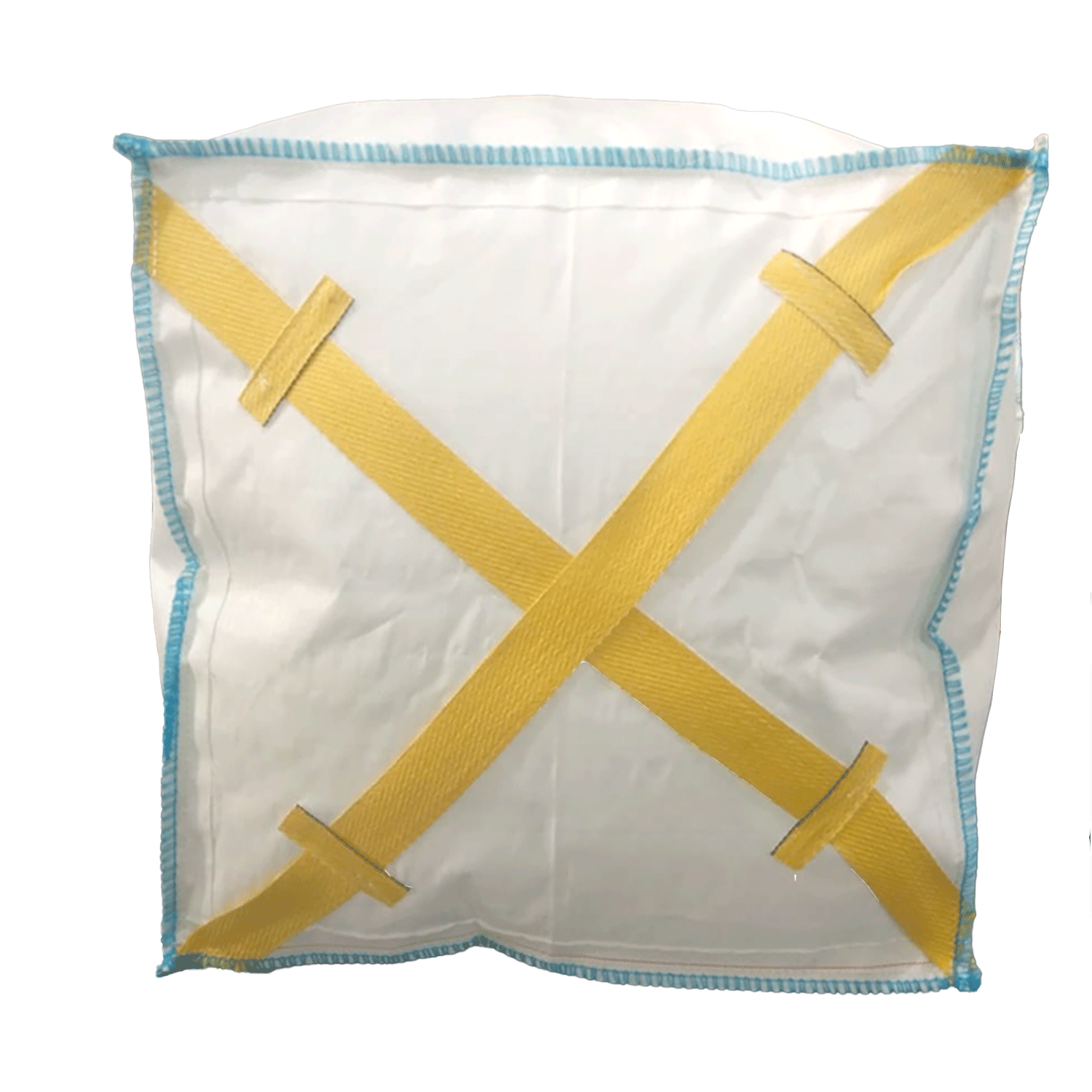 | FIBC Section Cross Bottom Sling Bags Cross Bottom Sling FIBCs – Bulk Bags Deccan Cans & Printers Pvt. Ltd. |