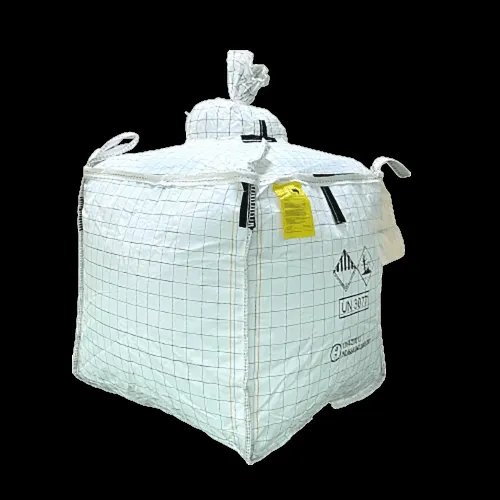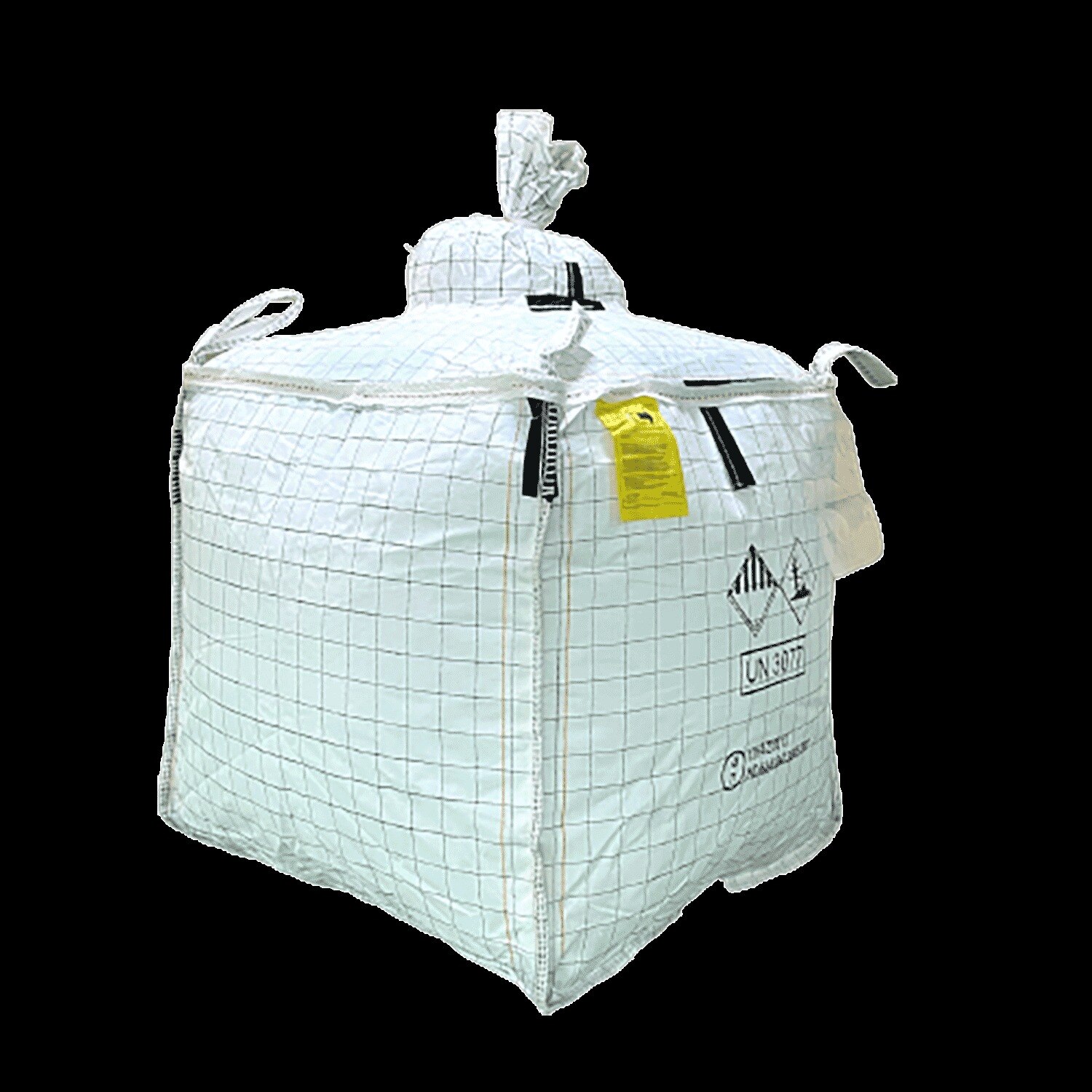
A bag marked “food grade” is not automatically suitable for every food product or handling process. You need to verify the materials, food-contact evidence, liner design, load rating and hygiene controls before approving an FIBC for use in Pune or for export.
Key takeaways
- Ask for food-contact evidence for resin, thread, ink, liners and closures.
- Match the liner, coating and fabric to your powder, moisture and discharge needs.
- Specify safe working load, lifting loops and filling and discharge controls.
- Check hygiene records, traceability documents and storage conditions before ordering.
What makes an FIBC suitable for food contact?
A food-grade FIBC is distinguished by documented control of every surface and component that could contact the food, not by a label or white fabric. An ordinary woven polypropylene bulk bag may use unknown or recycled resin, sewing thread, ink or closures without food-contact evidence.
The bags can look identical and still differ in food-contact suitability.
Ask the supplier for evidence covering the complete construction:
- A food-contact declaration identifying virgin polypropylene fabric and tapes, lifting loops, coating, sewing thread, printing ink, cord and each fitment.
- A separate declaration for the polyethylene or polypropylene liner, including resin type, thickness, sealing method and closure design.
- A migration-test report matching your food, contact time, temperature, filling method and storage period.
- A certificate of analysis, manufacturing-lot traceability record and cleanliness statement covering foreign material and allergen controls.
For India, check compliance with the Food Safety and Standards (Packaging) Regulations, 2018, often called the FSSAI Packaging Regulations 2018, plus the listed Indian Standards relevant to the material. A destination market can add requirements such as EU Regulation (EC) No 1935/2004 or United States FDA food-contact rules.
ISO 21898 addresses FIBC performance and safety for non-dangerous goods; it does not prove hygienic food-contact suitability. Food-contact approval also says nothing about UV durability or combustible-dust protection, so specify those separately.
Choose the right fabric, coating and liner for the product
An unlined bag suits dry, free-flowing granules that do not absorb moisture and do not require sift-proof containment. Choose coated fabric when you need a modest moisture and powder barrier but the product remains dry; coating is not a substitute for a sealed liner when liquid can escape.
| Option | What it provides | When to specify it |
|---|---|---|
| Unlined woven polypropylene | Breathability and simple construction | Dry granules, pellets and coarse products with low dust and no moisture sensitivity |
| Coated fabric | A laminated surface that limits dust loss and external moisture ingress | Powders needing improved sift resistance, but not free liquids or strongly hygroscopic products |
| Polyethylene liner | A sealed, flexible food-contact barrier with good moisture protection | Fine powders, hygroscopic goods, oils and products that could leak through woven seams |
| Polypropylene liner | A stiffer liner with higher temperature tolerance than common polyethylene films | Warm powders, abrasive granules or products whose compatibility review favours polypropylene |
| Form-fit liner | A shaped liner that follows the bag and reduces folds, trapped residue and dead space | Liquid-like products, slurries and difficult-to-discharge powders; confirm the fitment and closure design |
For oil or liquid-like contents, specify a liner thickness, heat-sealed seams, filling and discharge fitments, and a compatibility test. Do not assume either resin is suitable for every oil.
Review the FIBC liner separately from the outer fabric. Request its resin declaration, thickness, migration evidence and sealing specification; a declaration for polypropylene fabric does not cover a polyethylene liner, thread, coating, ink or valve.
Specify capacity, lifting design and powder-control details
Specify the target product mass and bulk density before selecting a bag volume. An FIBC safe working load is not the same as its nominal capacity: dimensions, filling density, lifting arrangement, discharge design and safety factor determine the allowable payload. Require a design test report for that exact configuration.
| Design detail | Specify | Failure prevented |
|---|---|---|
| Capacity | Product mass, bulk density and target fill level | Overloading a bag selected by volume alone |
| Four-loop FIBC | Cross-corner loops, forklift tine spacing, hook radius and loop abrasion limits | Uneven lifting, loop damage or tine interference |
| Sleeve-lift or single-point | Compatible sleeves or certified lifting hook, plus partly filled lifting conditions | Collapse or unbalanced handling |
| Discharge | Spout diameter, closure type and support during emptying | Uncontrolled flow or tearing at the outlet |
Sift-proof seams matter for flour, starch, spices and milk powders. Specify the seam construction, closure method and a powder-leakage test; ordinary stitching can leak fines and retain residues. Inspect the discharge valve for trapped product and tight folds that cannot be cleaned.
State whether the bag will face outdoor staging or transport. UV stabilisation, a maximum exposure period and covered storage protect polypropylene strength; food-contact status does not provide UV protection.
Combustible powders require a separate electrostatic decision. Type C construction needs a verified earth connection during filling and emptying, while Type A, B and D designs impose different controls. Do not treat a food-contact declaration as approval for explosive-dust service.
Build a hygiene process from storage through disposal
A damp liner can cake powder, hold allergens and turn a clean-looking FIBC into a hygiene failure. Treat FIBC hygiene as a documented process from receipt to disposal, not as a claim on the bag specification.
1. Receive bags in sealed outer protection and inspect the liner, seams, spouts, loops and closures for tears, stains, odour, insects, loose fibres and foreign material. Reject wet, damaged or unidentifiable bags, then record the lot number and keep accepted bags segregated by product risk.
2. Apply monsoon storage controls: keep bags on pallets above the floor, away from walls, rain and condensation, and use a cover that shields them without trapping humid air. Do not store them beside chemicals, waste, strongly scented goods or allergen-containing materials.
3. During filling, use a clean, closed filling connection and prevent the liner or discharge spout from touching the floor. Control allergen transfer by scheduling compatible products, cleaning contact equipment between products and using a dedicated or single-use FIBC for milk, nut, spice or other high-risk powders. Check the closure after filling.
4. Before reuse, clean the bag with a defined method, dry it completely and inspect difficult areas such as seams, folds, liner corners and discharge valves. Release a reusable FIBC only against documented inspection and cleaning results; if you cannot validate residue, moisture and allergen removal, choose a single-use FIBC.
After discharge, close the empty bag before moving it. Dispose of damaged or contaminated bags through your approved waste route, and never return a rejected bag to clean stock.
Use a Pune supplier checklist before placing the order
Before approving a food-packaging specification, ask the manufacturer to prove compliance for the exact bag construction, product and handling conditions—not merely label it “food grade.”
1. Provide a food-contact declaration covering every contact component: woven polypropylene, tapes, lifting loops, liner, coating, thread, ink, adhesive, spout, valve and closure. Confirm compliance with India’s Food Safety and Standards (Packaging) Regulations, 2018 and the relevant Indian Standards.
2. Provide a migration test report for the actual liner and contact materials. Check that the test matches your food type, filling temperature, contact time, storage period and filling method; dry ambient-food evidence does not automatically cover hot filling, oily products or long-term contact.
3. Supply a certificate of analysis for each production lot, linked to resin and liner batch numbers, manufacturing date, conversion or sewing batch, inspection release, cleaning status and packing-line identity.
4. Request the liner specification separately: resin, thickness, seal method, fitment dimensions and closure material. The outer fabric declaration does not automatically cover the liner, valve or adhesive.
5. Confirm the target product mass, bulk density, dimensions, lifting arrangement, discharge design and required safety factor. Approve a design test report for the specified safe working load rather than choosing by nominal volume.
6. Record UV stabilisation, maximum uncovered exposure time and covered-storage instructions. Food-contact compliance does not prove resistance to sunlight.
Deccan Cans & Printers Pvt. Ltd. belongs on a comparison list only after it supplies this same evidence for the proposed construction and manufacturing lot.
Frequently asked questions
What makes an FIBC suitable for food contact?
Food-contact suitability requires documented control of every food-contact surface and component, including polypropylene resin, sewing thread, liner, closures and printing ink. Do not rely on a white fabric or the phrase “food grade” alone.
How do you choose fabric, coating and liner for a food product?
Match the construction to the product’s particle size, moisture sensitivity, flow behaviour and required barrier. Ask the supplier to identify the fabric type, coating material and liner film, then provide food-contact documentation for each component.
What FIBC capacity and lifting design should you specify?
Specify the filled weight, bag dimensions, safe working load, safety factor, lifting-loop configuration and equipment used for handling. Add liner fit, sift-proof seams and filling or discharge controls when the product is a fine powder.
How should food-grade FIBCs be stored and disposed of?
Keep bags sealed, dry, off the floor and protected from dust, pests, chemicals and direct sunlight. Record batch details, inspect packaging before use and follow your site’s rules for damaged bags, liners and contaminated materials.
What should you check with a Pune FIBC supplier before ordering?
Request samples, component specifications, food-contact declarations, batch traceability, cleaning and packing procedures, inspection records, delivery terms and a clear process for handling nonconforming bags.